
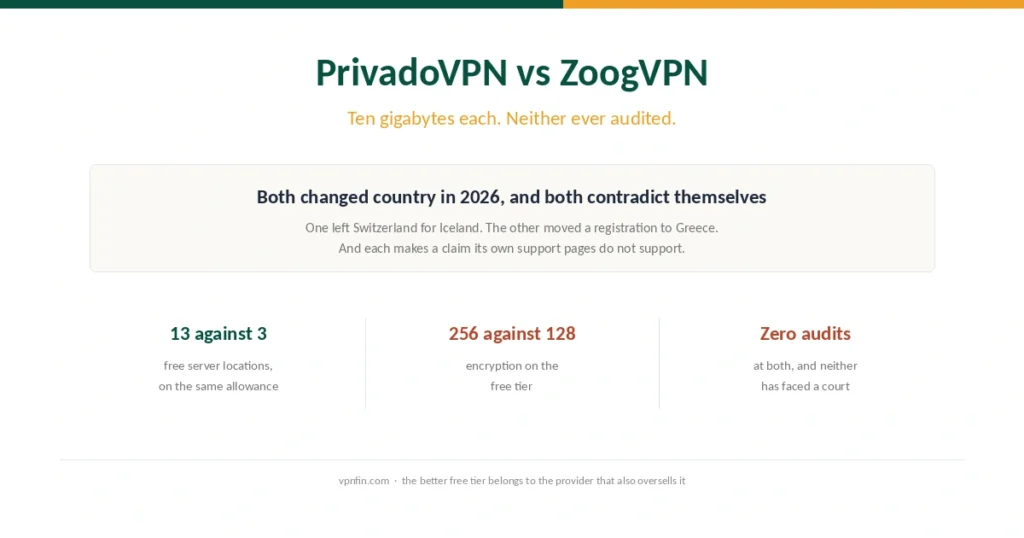
PrivadoVPN vs ZoogVPN (2026): Same Ten Gigabytes, Very Different Free Tiers
Two unaudited providers, both of which changed country this year, with identical free allowances. And each makes a claim its own support pages contradict.
Head-to-head VPN comparisons that go beyond spec sheets. We line up audit records, independent speed results, features, and pricing side by side — and name a winner for your specific needs.
Two unaudited providers, both of which changed country this year, with identical free allowances. And each makes a claim its own support pages contradict.
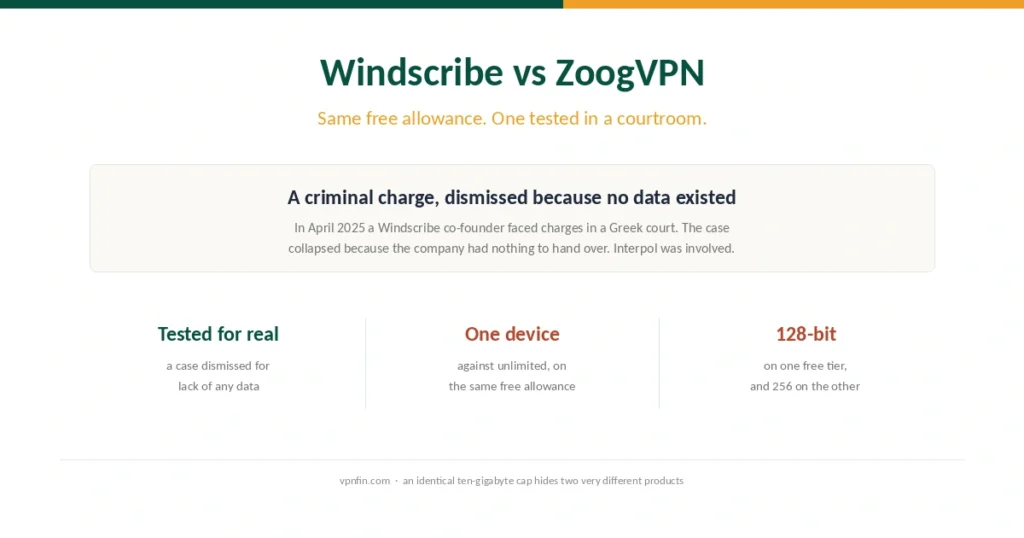
An identical free allowance hides two very different products. And one of these two has been tested by a prosecution rather than by a scheduled audit.
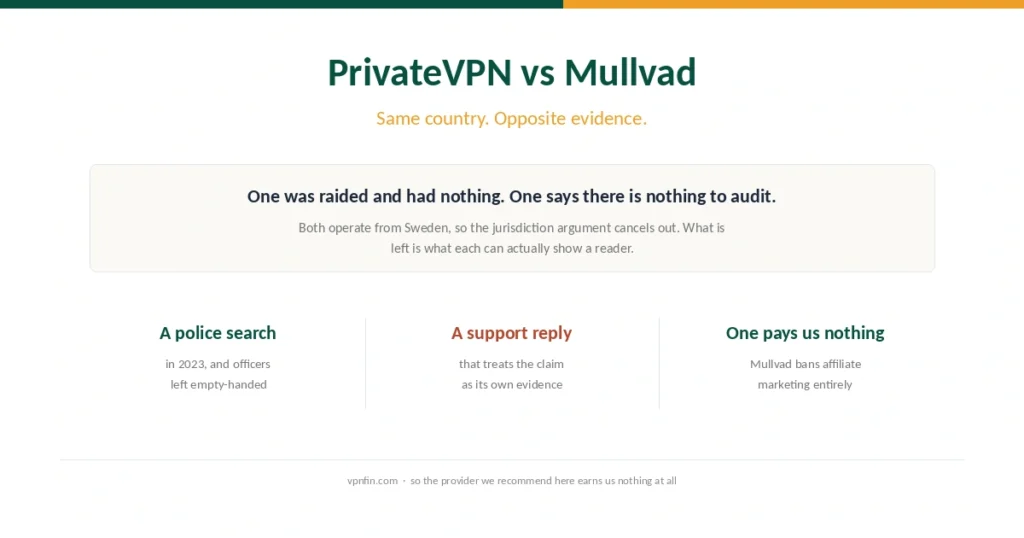
One was raided by police and had nothing to hand over. The other says there is nothing to audit. And the one we recommend here pays us nothing at all.
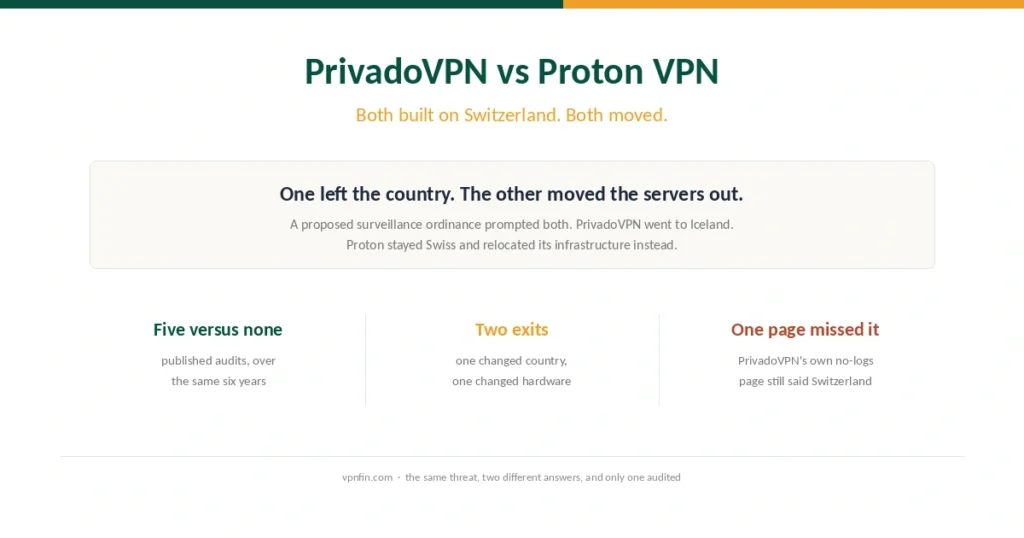
Two providers built on Switzerland, both now moving away from it for the same reason. One announced the move. The other left its own no-logs page unchanged.
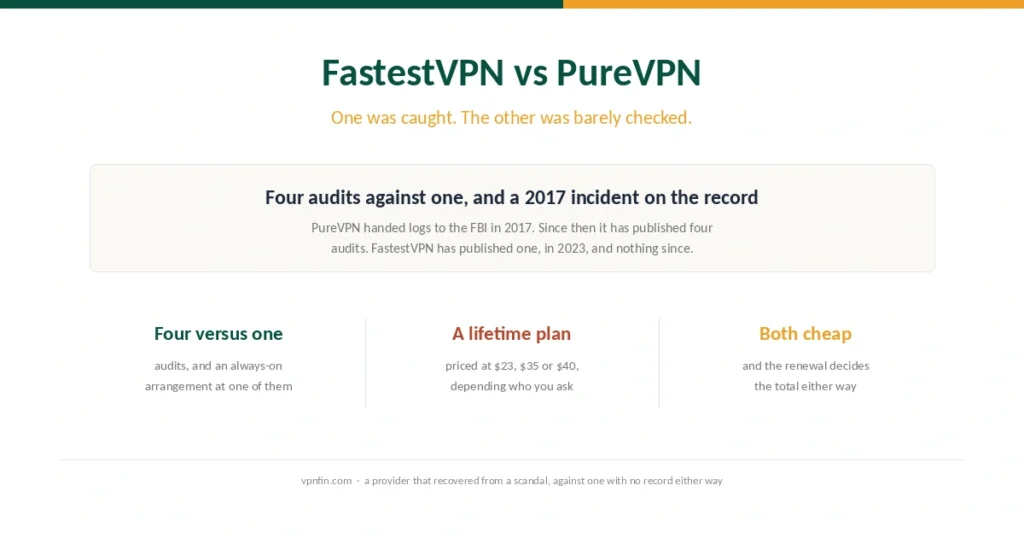
A documented failure with a documented response, against a clean sheet nobody has checked. From outside those look the same. Only one has produced evidence.
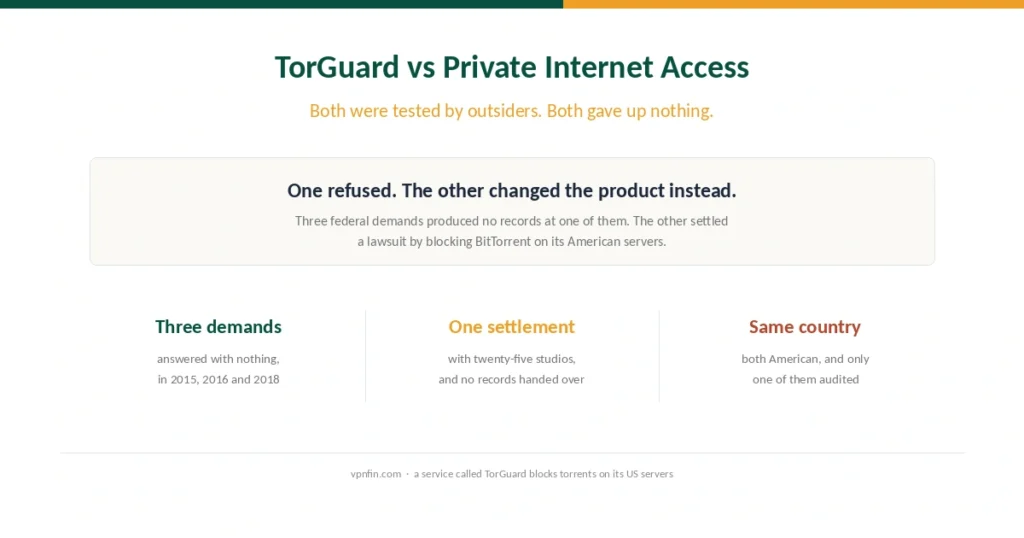
Most providers have never been tested by anyone. These two were, and both kept customer data out of it — by routes that prove entirely different things.
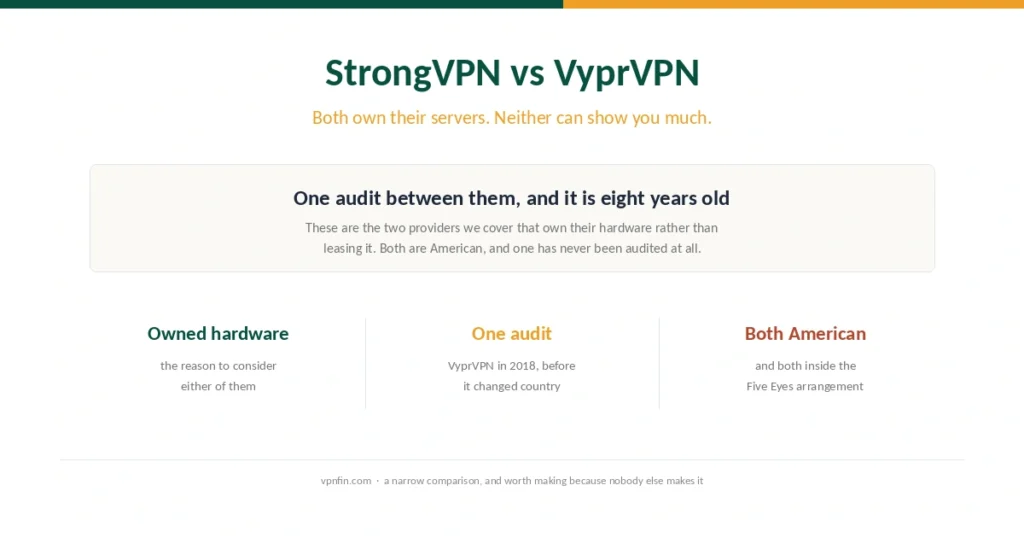
Almost every VPN leases its servers. These two own them, which is the reason to consider either — and between them they have a single audit from eight years ago.
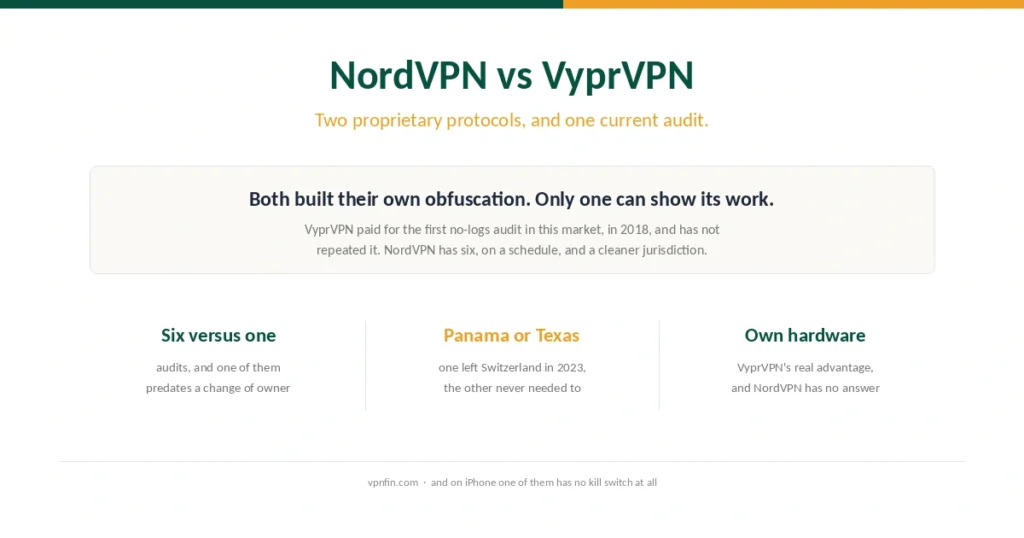
One of these commissioned the industry’s first independent audit and has not repeated it in eight years. The other publishes on a schedule. And one owns its servers.
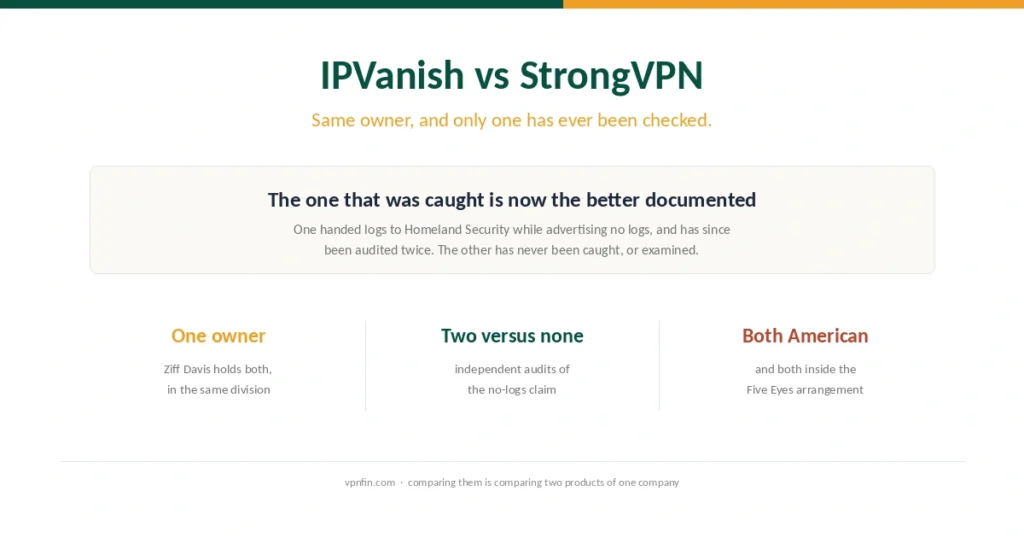
One of these was caught in 2016 and now publishes more evidence than almost any American provider. The other has never been caught, and never examined either.
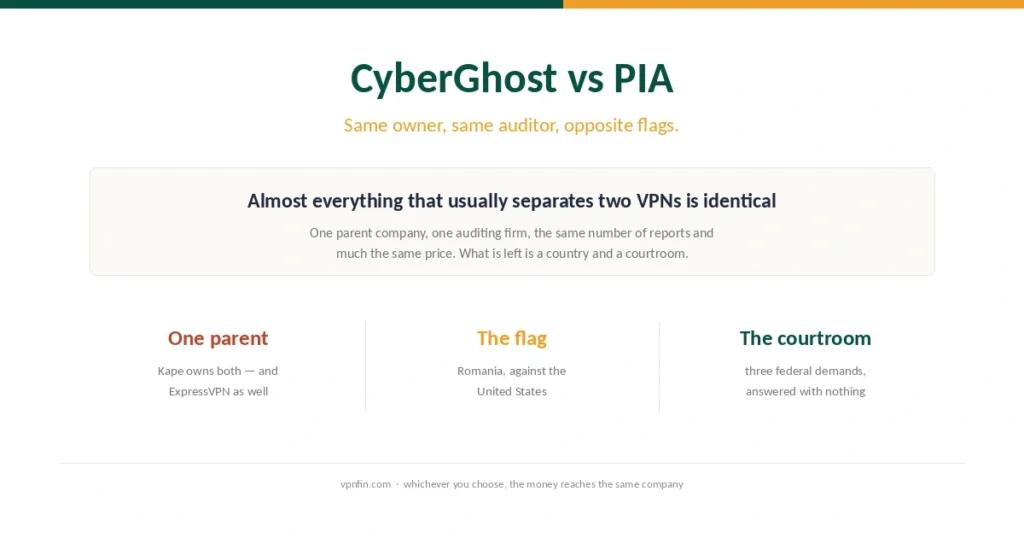
Everything that usually separates two VPNs is identical here. What is left is a country and a courtroom, pointing in opposite directions.