
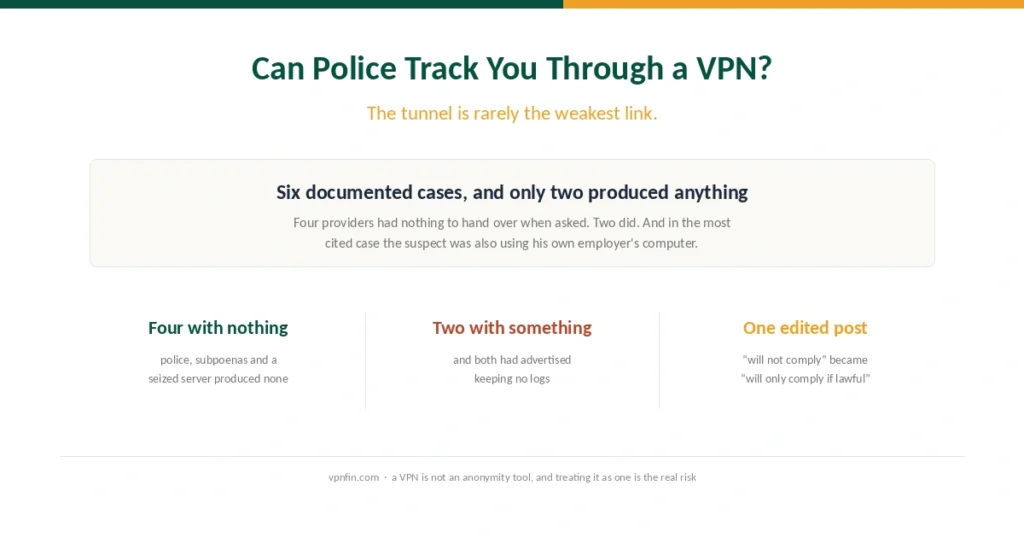
Can Police Track You Through a VPN? (2026): The Tunnel Is Rarely the Weakest Link
Four of six providers had nothing to give when asked. Two produced what they had promised not to keep. And the tunnel is rarely where an investigation succeeds.
VPN legality explained country by country, from the text of the law rather than from headlines. We name what each rule actually targets — the tunnel, the provider, your conduct or nothing at all — and say plainly where sources disagree.
Four of six providers had nothing to give when asked. Two produced what they had promised not to keep. And the tunnel is rarely where an investigation succeeds.
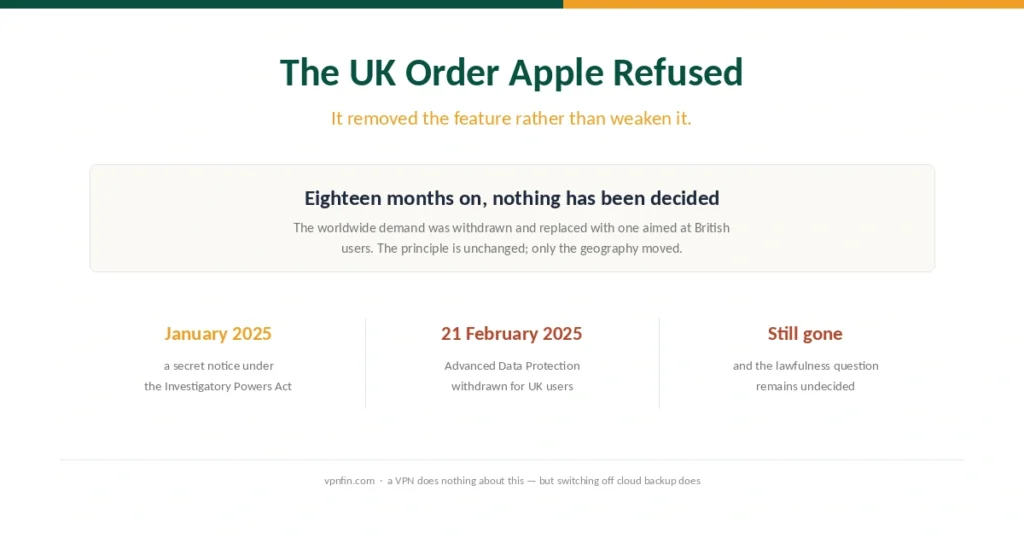
The worldwide demand was withdrawn and replaced with a national one. Reporting called that a resolution; the principle was unchanged and only the geography moved.
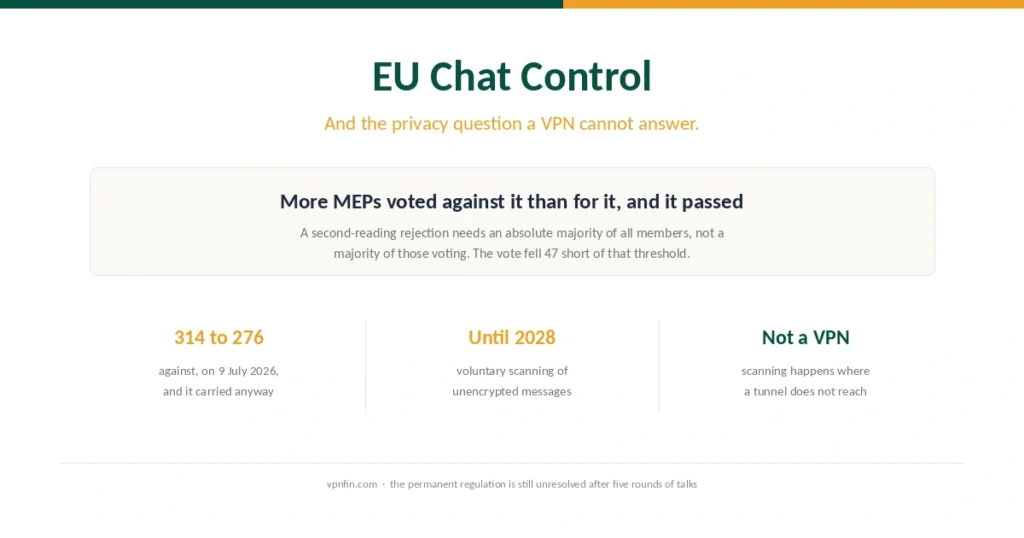
Two separate measures carry the same nickname, and only one of them is law. Neither is affected by anything you can buy from a VPN provider.
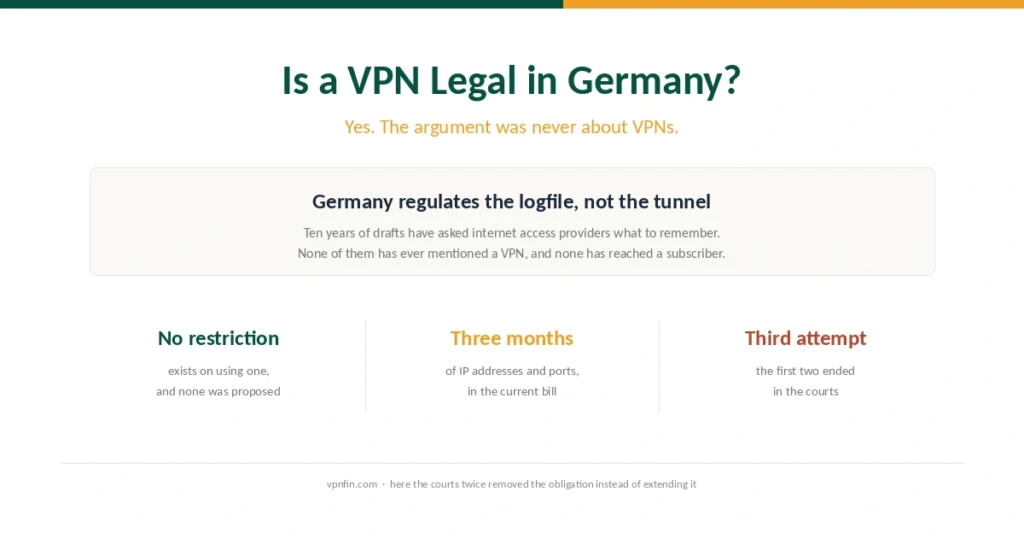
Germany has never regulated VPNs. What it keeps trying to regulate is the one record a VPN replaces, and its courts have struck that down twice already.
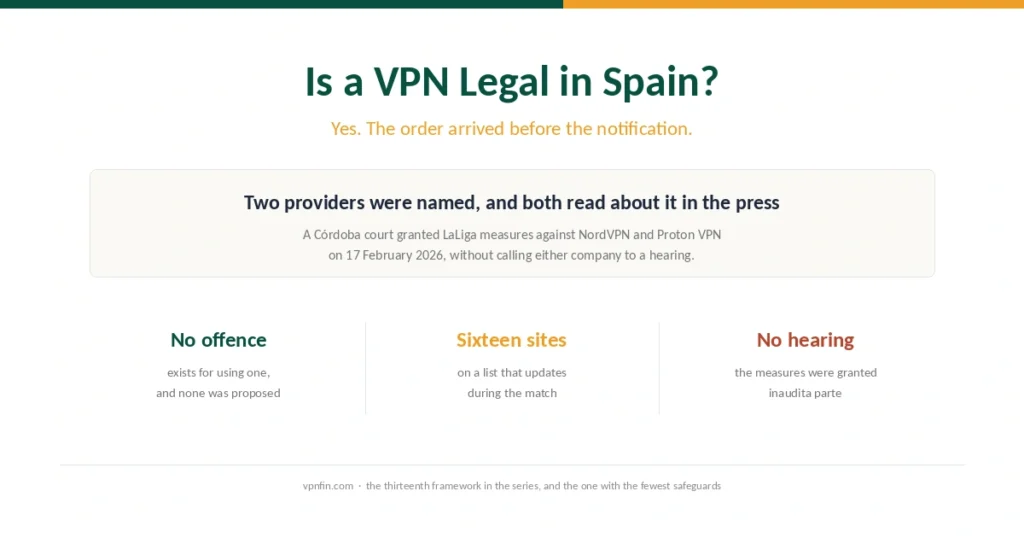
Spain has not restricted VPN use. A commercial court in Córdoba instead ordered two named providers to block IP addresses during matches, and both said they found out from the press.
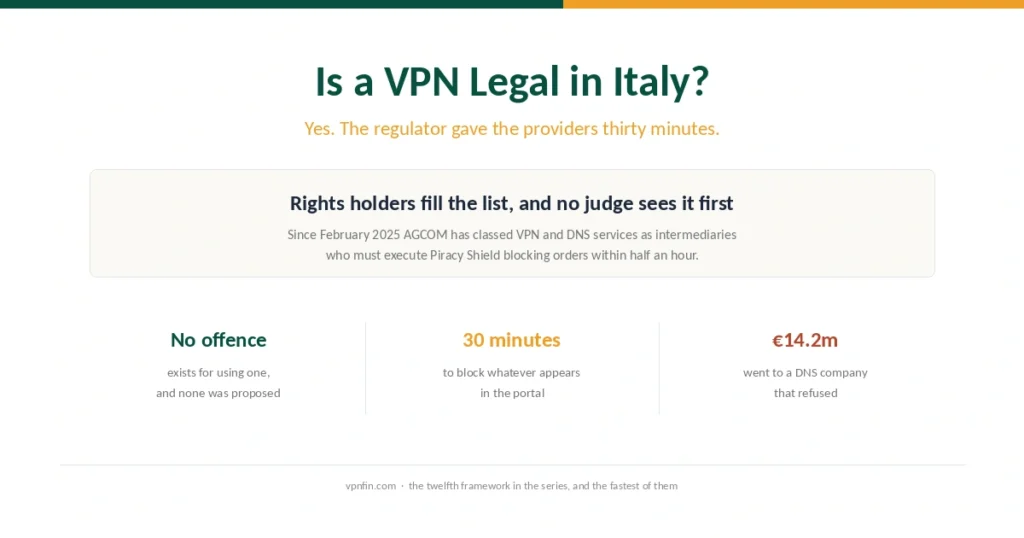
Italy did not restrict VPN use. It built an automated platform that obliges VPN and DNS providers to block whatever rights holders enter into it, within half an hour, before any judge sees the list.
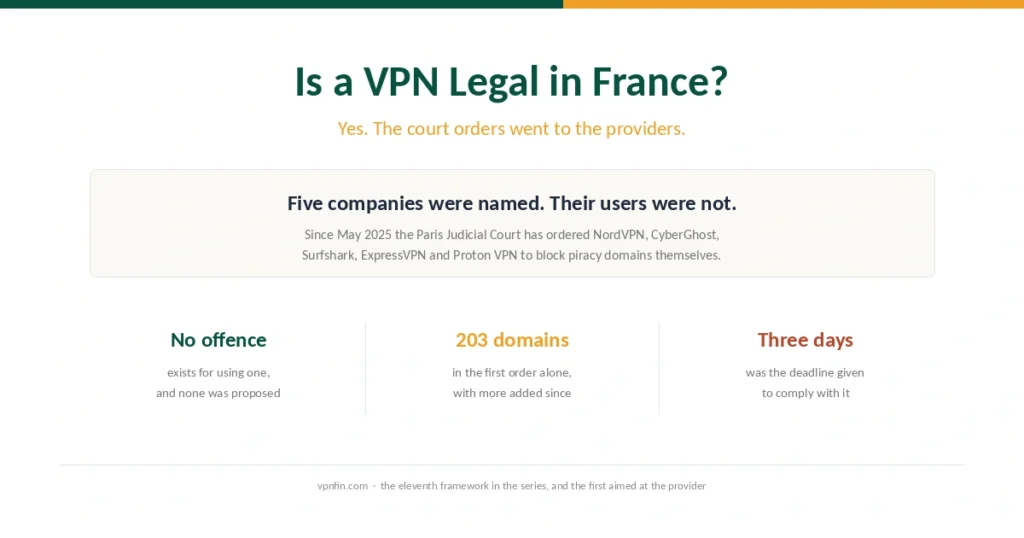
France has not restricted VPN use and has never proposed it. Since May 2025 its courts have done something no other country in this series has: named five VPN companies and ordered them to block sites.
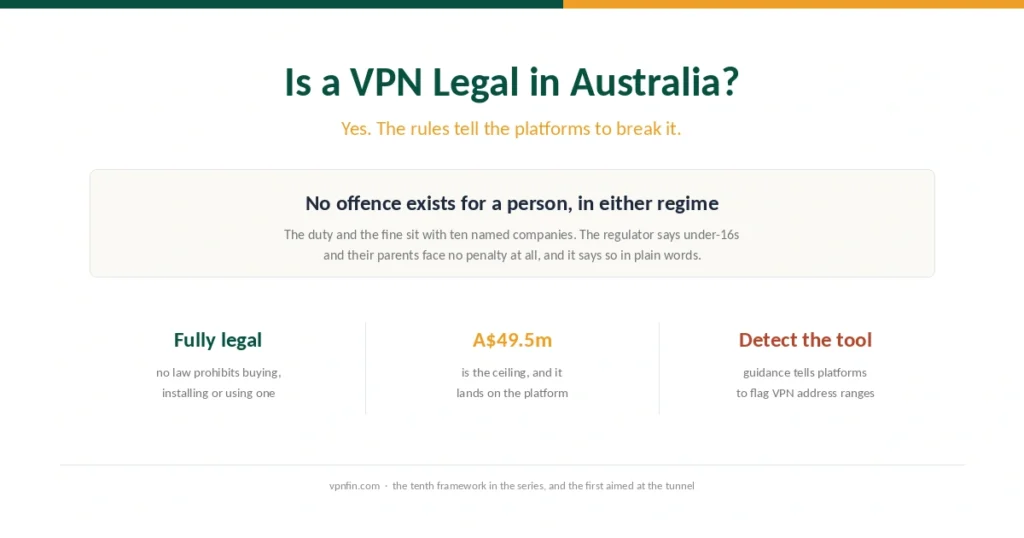
Australia has not banned VPNs and has never proposed it. What it has done is tell social media platforms to detect them, which is a different kind of rule and a more effective one.
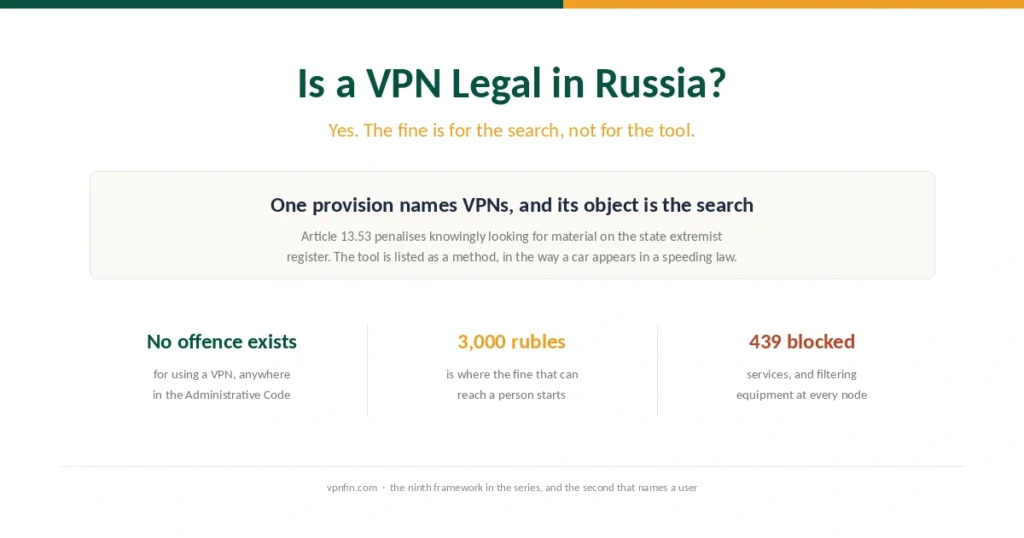
Russia has blocked hundreds of VPN services and fined the people who advertise them. It has not made using one an offence, and the six known cases under the law that mentions VPNs were all about what was searched for.
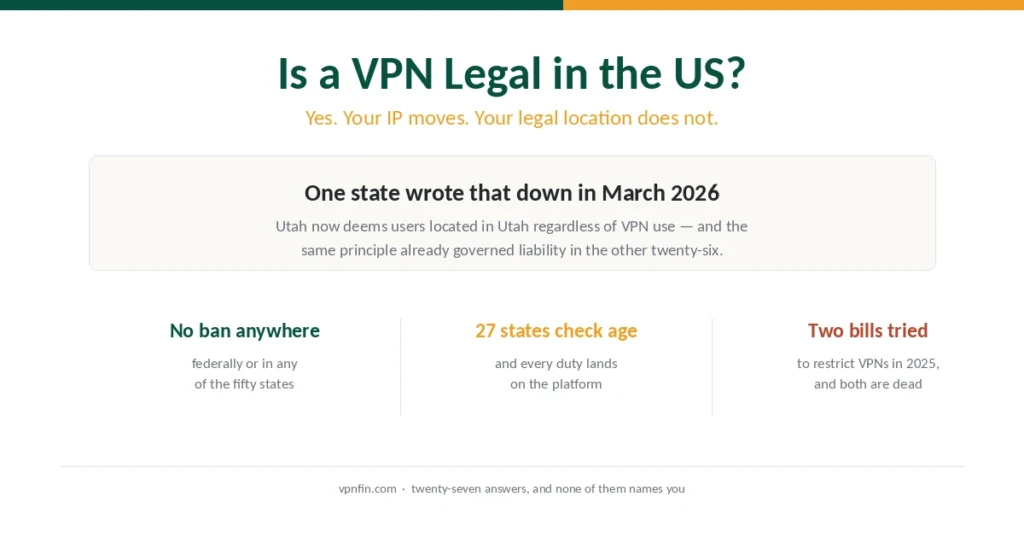
No American law restricts using a VPN. What changed is what a VPN accomplishes: one state has legislated that you remain legally located where you actually are, whatever address you present.