
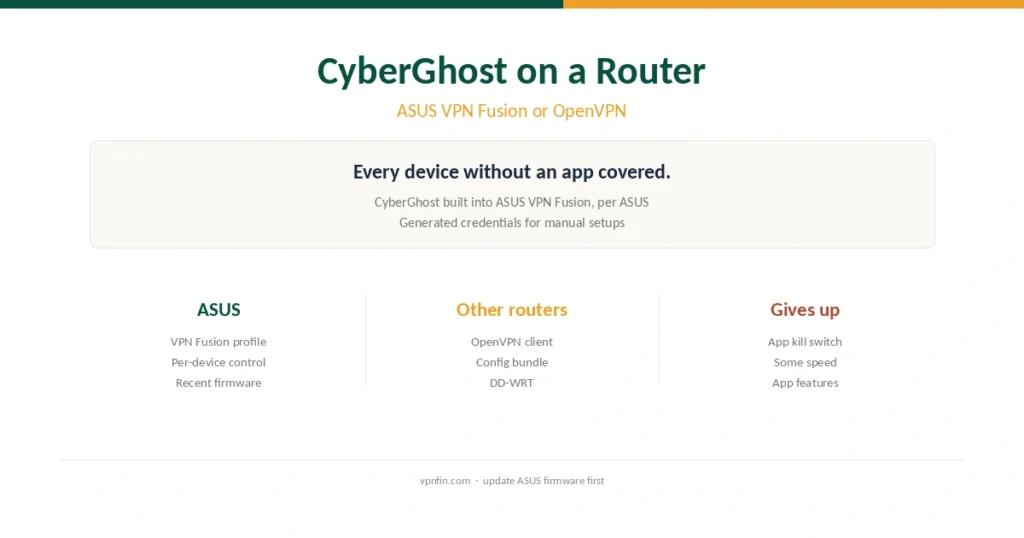
CyberGhost on a Router (2026): ASUS VPN Fusion, OpenVPN and DD-WRT
ASUS routers include CyberGhost in VPN Fusion, and other routers use OpenVPN files. Here are both routes and what a router setup gives up.
Step-by-step VPN tutorials for beginners: setup, troubleshooting, and getting the most out of your VPN. Clear instructions with screenshots — no technical background needed.
ASUS routers include CyberGhost in VPN Fusion, and other routers use OpenVPN files. Here are both routes and what a router setup gives up.
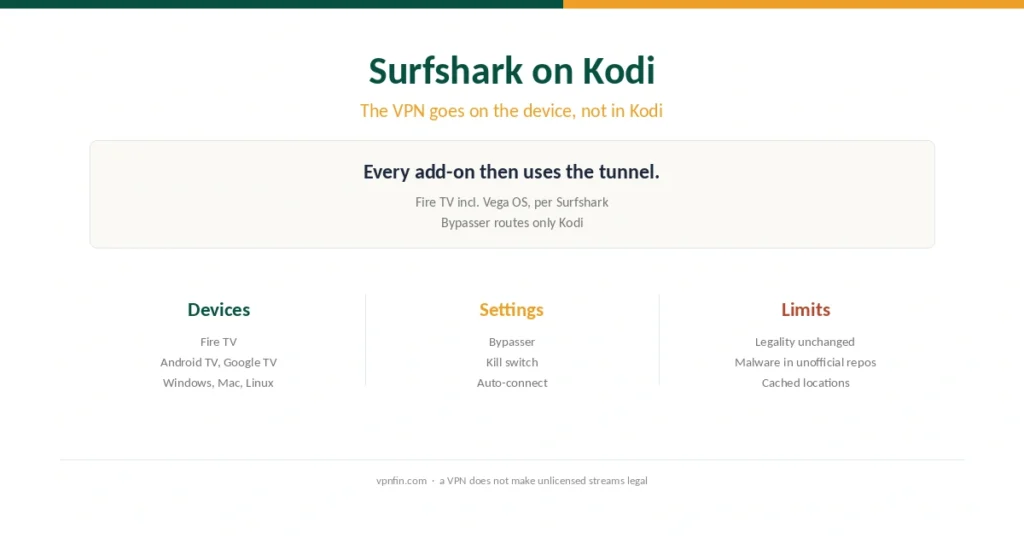
Kodi has no VPN of its own. Here is how to run Surfshark beneath it, route only Kodi through the tunnel, and stay on the right side of the law.
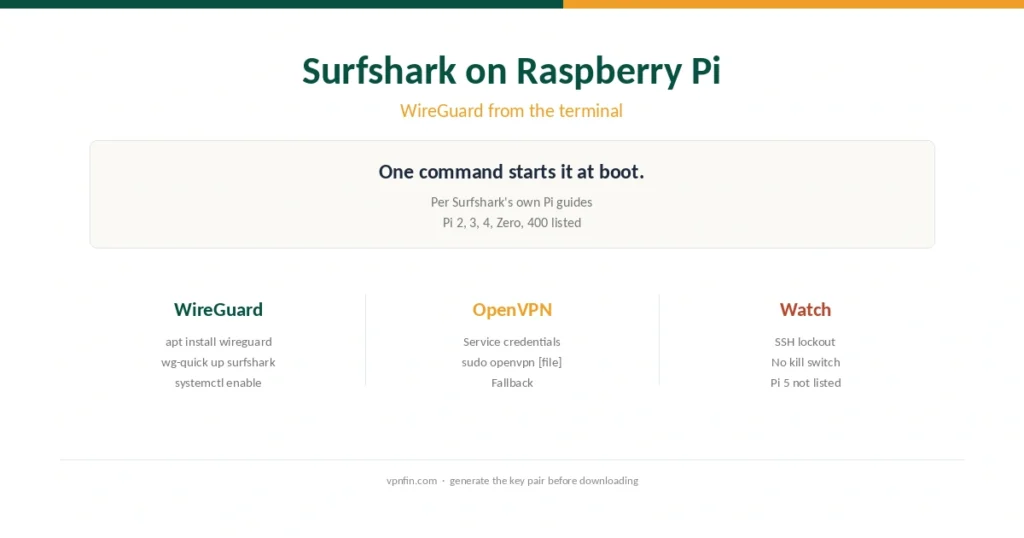
Surfshark documents WireGuard and OpenVPN setups for the Pi. Here are the steps, supported models and how to keep SSH access.
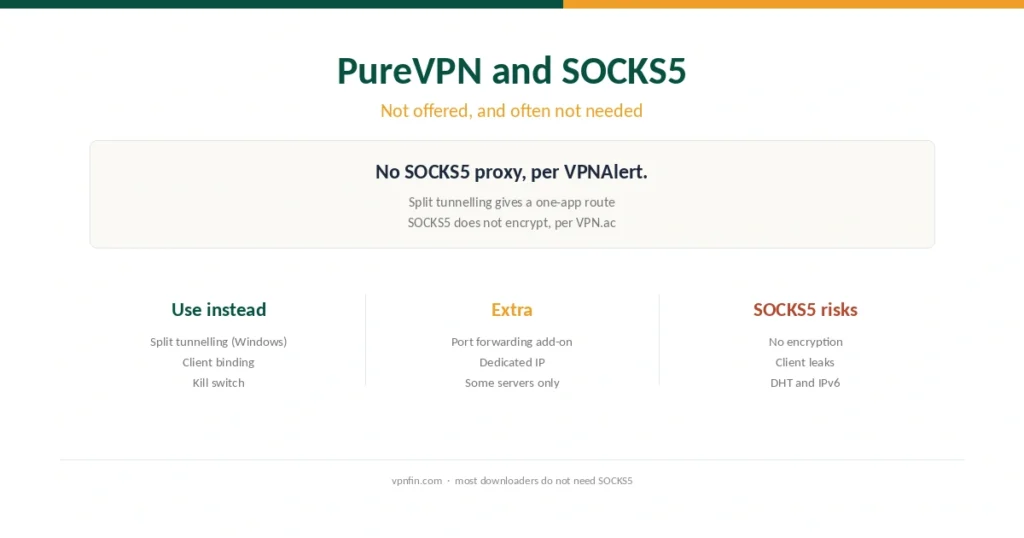
PureVPN has no SOCKS5 proxy. Here is what SOCKS5 does, how to get the same effect with PureVPN, and who still offers it.
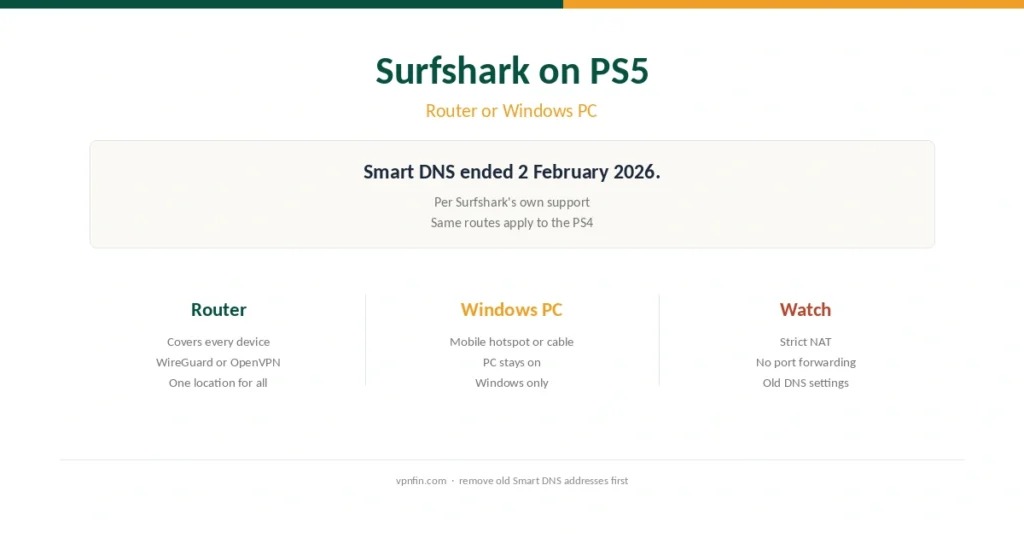
PlayStation cannot run VPN apps, and Surfshark’s Smart DNS is gone. Here is how to put Surfshark in front of a PS5.
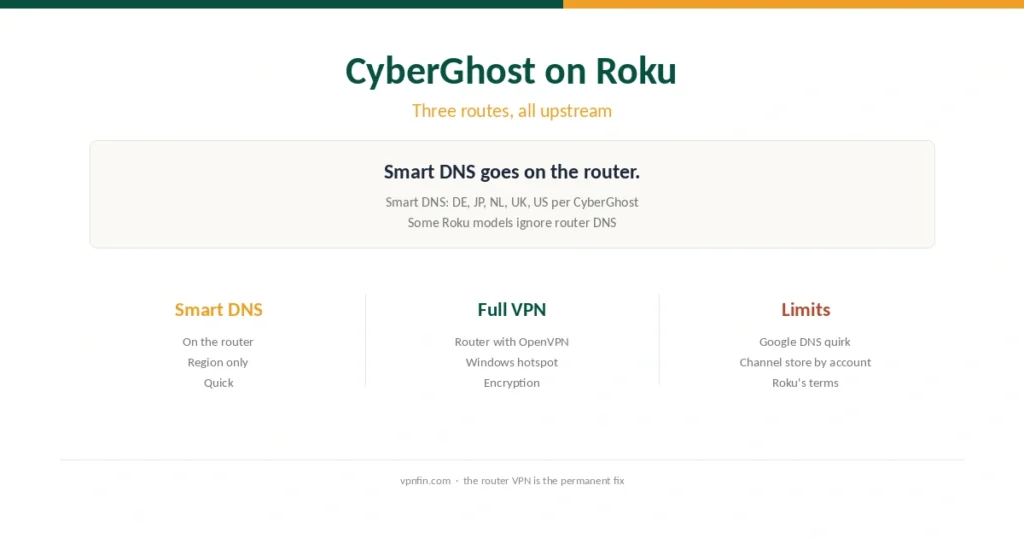
Roku cannot run VPN apps or change DNS. Here are the three CyberGhost routes and the Google DNS quirk that breaks Smart DNS on some models.
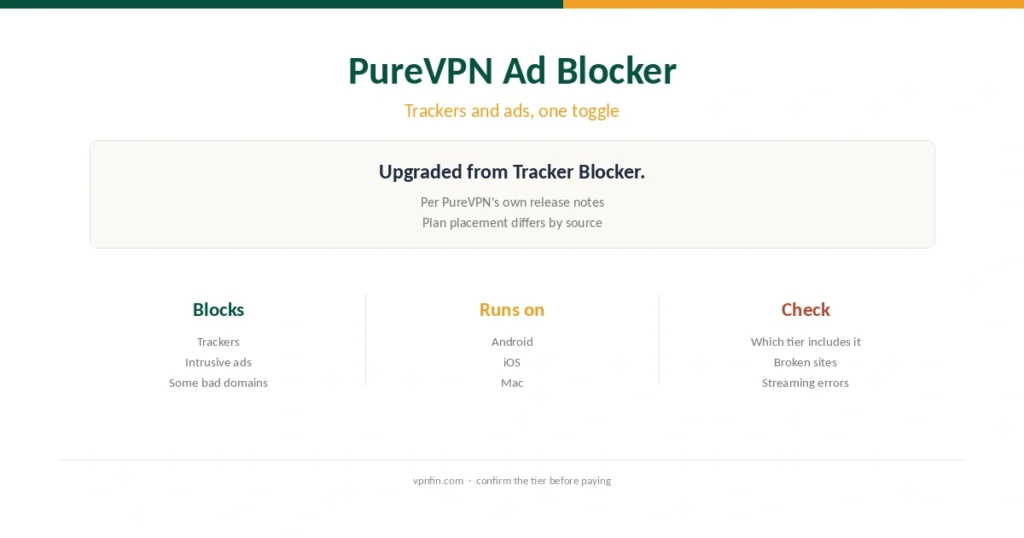
PureVPN upgraded its Tracker Blocker to block ads too. Here is where it runs, which plan includes it, and when a browser blocker is better.
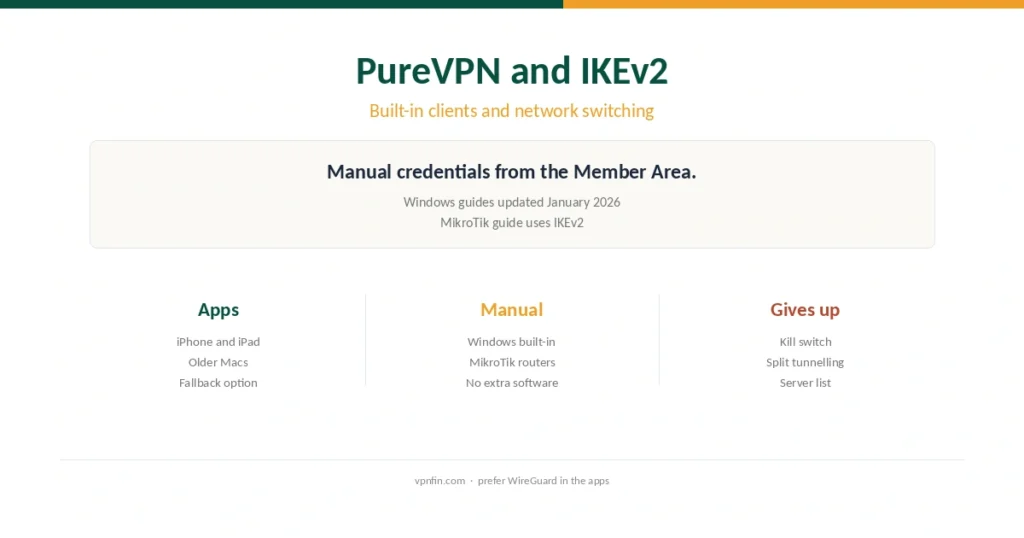
IKEv2 is PureVPN’s protocol for built-in clients and network switching. Here is where it works and how to set it up on Windows.
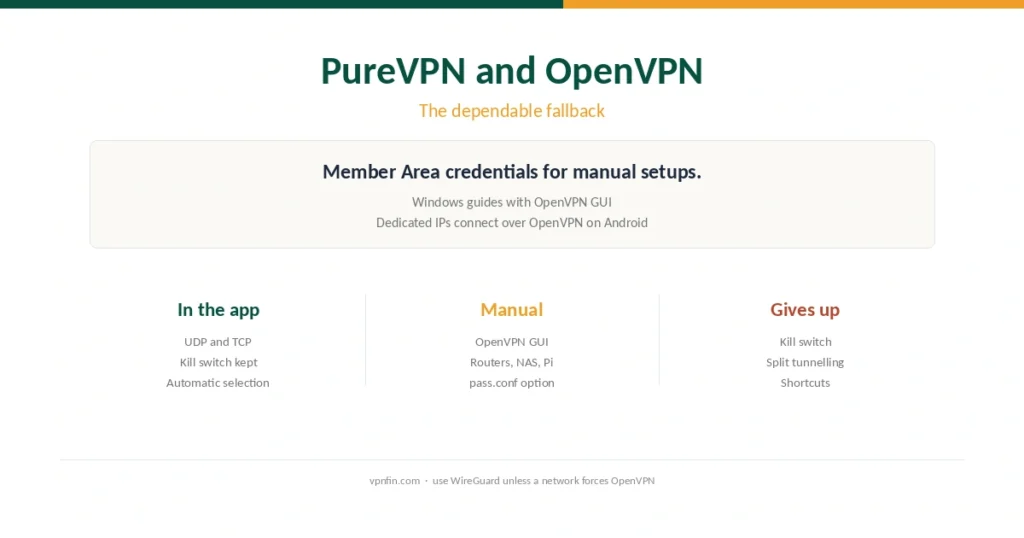
OpenVPN is PureVPN’s fallback for difficult networks and routers. Here is how to use it in the apps and set it up by hand.
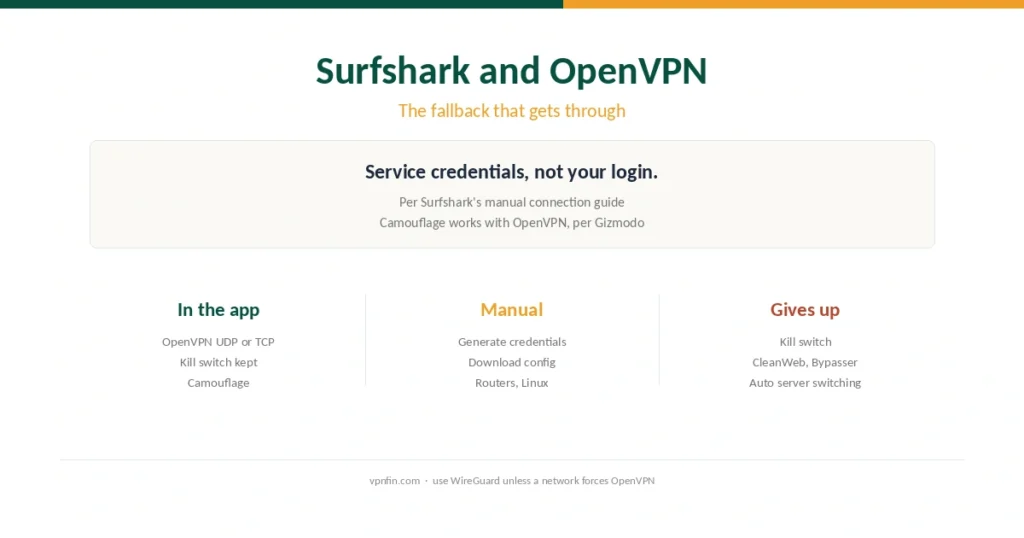
OpenVPN is Surfshark’s fallback for difficult networks and older routers. Here is how to use it in the app and set it up by hand.