
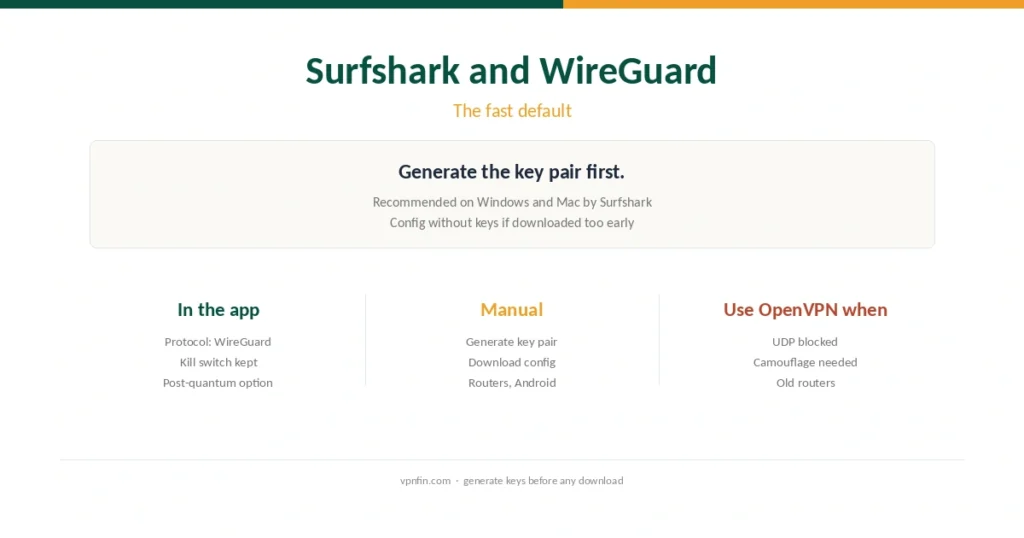
Surfshark WireGuard (2026): App Settings, Manual Setup and the Key Pair Catch
WireGuard is Surfshark’s fast default. Here is how to use it in the apps, set it up by hand, and avoid the key pair catch.
Step-by-step VPN tutorials for beginners: setup, troubleshooting, and getting the most out of your VPN. Clear instructions with screenshots — no technical background needed.
WireGuard is Surfshark’s fast default. Here is how to use it in the apps, set it up by hand, and avoid the key pair catch.
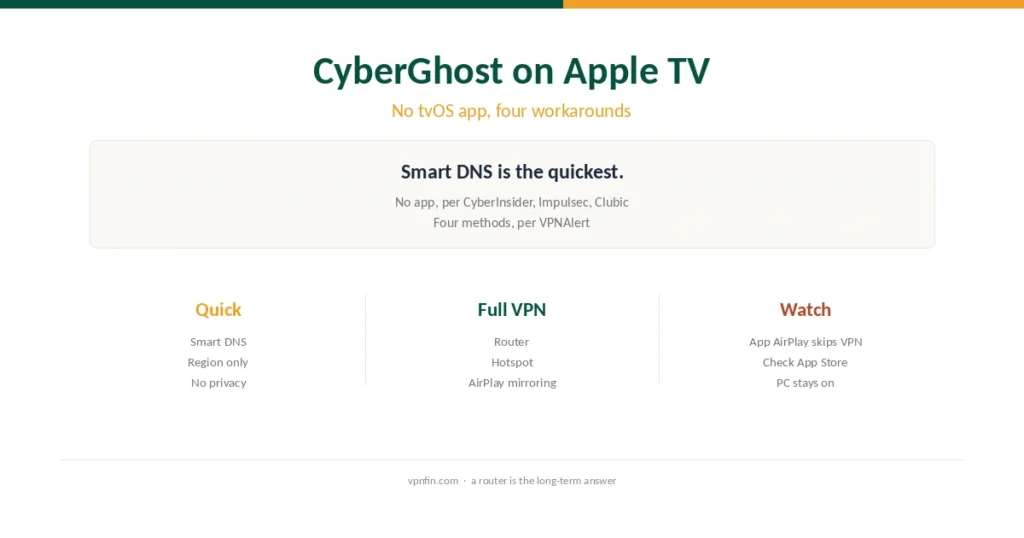
CyberGhost has no Apple TV app in 2026 reports. Here are the four ways round it and what each one actually protects.
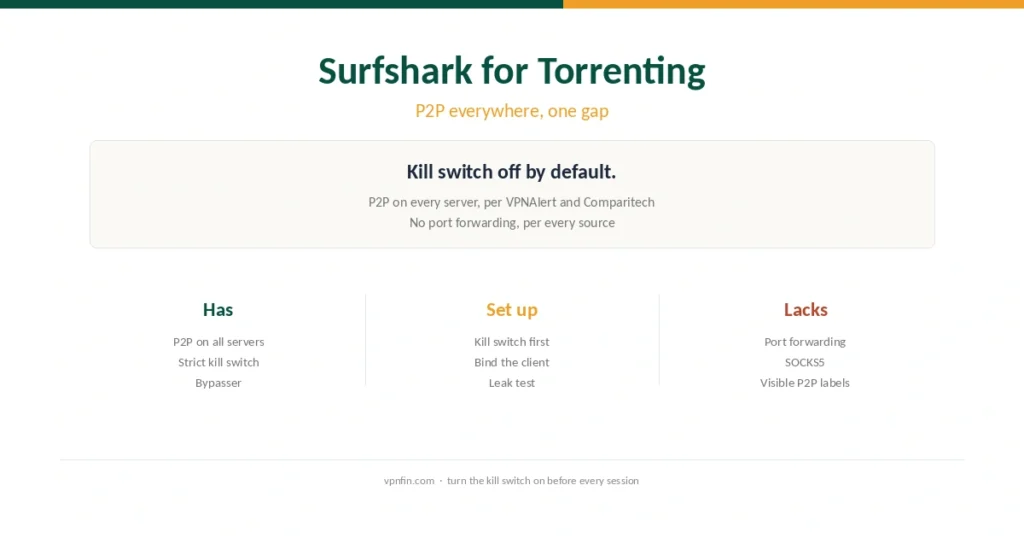
Surfshark allows P2P on every server. Here is the safe setup, the strict kill switch and what the missing port forwarding means.
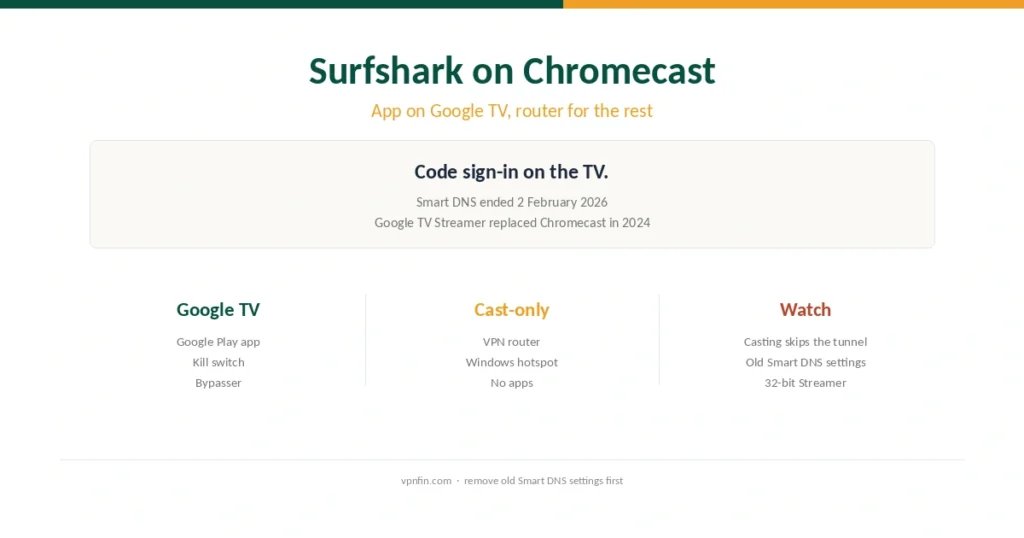
Two Chromecasts, two answers. Here is how to set up Surfshark on each, and why old Smart DNS advice no longer applies.
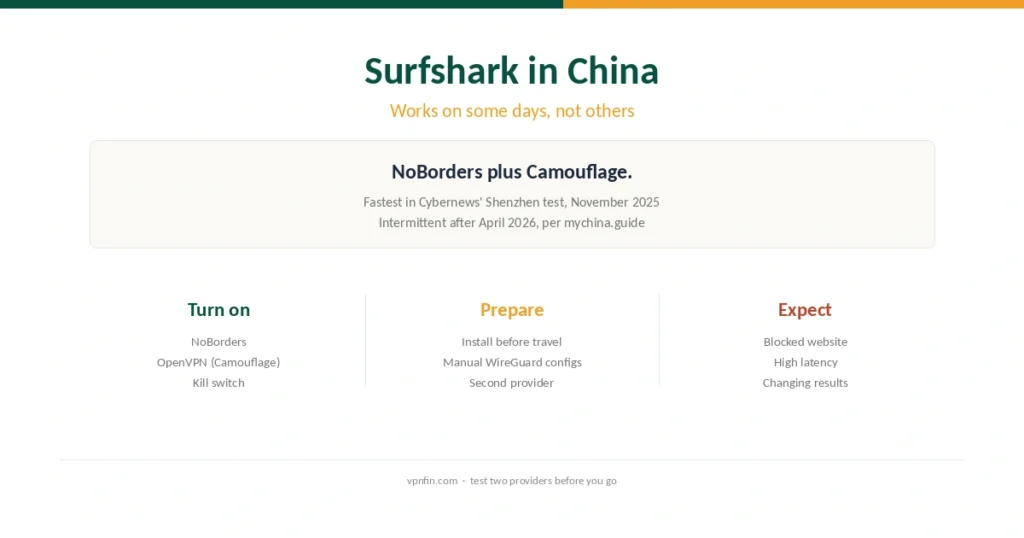
Some testers say Surfshark works in China, others call it intermittent. Here is the setup, the results by source and a backup plan.
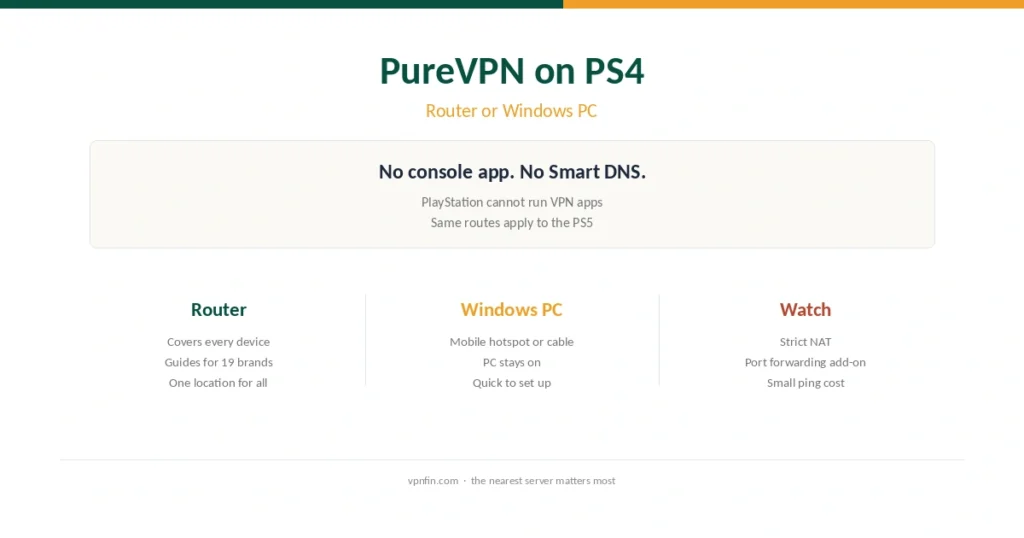
PlayStation cannot run VPN apps. Here is how to put PureVPN in front of a PS4, and what to do about strict NAT and ping.
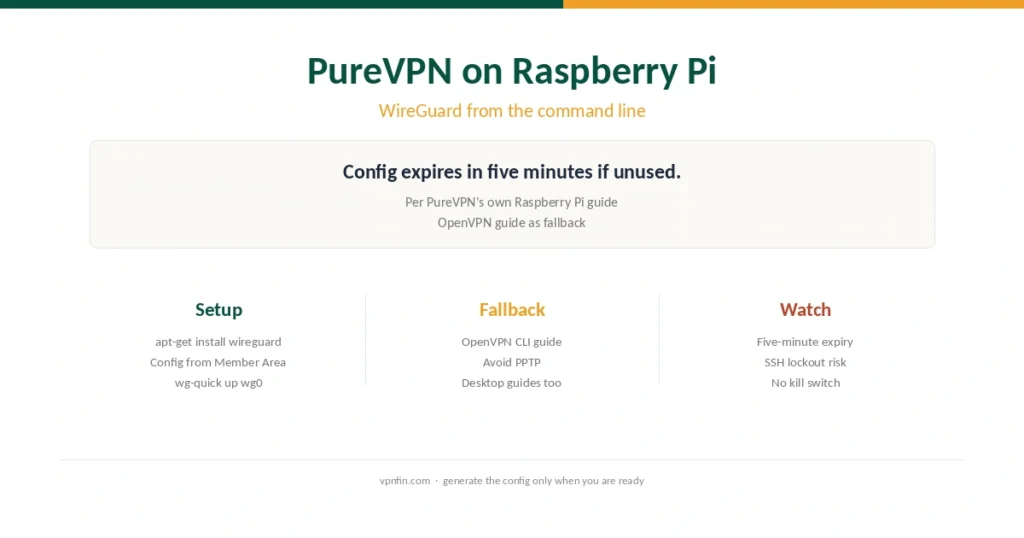
PureVPN documents a WireGuard setup for the Pi. Here are the steps, the five-minute catch and how to keep SSH access.
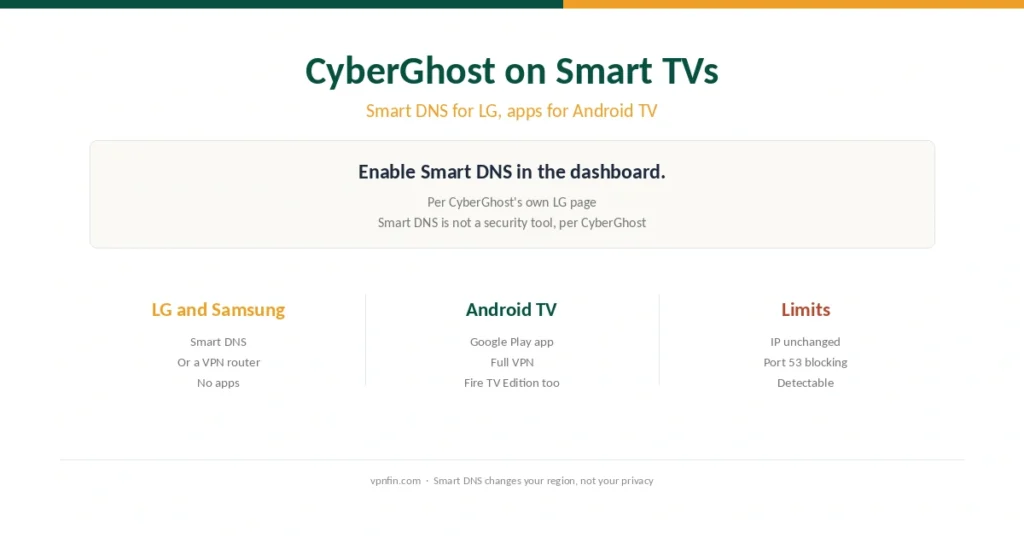
LG TVs cannot run VPN apps, but CyberGhost’s Smart DNS works on them. Here is the setup, its limits and the router alternative.
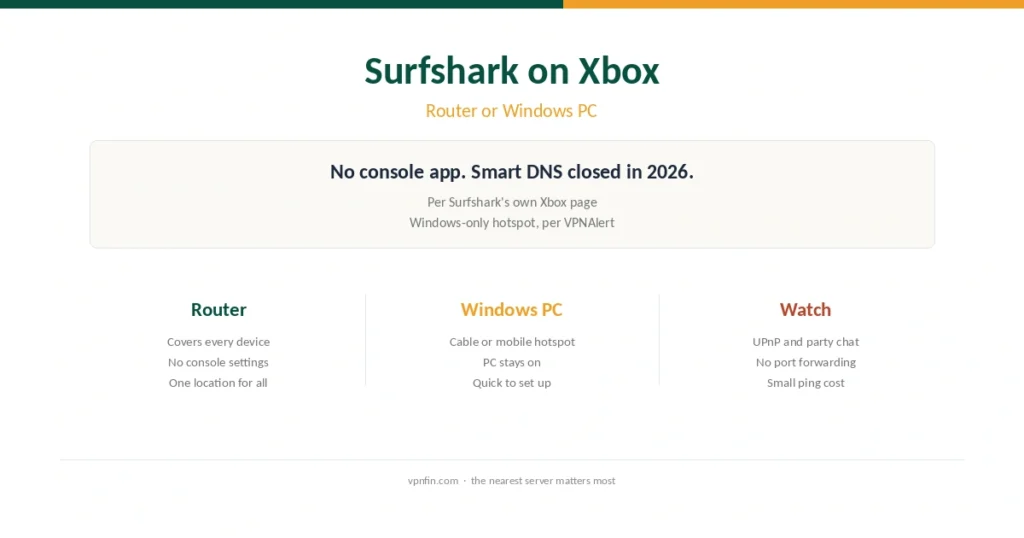
Xbox cannot run VPN apps. Here is how to put Surfshark in front of it with a router or a Windows PC, and how to fix party chat problems.
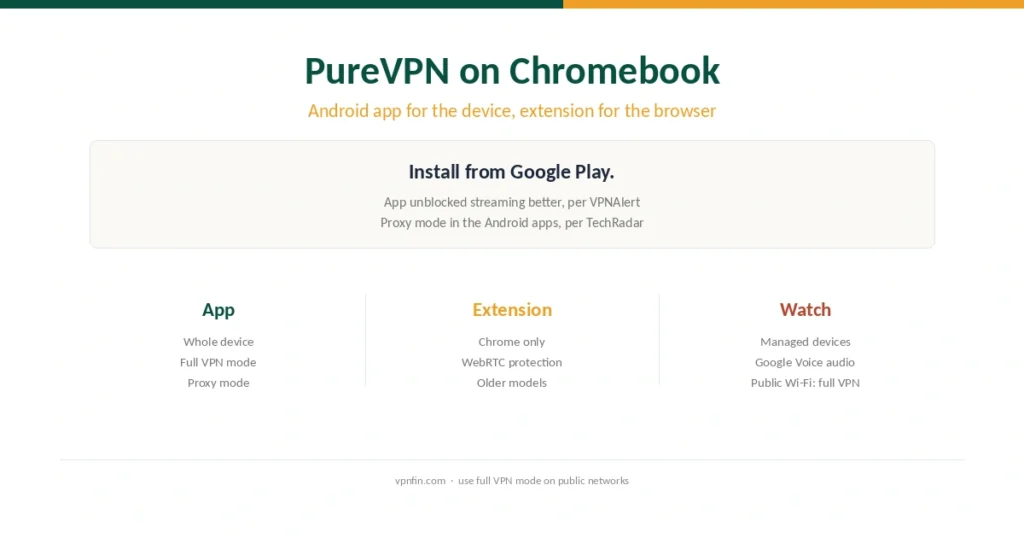
PureVPN’s Android app covers the whole Chromebook; its extension covers only Chrome. Here is the setup, the proxy mode and the known quirks.