
Disclosure: VPNFin is reader-supported. If you buy a VPN through links on this page, we may earn a commission at no extra cost to you. This never affects our ratings — here’s our full disclosure.
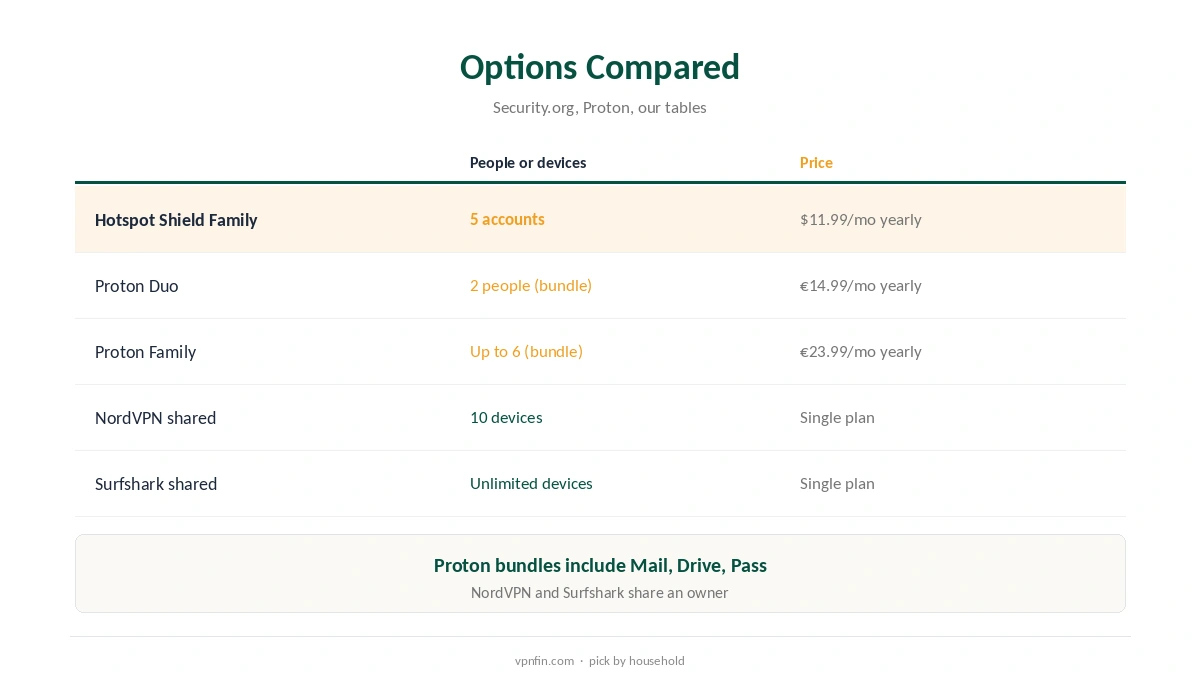
A VPN family plan gives each person their own account under one bill. Hotspot Shield’s Premium Family covers five accounts, each with its own devices, at $19.99 a month or $11.99 a month on a yearly plan, Security.org lists. Proton’s Duo and Family plans cover two and up to six people, but they bundle Proton Mail, Drive, Pass and more with the VPN. Many families simply share one account instead: NordVPN allows 10 devices and Surfshark sets no limit.
This guide compares true family plans with shared accounts and shows how to set one up.
True Family Plans
Hotspot Shield Premium Family gives five separate accounts, at about $143.88 a year on the annual plan, Security.org notes. Proton Family covers up to six people with 3 TB of storage at €23.99 a month on a yearly plan, and Proton Duo two people at €14.99, Proton’s plan page says. Our Hotspot Shield price guide covers its plans.
Sharing One Account
A single account with a high device limit often covers a family more cheaply. NordVPN allows 10 devices, Proton VPN Plus 10 and Surfshark unlimited, our device table records; NordVPN and Surfshark share an owner, Nord Security. Our unlimited devices guide compares them.
Which Suits Your Family
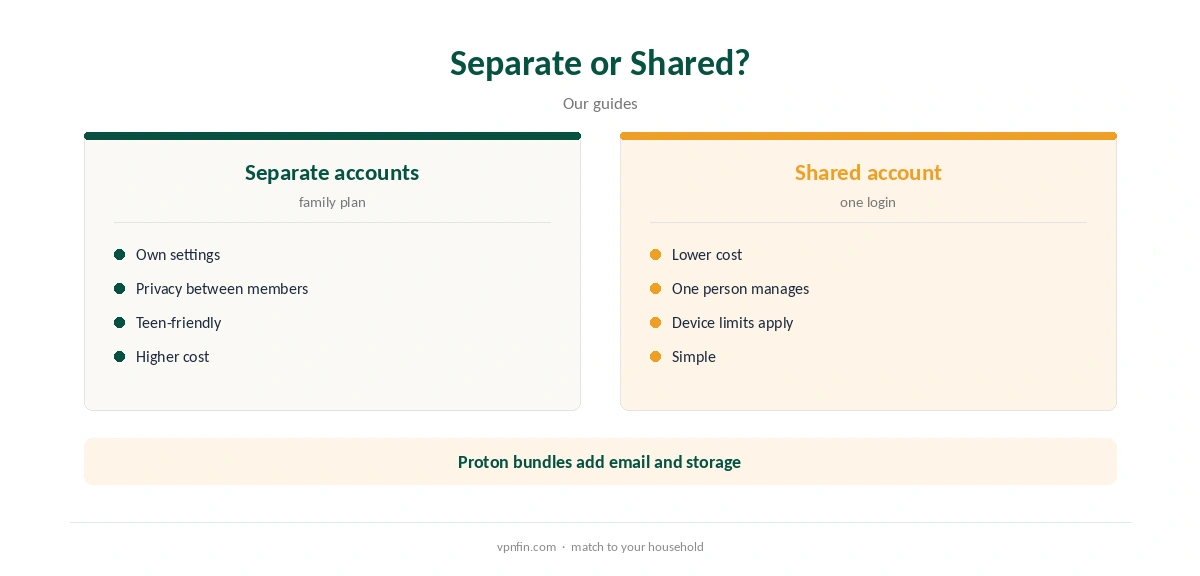
Separate accounts suit families where teenagers manage their own settings or adults want privacy from each other. A shared account suits families where one person sets up every device. Proton’s bundles suit households that want encrypted email and storage too.
VPN Family Plan Setup
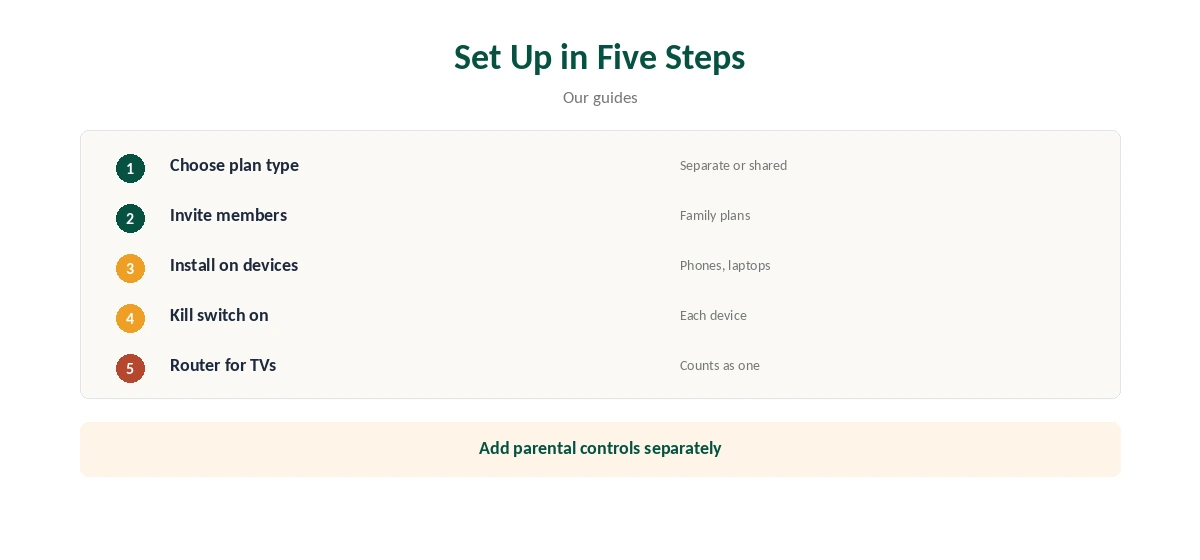
Buy the plan, invite each member by email if the plan uses separate accounts, then install the apps on each device and turn on the kill switch. A router covers TVs and consoles as one device.
Is a VPN Family Plan Worth It?
If several adults each want their own settings and privacy, yes. If one parent manages every device, a single account with enough devices usually costs less. Compare the yearly cost per person before buying.
Cost per Person
Hotspot Shield Family at about $143.88 a year across five accounts works out to under $30 per person, Security.org’s figures show. Proton Family spreads its yearly price across up to six people, and includes more than a VPN.
Device Limits Still Apply
Separate accounts each carry their own device limit. Check that teenagers’ phones, laptops and consoles fit within it, or add a router.
Renewal
Family plans renew at their own prices. Note the renewal line at checkout, as our renewal price guide explains.
VPN Family Plan Alternatives
A router running a VPN covers every device at home as one connection, which can replace a family plan for home use. Phones still need the app when away. Our router setup guide explains the set-up.
Shared Settings
On a shared account, one person’s settings, such as the default server, do not carry to other devices; each app keeps its own. Agree on a kill switch policy for everyone.
Privacy Within the Family
A VPN hides traffic from networks, not from other family members using the same account dashboard. Separate accounts give adults more privacy from each other.
Testing First
Hotspot Shield offers a 45-day refund, our tables record, and Proton 30 days. Test the apps on every family device before the window closes.
Quick Rule
Separate adults with their own needs: a family plan. One person managing every device: a shared account. Whole-home TVs: add a router.
Proton Bundles in Practice
Proton Duo and Family include encrypted email, calendar, storage and a password manager, Proton’s plan page says. If your household would use those, the bundle can replace several subscriptions; if not, it costs more than a VPN alone.
Teenagers’ Phones
Teenagers often switch networks between home, school and friends’ houses. Turn on auto-connect for untrusted Wi-Fi so protection does not depend on remembering.
Shared Streaming
Family members streaming from different countries on one account may trigger service checks. Keep each person on servers in the subscription’s country.
Payment and Ownership
The account holder owns the subscription and sees its billing. On a family plan, members manage their own app settings, but the payer controls renewal.
Several Homes
Check the terms before sharing with relatives in another home. Plans are sold for a household, and shared logins across homes may breach them.
Quick Check
Before buying, list each person, their devices and whether they need their own account, then compare the yearly cost of each option.
Children’s Devices
A VPN does not filter content. Use the device’s own parental controls alongside it, and teach children not to switch the VPN off on public Wi-Fi.
Free Plans for Families
Free plans usually cover one device each. Proton’s free plan has no data cap but one device, so a family would need several free accounts. Our Proton VPN free guide covers it.
How We Research
This page draws on Security.org’s Hotspot Shield pricing, Proton’s plan support page, itechguides on Proton’s bundles and our device table. We cross-checked these sources against each other, and where they conflict or something can’t be verified, we say so in the text rather than guessing. We checked time-sensitive figures, including prices in US dollars, on 8 October 2026. The main source we relied on is Proton’s plan guide. Our full approach lives on the About Us page.
VPN Family Plan FAQ
Hotspot Shield Premium Family and Proton’s Duo and Family bundles.
Five, per Security.org.
No; it bundles Mail, Drive, Pass and more with the VPN.
Yes; NordVPN allows 10 devices and Surfshark sets no limit.
No; use parental controls too.
The Verdict
A VPN family plan suits households wanting separate accounts; a shared account with many devices suits most others. Compare per-person cost before buying.