
Disclosure: VPNFin is reader-supported. If you buy a VPN through links on this page, we may earn a commission at no extra cost to you. This never affects our ratings — here’s our full disclosure.
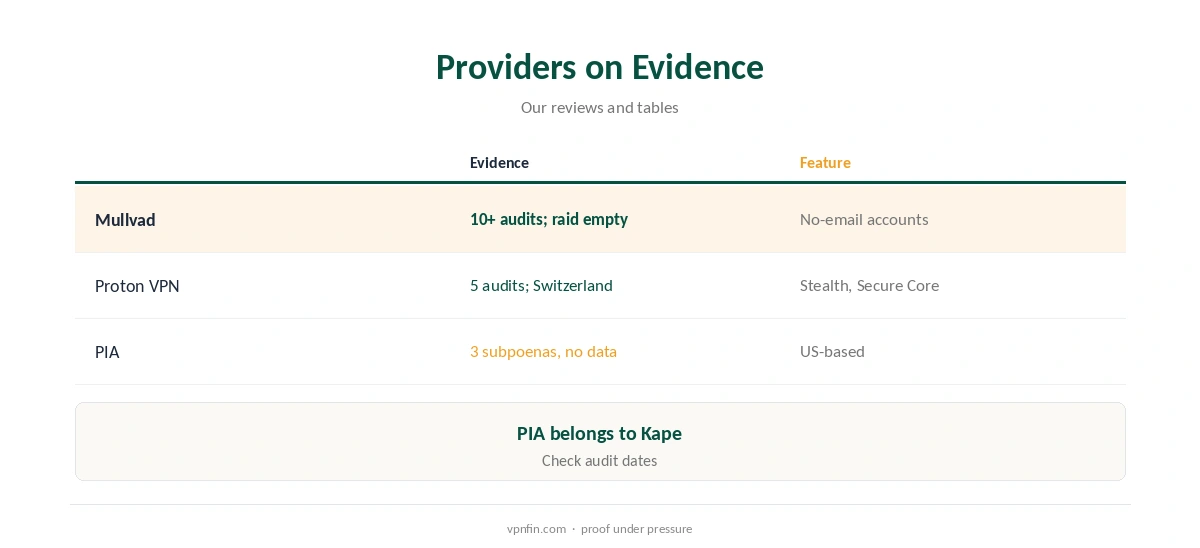
A VPN for journalists must hold up under pressure, so evidence matters more than features. Mullvad has more than 10 audits in our table, accepts anonymous account numbers instead of emails, and saw police leave its office with nothing. Proton VPN, based in Switzerland, has five Securitum audits and offers Stealth for networks that block VPNs. PIA’s no-logs claim survived three federal subpoenas. A VPN still cannot protect a compromised phone or an identified account.
This guide covers what to look for, how to set up and the limits.
Evidence First
Choose providers whose no-logs claims have faced audits or legal tests. Mullvad’s police visit and PIA’s subpoenas are real-world tests, and our VPN audit tracker shows which providers had independent checks.
Anonymity at Sign-Up
Mullvad issues an account number instead of asking for an email and accepts cash by post, our review notes. That keeps your name off the subscription. Our Mullvad review covers its approach.
Restrictive Countries
Obfuscation disguises VPN traffic where networks block it. Proton’s Stealth, NordVPN’s obfuscated servers and Mullvad’s Shadowsocks bridges are examples; our tables record that Mullvad and Proton have held on in Russia with interruptions. Our obfuscation guide explains the methods.
Multi-Hop and Tor
Proton’s Secure Core routes traffic through a privacy-friendly country first, and Proton offers Tor servers, though both slow connections, Proton’s speed guide notes. Our Double VPN guide explains multi-hop.
VPN for Journalists Setup
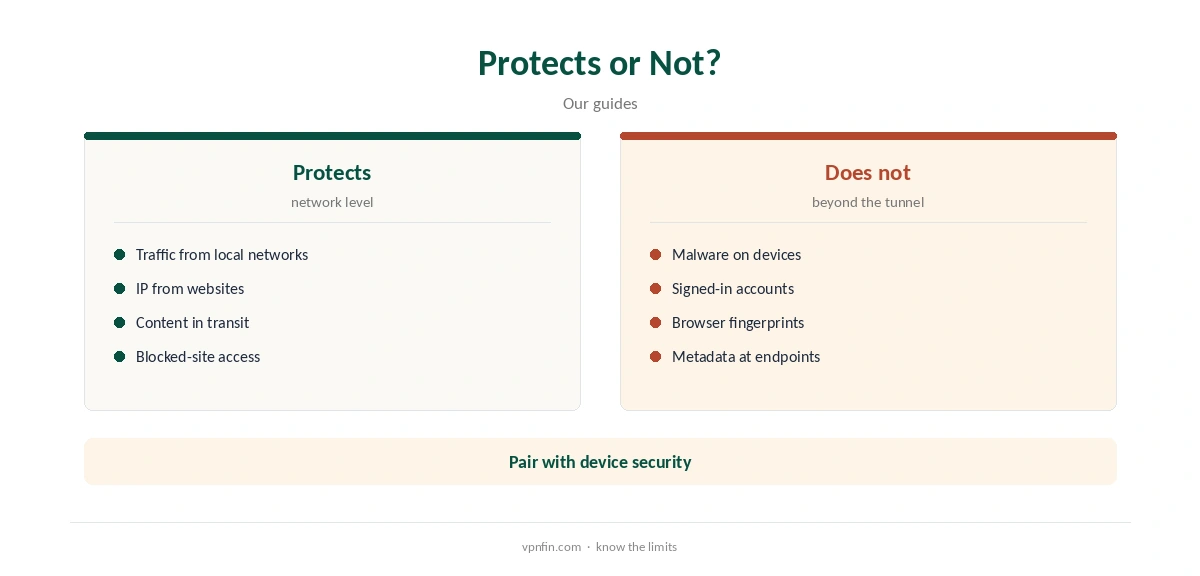
Turn on the kill switch, run DNS and WebRTC leak tests, use a separate browser profile for sensitive research, and sign out of personal accounts during that work. Update apps before travelling.
What a VPN Cannot Hide
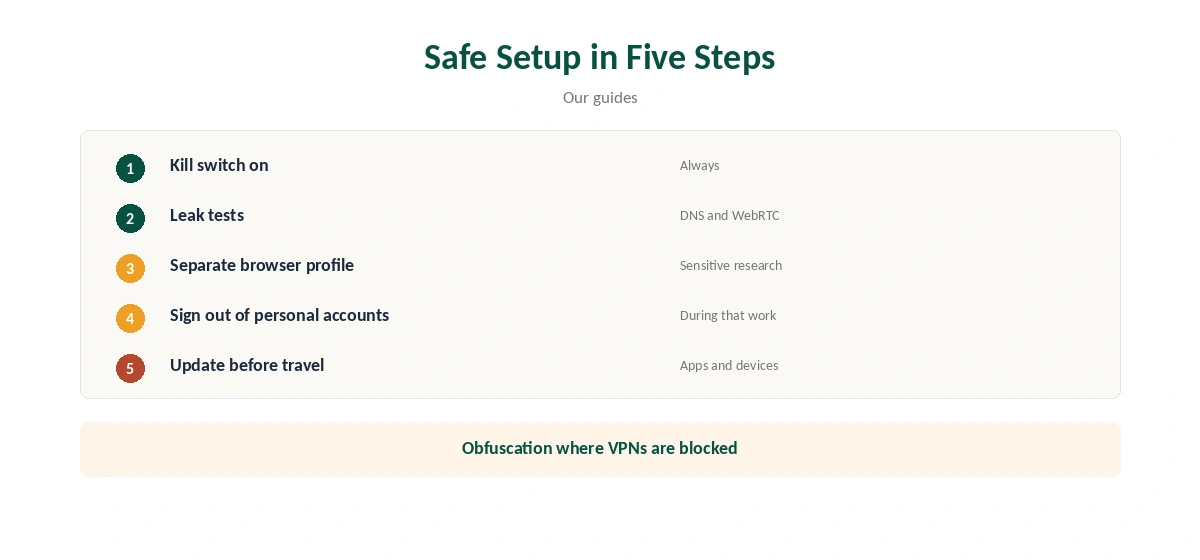
A VPN hides your traffic from local networks, not your identity from accounts you sign in to. Malware on a phone sees everything before encryption. Our guide to whether a VPN can be traced covers the gaps.
Phones Are the Weak Point
Phones carry contacts, messages and location history. A VPN protects traffic, not the device; keep the operating system updated and remove apps you do not use.
Separate Identities
Use separate accounts and browser profiles for reporting and personal life, so a VPN session does not mix the two. Our guide to what a VPN hides explains why accounts still identify you.
Paying Without a Trail
Mullvad accepts cash by post, and AirVPN cryptocurrency. A card payment links your name to the subscription, though not to what you do through it.
Testing Before Travel
Connect from home using the obfuscated protocol you plan to rely on abroad, and confirm it works before you leave.
Is a VPN for Journalists Enough in High-Risk Countries?
No single tool is enough. Combine an audited VPN with device security, encrypted messaging and careful habits, and seek guidance from press-freedom organisations before high-risk assignments.
RAM-Only Servers
Servers that store nothing on disk leave little to seize. Surfshark runs RAM-only servers, Wikipedia notes; it shares an owner, Nord Security, with NordVPN. Check each provider’s server design.
Leak Tests
Run our WebRTC leak guide in the browser you use for research. A leak can reveal your real address even with the tunnel up.
Quick Rule
Audited, legally tested provider; kill switch on; obfuscation ready; separate profiles; devices updated.
Choosing Between Mullvad and Proton
Mullvad leads on anonymous sign-up and a long audit record; Proton adds Secure Core, Tor servers, Stealth and a free plan. Our reviews of both cover each in depth.
Public Wi-Fi at Events
Press rooms and event Wi-Fi put you on a network with strangers. Connect the VPN before signing in to anything there.
Keeping It Updated
Update the VPN app and operating system before assignments, since updates close known flaws.
Free Plans
Proton’s free plan includes Stealth and the kill switch, Toolradar notes, which gives a starting point for journalists on tight budgets, though paid plans add Secure Core.
Several Devices
Protect every device you use for reporting, including tablets, and turn on the kill switch on each.
Support
Check how to reach the provider’s support from a restrictive country before you travel; authorities there may block some sites.
Who Should Read This
Reporters, researchers and fixers working on sensitive stories gain most. Everyday writers on public Wi-Fi need only the basics: a reputable provider and the kill switch.
Backups
Keep a second provider or protocol ready for assignments where one may be blocked. A free Proton account installed in advance costs nothing and gives a fallback with Stealth.
Payments and Renewals
Note the renewal date and price. A lapsed subscription mid-assignment leaves you without protection at the worst moment, so set a reminder.
Local Law
Some countries fine or punish VPN use tied to other acts. Our VPN fines guide lists verified cases; check before travelling.
How We Research
This page draws on our Mullvad, PIA and Proton reviews, our audit tracker, Proton’s speed guide and our Russia and obfuscation tables. We cross-checked these sources against each other, and where they conflict or something can’t be verified, we say so in the text rather than guessing. We checked time-sensitive figures, including prices in US dollars, on 8 October 2026. The main source we relied on is Proton’s speed guide. Our full approach lives on the About Us page.
VPN for Journalists FAQ
Audited providers with legal track records, such as Mullvad or Proton.
With Mullvad, yes; it issues an account number.
Obfuscated protocols help, with interruptions in places like Russia.
No; devices, accounts and habits matter as much.
For high-risk work, yes, accepting slower speeds.
The Verdict
A VPN for journalists should carry audits, a record under legal pressure and the means to get past blocks. Pair it with device security and careful account habits.