
Disclosure: VPNFin is reader-supported. If you buy a VPN through links on this page, we may earn a commission at no extra cost to you. This never affects our ratings — here’s our full disclosure.
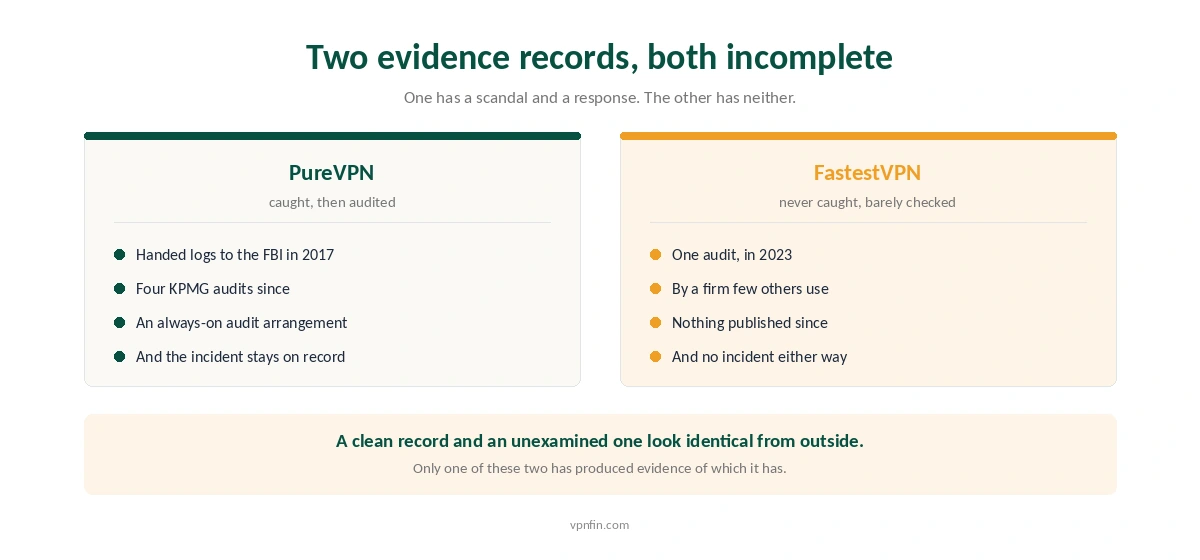
One of these was caught. In 2017 PureVPN handed user logs to the FBI while advertising no logs. Since then it has published four audits.
The other has barely been examined. FastestVPN published one audit, in 2023. Nothing has followed it.
So the choice is between a documented failure with a documented response, and a clean sheet that nobody has checked. Those look identical from outside. But only one of them has produced evidence.
The Short Answer
PureVPN if evidence decides it. Four KPMG audits, an always-on audit arrangement, and ten devices. However, the 2017 incident stays on the record permanently.
FastestVPN if the price decides it. One audit, from a firm few others use, and a jurisdiction outside the intelligence arrangements.
⚠️ And avoid the lifetime plan either way. Our page on those deals explains why. In short, the lifetime in question belongs to the company.
What Happened in 2017
PureVPN provided logs to the FBI. The case involved a cyberstalking investigation. Meanwhile the company’s published policy claimed no logs at all.
Its response was unusual. Instead of denying it, PureVPN commissioned repeated third-party audits. It now operates an always-on arrangement, so the auditor can inspect without notice.
⚠️ That does not undo 2017. But four reports and an open-door arrangement are more than most providers offer — and far more than a policy page alone.
FastestVPN has no such story. No incident, and no audit programme either. Therefore its no-logs claim rests on one report from 2023 and on its privacy policy.
Where the Jurisdictions Sit
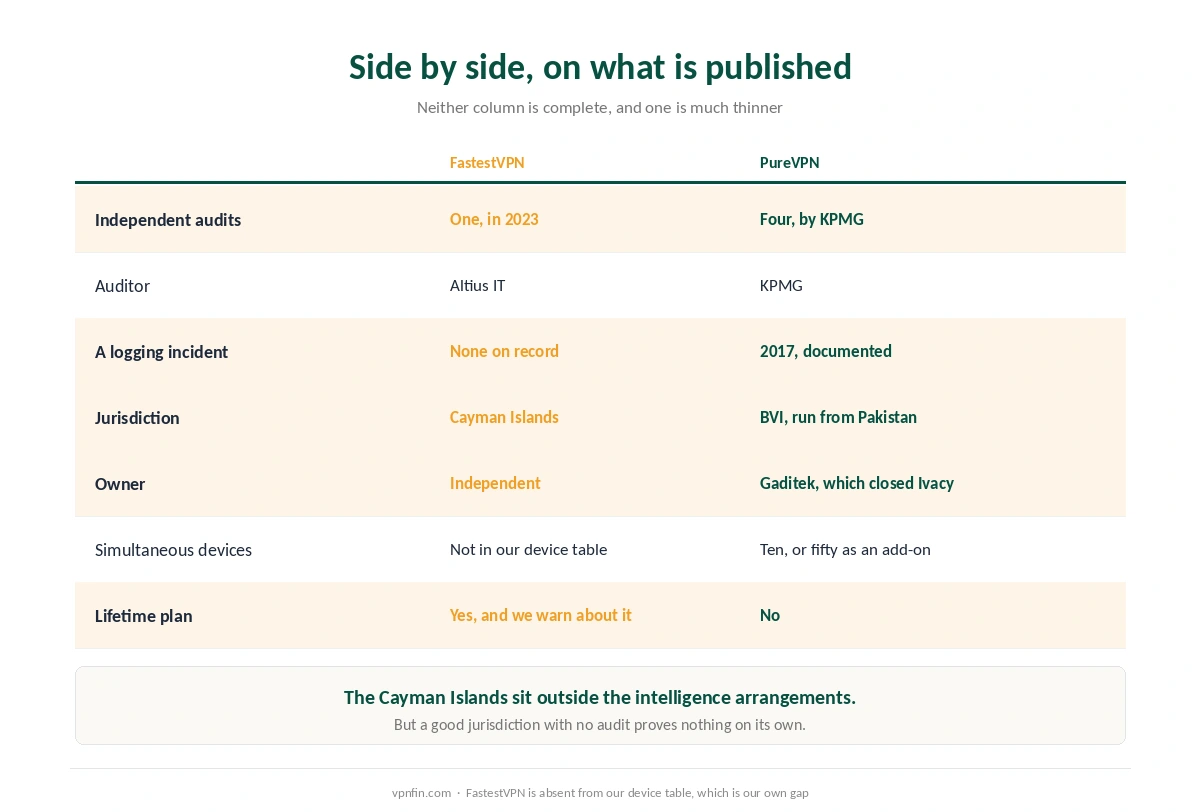
FastestVPN operates from the Cayman Islands. That sits outside the Five, Nine and Fourteen Eyes arrangements, with no retention duty reaching it.
PureVPN is registered in the British Virgin Islands. However, published accounts describe it as operated from Pakistan, which is a different question from where the paperwork lives.
⚠️ A good jurisdiction with no audit proves nothing. That is why our privacy ranking weighs jurisdiction lowest of its five criteria.
Ownership differs too. FastestVPN is independent. PureVPN belongs to Gaditek, which absorbed Ivacy in 2024 after years of denying the two were connected.
The Lifetime Plan Problem
FastestVPN sells one. PureVPN does not. That difference matters more than it looks.
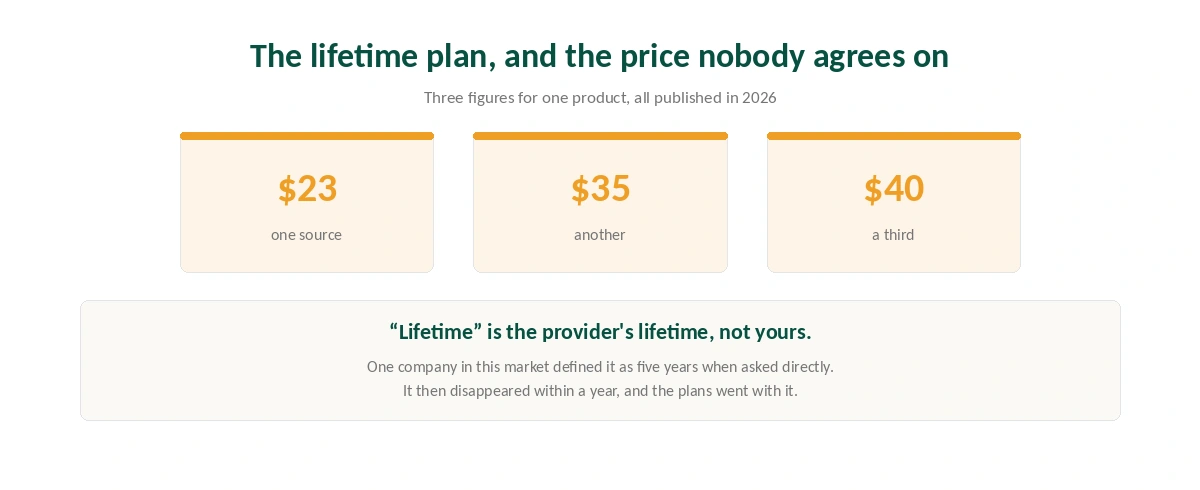
Published prices for it disagree. Sources in 2026 give $23, $35 and $40 for the same product. So the figure you see depends on which page you land on.
⚠️ And the word means the provider’s lifetime, not yours. One company in this market defined it as five years when a customer asked directly. Then it disappeared within a year, and the plans went with it.
That case was Ivacy — now absorbed into PureVPN, the other provider on this page. In other words the cautionary tale and one of the two options share a parent company.
Devices, Features and Price
PureVPN allows ten devices. A paid add-on raises that to fifty. For a household, a router makes either number less decisive.
⚠️ FastestVPN is absent from our device table. So are seven other providers we have reviewed. That is a gap on our side rather than a fact about them.
Both sit in the cheap half of the market. Therefore the renewal is what decides the total — and our renewal table exists for that reason.
Check the refund window before buying either. Thirty days is the minimum everywhere we rank. Besides, cancelling and claiming a refund are two separate actions.
Who Each Is For
PureVPN if you weigh evidence over history. Four audits, an always-on arrangement, and a company that responded to being caught rather than denying it.
FastestVPN if the jurisdiction and the price are the point. Even so, one audit from 2023 is thin, and the lifetime plan is a trap rather than a bargain.
⚠️ Neither belongs in a privacy-first shortlist. Mullvad publishes annually and had its office searched. Proton has five audits and a non-profit owner.
How We Research
Audit counts, auditors, jurisdictions, ownership and device limits come from our own published tables. For the 2017 incident, the always-on audit arrangement and the Gaditek ownership chain, this comparison draws on our reviews of both providers, which name their sources. The three conflicting lifetime prices come from our FastestVPN review, and we give the range rather than choosing. FastestVPN is absent from our device and renewal tables, so some figures that would normally appear here do not. We are saying that instead of estimating. We do not run our own tests. Our method lives on the About Us page.
FastestVPN vs PureVPN FAQ
PureVPN, on published evidence. It has four KPMG audits and an always-on arrangement letting the auditor inspect without notice. FastestVPN has one audit, from 2023, by a firm few other providers use. The 2017 PureVPN incident is real, and so is the response to it.
Yes, in a 2017 cyberstalking case, while its published policy claimed no logs. The company changed its approach afterwards, commissioning four reports and an always-on arrangement. Whether that is enough is a judgement, and the record is public either way.
We advise against it. Published prices for the same plan differ — $23, $35 and $40 across sources in 2026. More importantly, lifetime means the provider’s lifetime. One company in this market defined it as five years, then closed within a year of saying so.
FastestVPN’s, on paper. The Cayman Islands sit outside the intelligence-sharing arrangements, while PureVPN is registered in the British Virgin Islands and reportedly operated from Pakistan. However, a favourable jurisdiction with no audit programme proves very little on its own.
No. FastestVPN is independent. PureVPN belongs to Gaditek, which also owned Ivacy and absorbed it in 2024 after years of denying any connection between the two brands.
The Verdict
One of these failed publicly and then built an audit programme. The other has never failed publicly and has never been examined properly either.
From outside those look the same. But a clean record and an unchecked one are different things. Only one of the two has produced evidence of which it holds.
And skip the lifetime plan. Three prices circulate for it, and the word describes the company’s survival rather than yours.