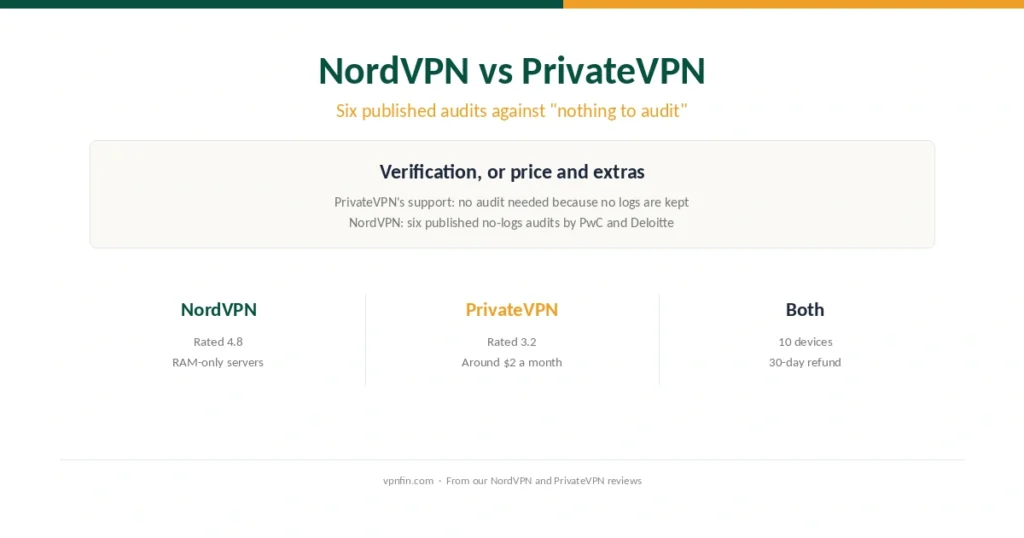
NordVPN vs PrivateVPN (2026): Audited, or “Nothing to Audit”?
PrivateVPN’s support says there is nothing to audit. NordVPN has six published audits. PrivateVPN answers with price, port forwarding and a free dedicated IP.
Head-to-head VPN comparisons that go beyond spec sheets. We line up audit records, independent speed results, features, and pricing side by side — and name a winner for your specific needs.
PrivateVPN’s support says there is nothing to audit. NordVPN has six published audits. PrivateVPN answers with price, port forwarding and a free dedicated IP.
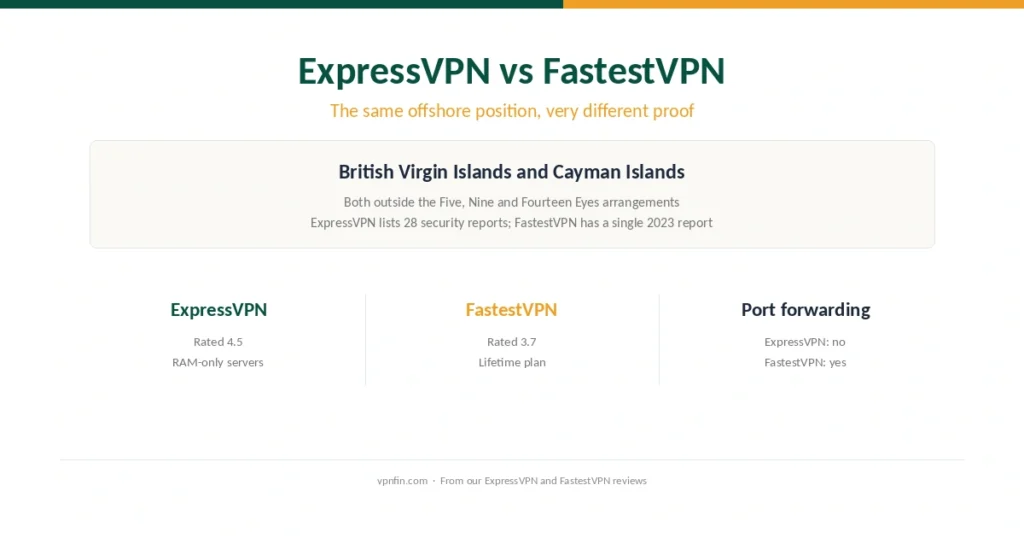
Both sit in British overseas territories outside the intelligence alliances. One lists 28 security reports; the other sells a lifetime plan.
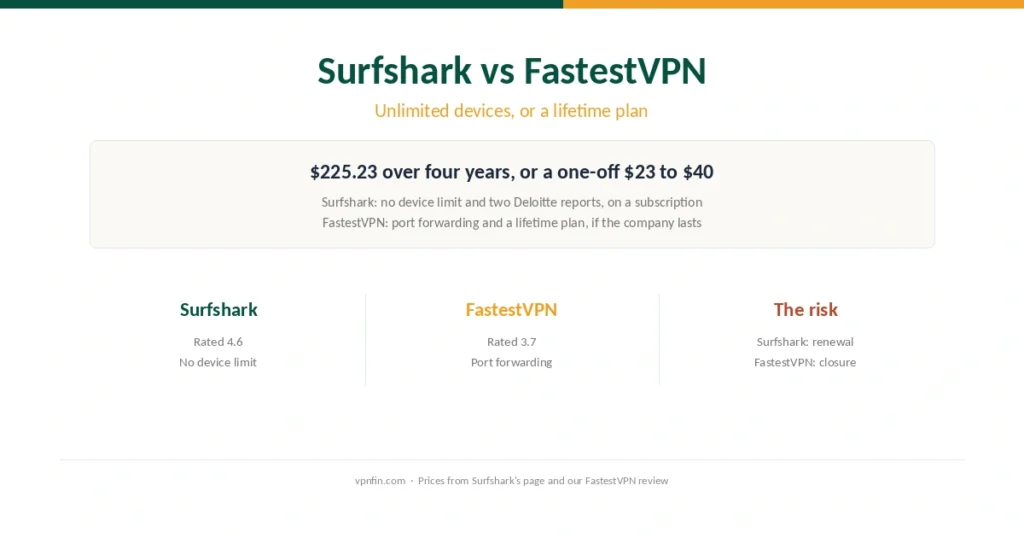
Surfshark offers unlimited devices and two Deloitte reports on a subscription. FastestVPN offers a lifetime plan and port forwarding, if the company lasts.
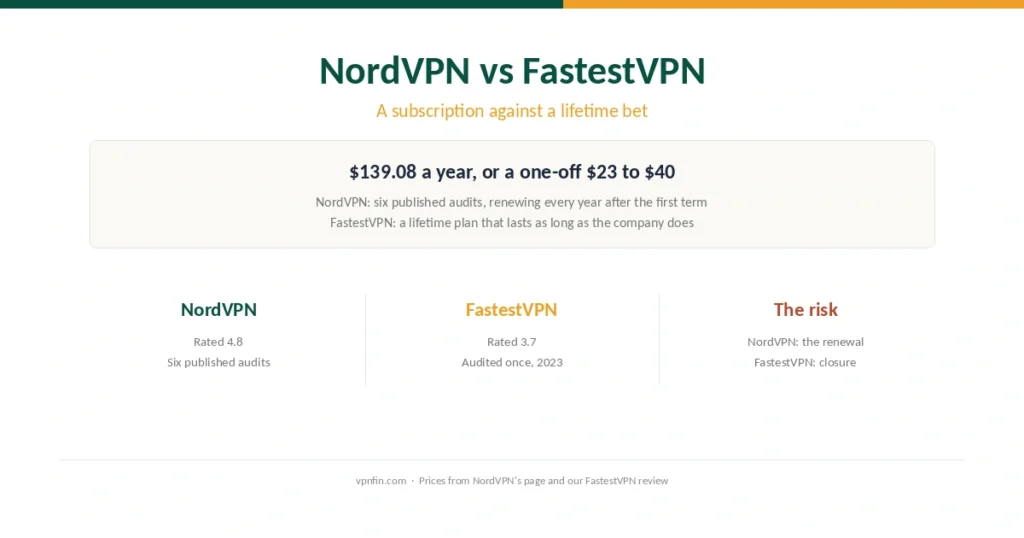
NordVPN charges $139.08 a year after its first term, with six published audits behind it. FastestVPN sells a lifetime plan that lasts as long as the company does.
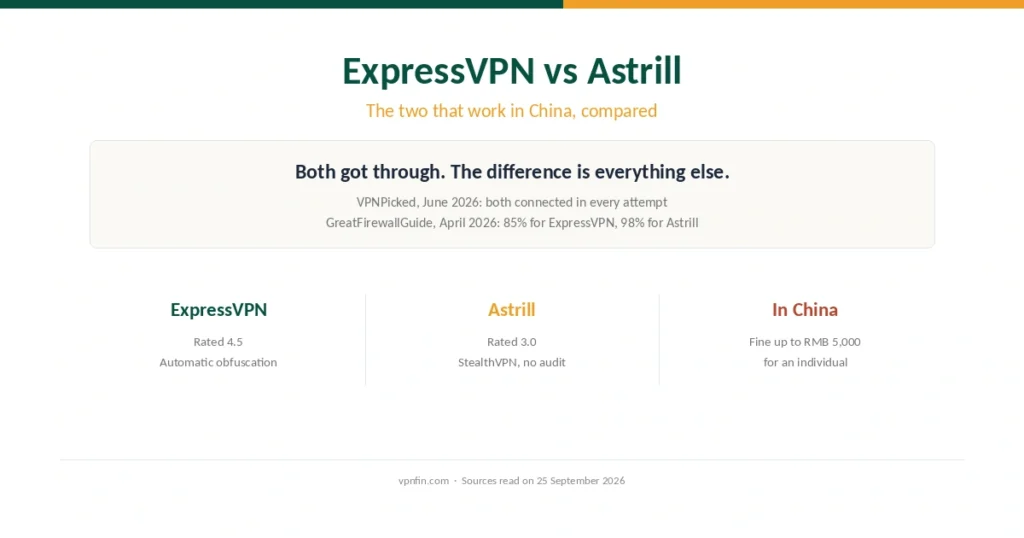
Both connected in every attempt in a June 2026 China retest. ExpressVPN is automatic, audited and cheaper; Astrill leads on reliability at four times the price.
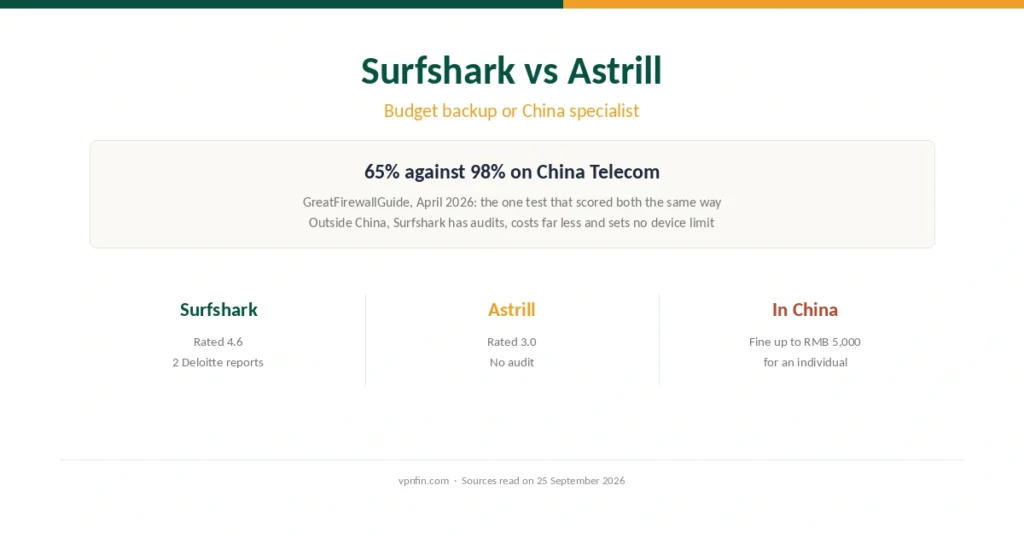
One China test scored Astrill at 98% and Surfshark at 65%. Outside China, Surfshark has audits, costs far less and sets no device limit. How to choose.
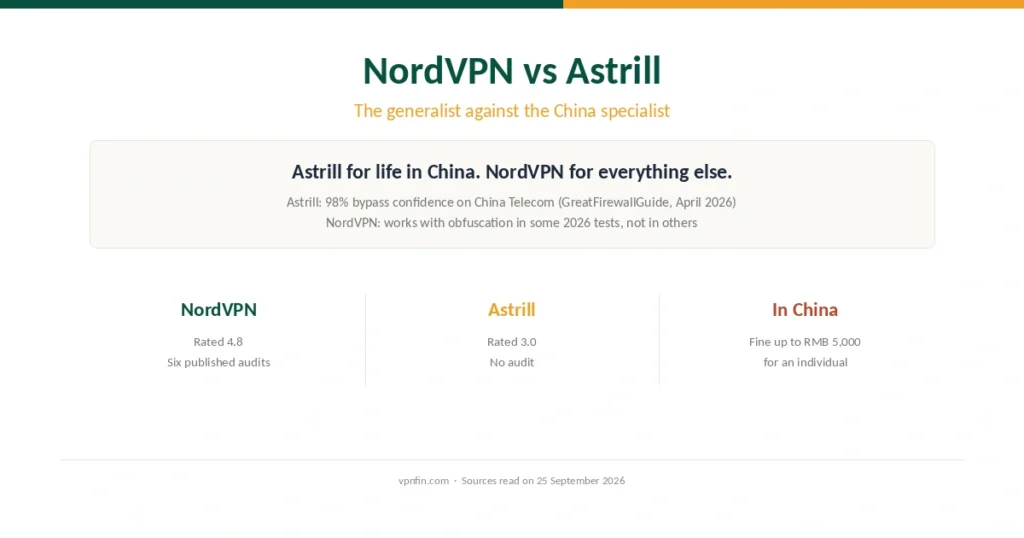
Astrill has the stronger China record; NordVPN has the audits, the streaming and the lower price. What 2026 tests found, and which one fits your trip.
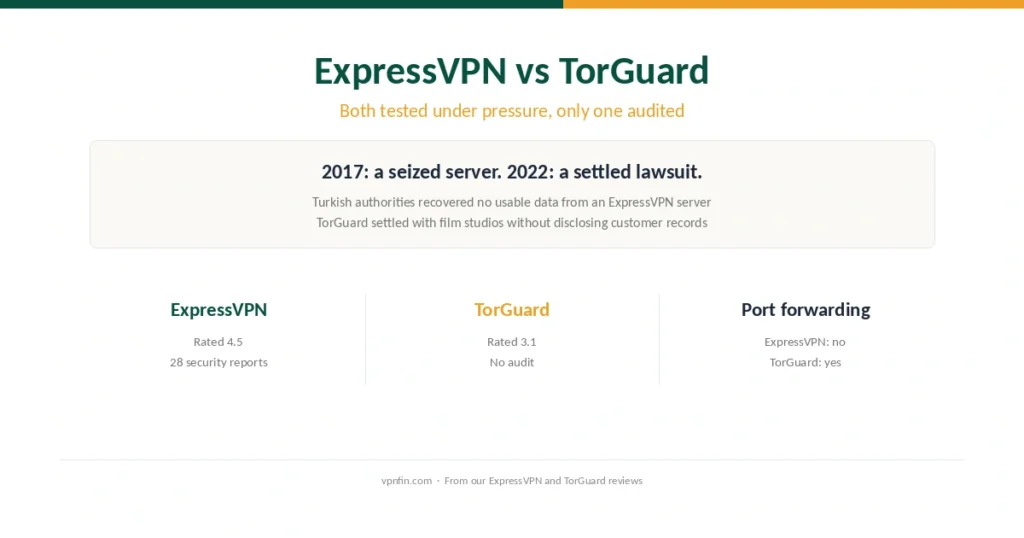
Both have been tested under pressure: a seized ExpressVPN server in 2017, a settled TorGuard lawsuit in 2022. Only one also has audits. How they compare.
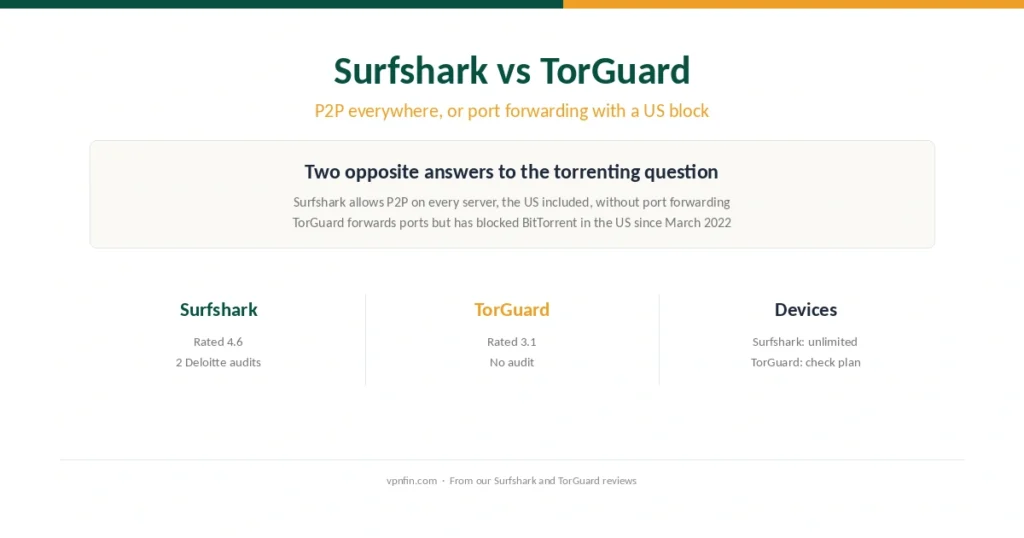
Surfshark allows P2P everywhere but has no port forwarding. TorGuard forwards ports but blocks BitTorrent in the US. How they compare on audits, price and devices.
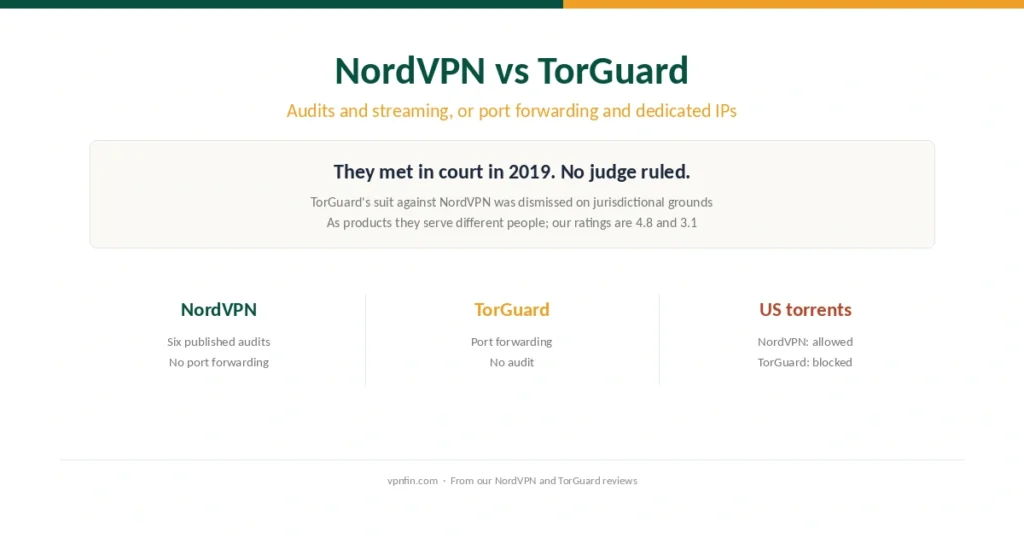
NordVPN has six published audits but no port forwarding. TorGuard forwards ports, has no audit, and blocks BitTorrent on US servers. They also once met in court.