
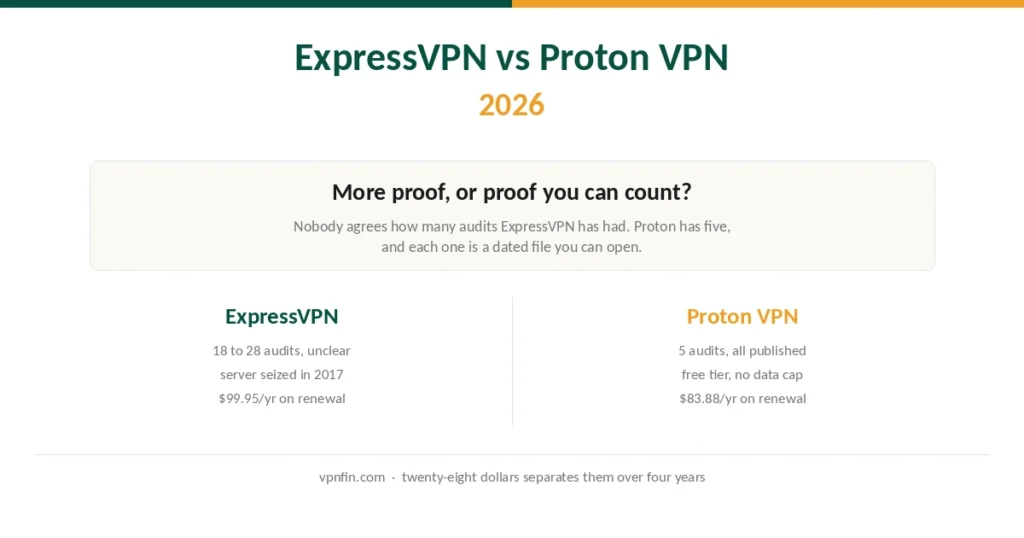
ExpressVPN vs Proton VPN (2026): The Audit Record Nobody Can Count
Sources credit ExpressVPN with anywhere from 18 to 28 audits. Proton VPN has five, and you can count them, because each one is a file you can open.
Head-to-head VPN comparisons that go beyond spec sheets. We line up audit records, independent speed results, features, and pricing side by side — and name a winner for your specific needs.
Sources credit ExpressVPN with anywhere from 18 to 28 audits. Proton VPN has five, and you can count them, because each one is a file you can open.
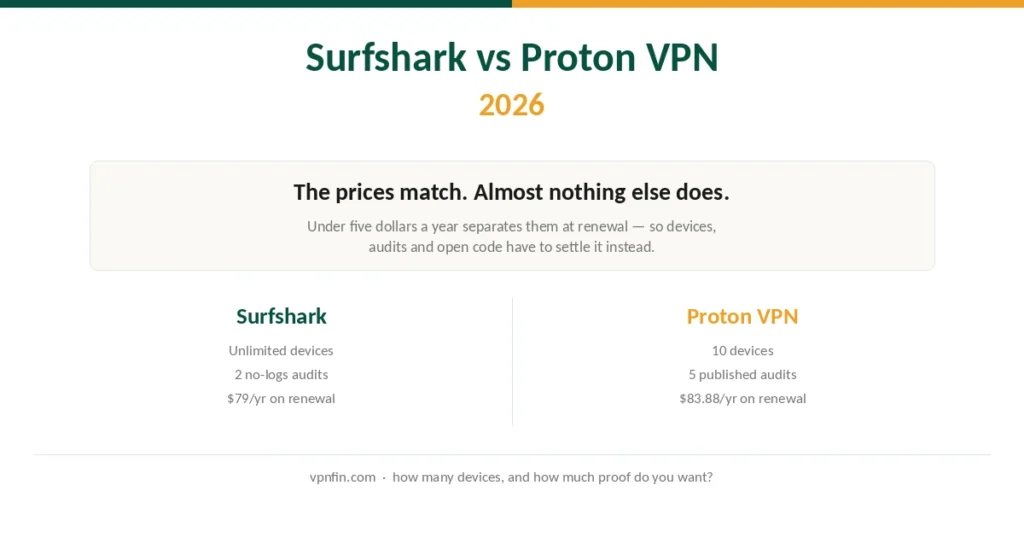
Their renewal prices differ by under $5 a year. What actually separates them is unlimited devices on one side and five published audits on the other.
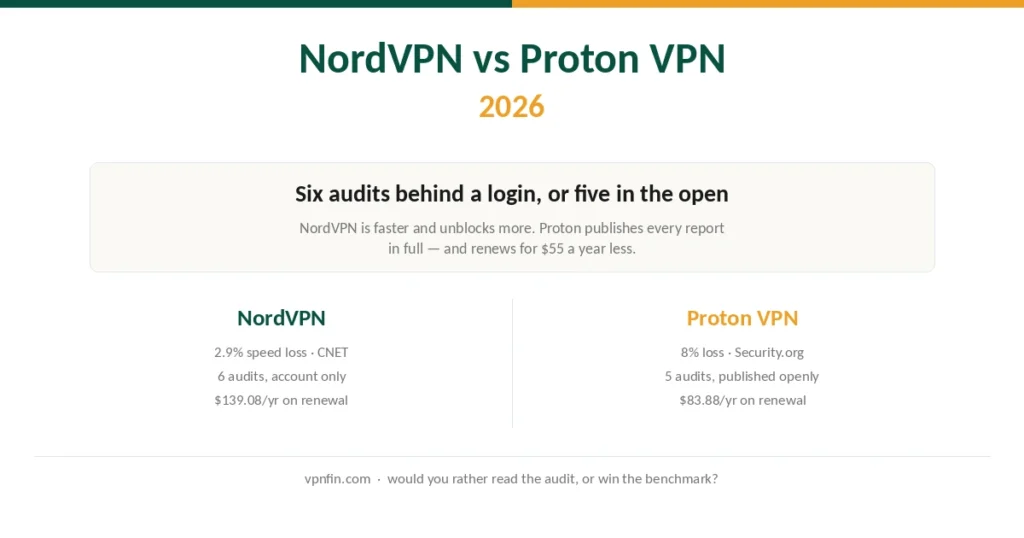
NordVPN is faster and unblocks more. Proton VPN publishes every audit report in full, includes a free tier, and renews for $55 a year less.
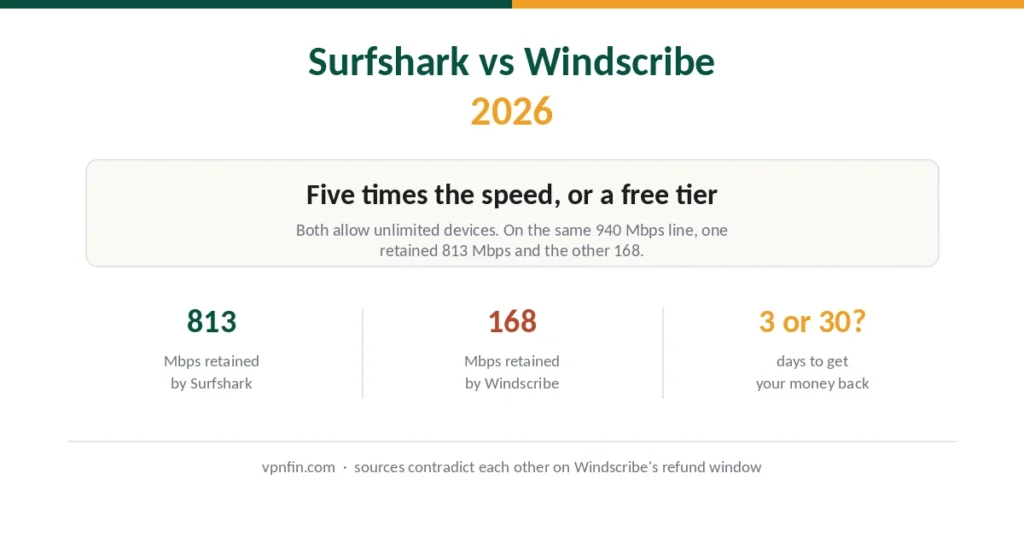
Both allow unlimited devices. One measured nearly five times the download speed of the other. And sources disagree sharply on Windscribe’s refund window.
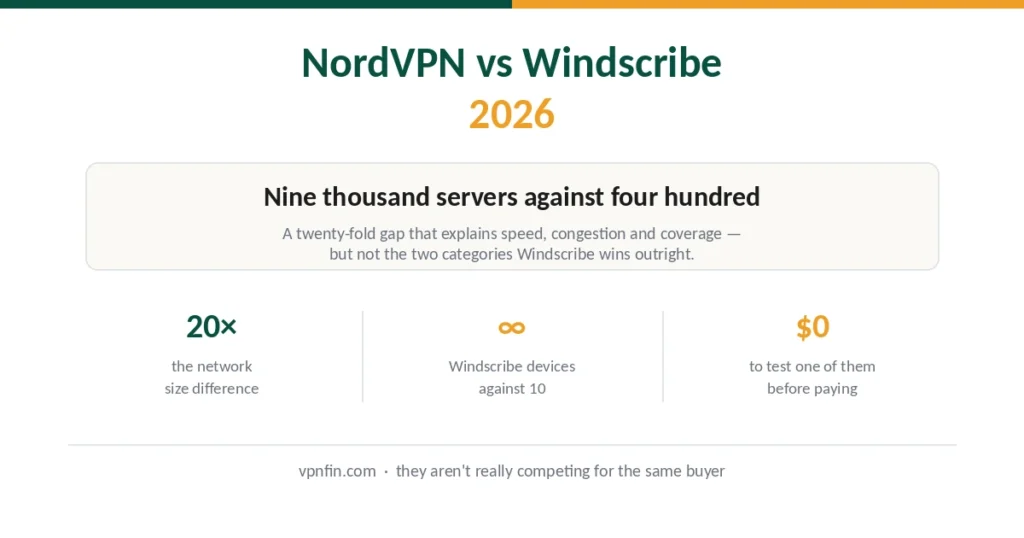
NordVPN runs 9,300 servers. Windscribe runs 480. That gap explains most of this comparison — but not the part where Windscribe wins.
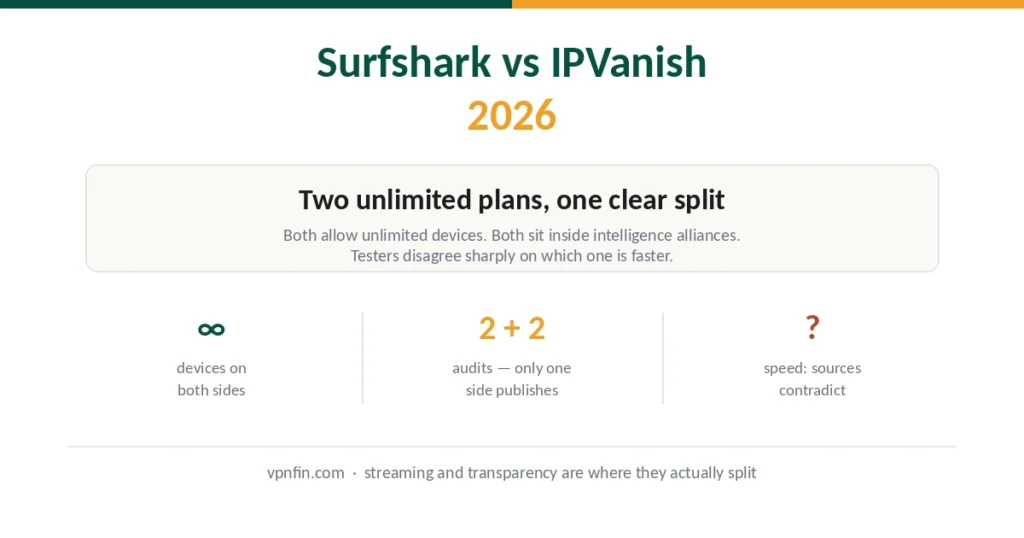
Both give you unlimited devices. Both are based inside intelligence-sharing alliances. Where they split is streaming, transparency — and a speed result nobody agrees on.
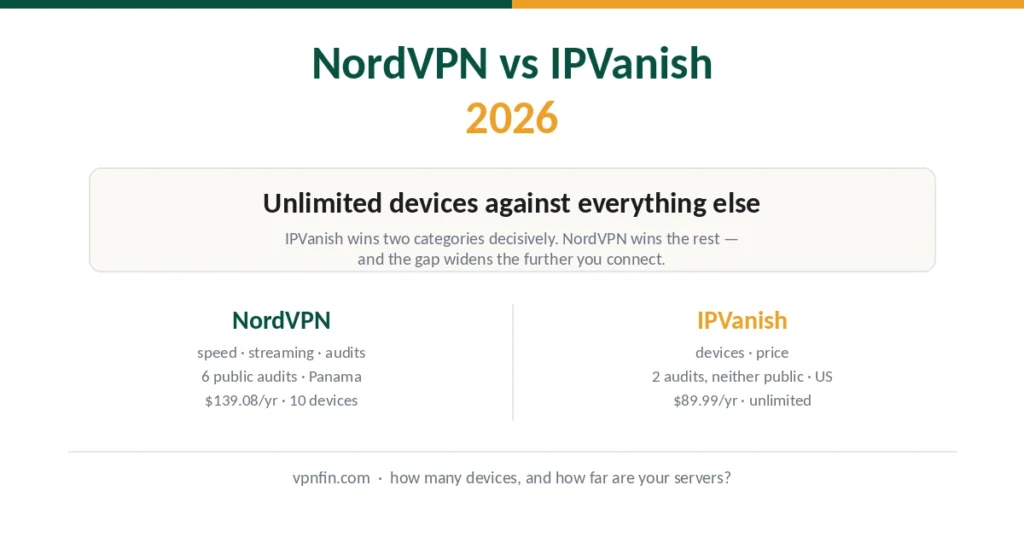
IPVanish gives you unlimited devices for less money. NordVPN wins nearly every other category — and the gap widens the further you connect.
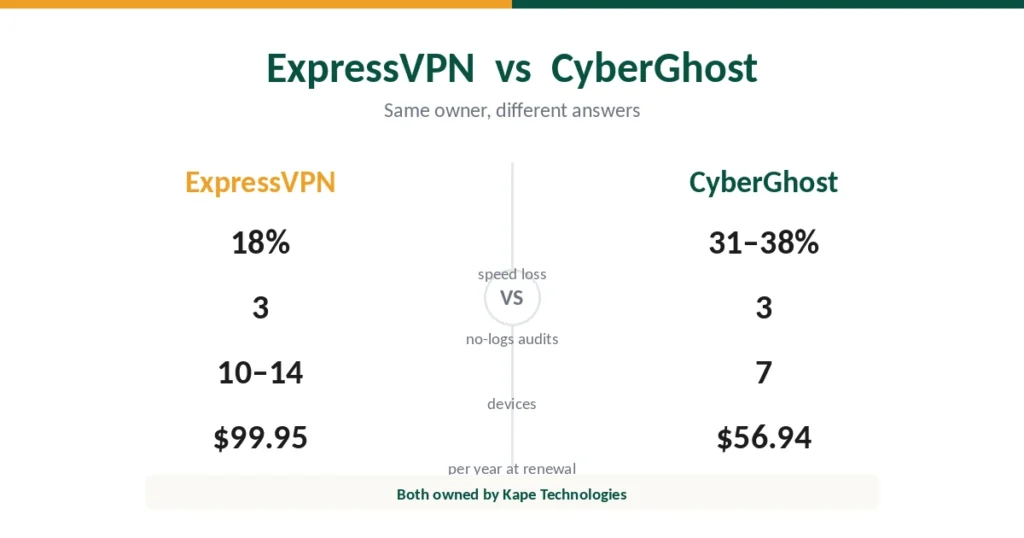
Two brands, one owner. ExpressVPN costs $43 more a year and loses half as much speed. CyberGhost gives you 45 days to decide and a trial that needs no card.
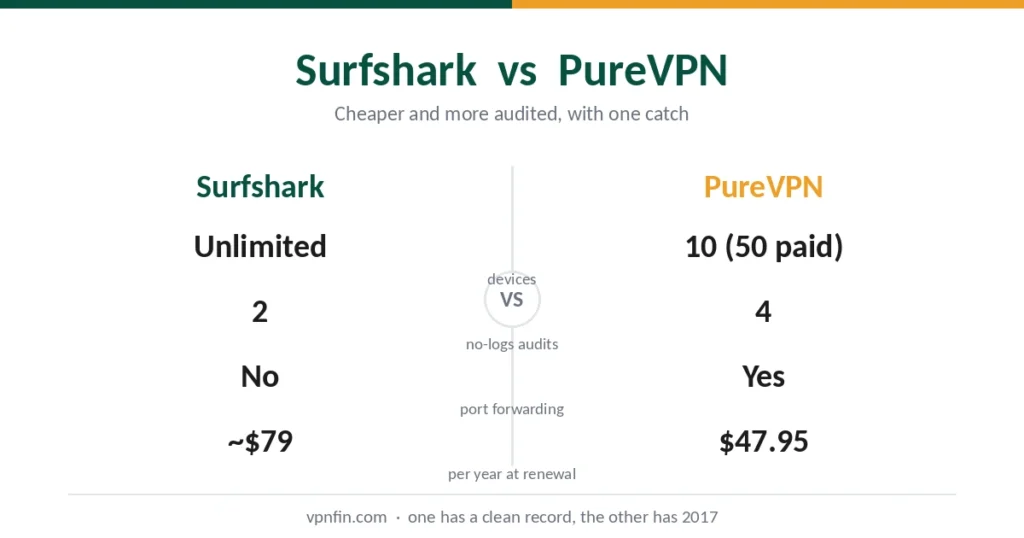
PureVPN costs $31 less a year, has twice the no-logs audits and the only port forwarding here. Surfshark has unlimited devices and nothing in its history requiring explanation.
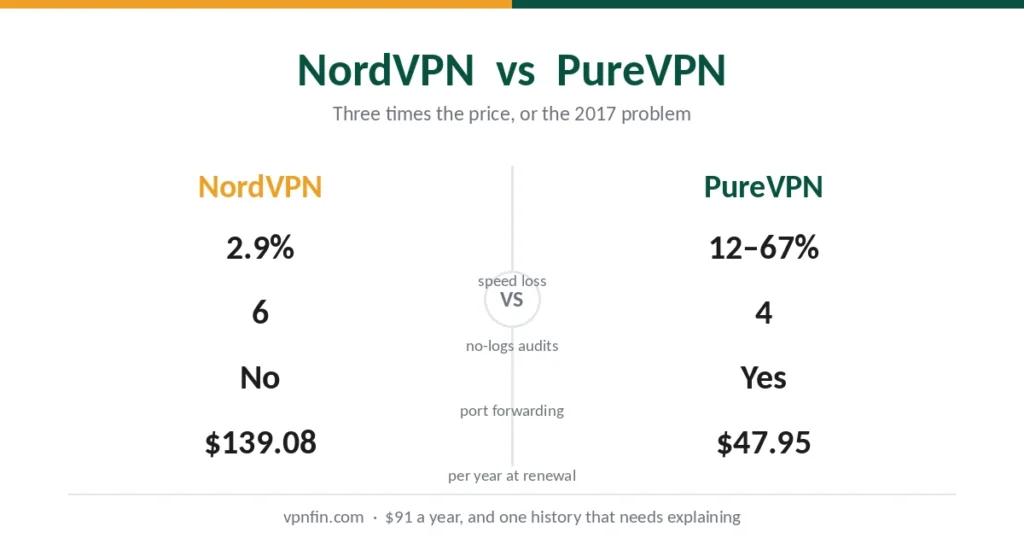
NordVPN costs three times more at renewal and delivers speeds PureVPN can’t match consistently. PureVPN has port forwarding, an unannounced-audit programme, and a logging incident on the record.