
Disclosure: VPNFin is reader-supported. If you buy a VPN through links on this page, we may earn a commission at no extra cost to you. This never affects our ratings — here’s our full disclosure.
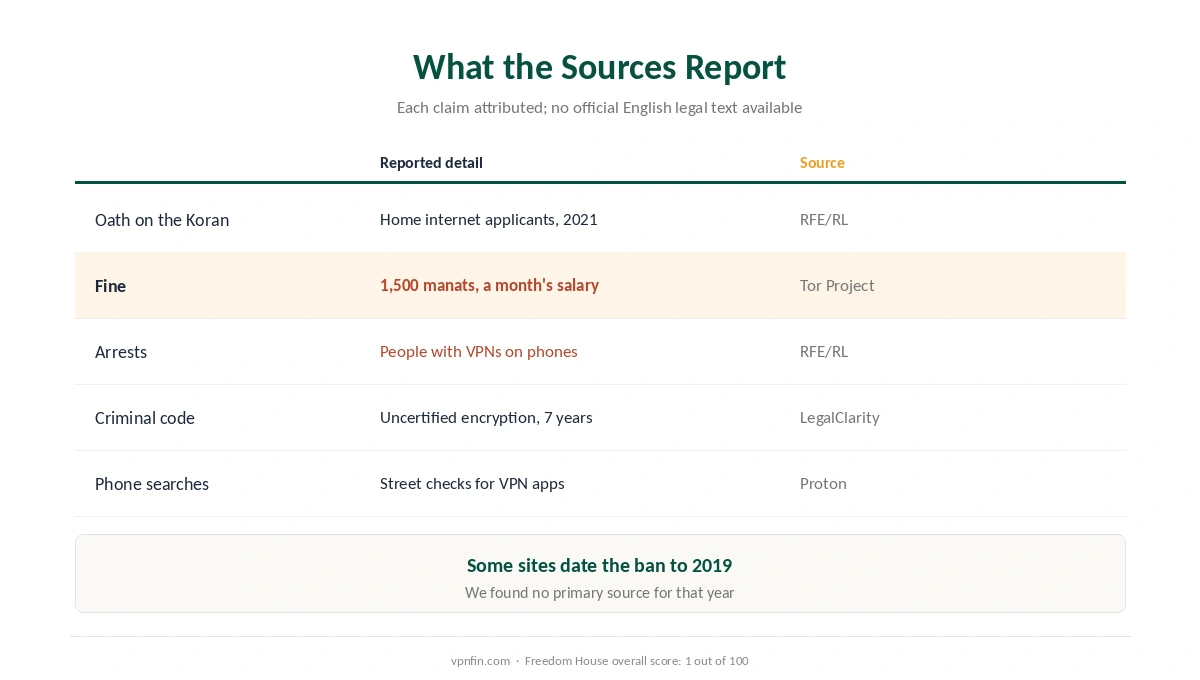
Is a VPN legal in Turkmenistan? No. Using a VPN is illegal and enforced. In 2021 people applying for home internet were made to swear on the Koran that they would not use VPNs, RFE/RL reported, and the Tor Project puts the fine for using one at 1,500 manats, about a month’s average salary. The authorities have also arrested people for installing VPNs on their phones, RFE/RL reported.
Yet VPNs remain widely used, and by 2025 a grey market had emerged in which access was sold at high prices, reportedly with the involvement of the officials meant to stop it. This page sets out what the sources report. It does not give advice on using a VPN there.
Is a VPN Legal in Turkmenistan? The Short Answer
No. VPNs are illegal, and the penalties reported range from fines to prosecution. Turkmenistan scores 1 out of 100 in Freedom House’s overall freedom rating, the Tor Project notes.
The legal basis is broad. LegalClarity reports that the criminal code prohibits uncertified encryption programs, with up to seven years in prison, and no commercial VPN holds certification. We could not verify the article text in an official English source.
Visitors are not exempt. Reports of phone searches in the street, noted by Proton, apply to anyone. If you are travelling there, take local legal advice.
What the Sources Report
| Measure | Reported detail | Source |
|---|---|---|
| Oath on the Koran | Required from home internet applicants in 2021 | RFE/RL |
| Fine for VPN use | 1,500 manats, about a month’s salary | Tor Project |
| Arrests | People who installed VPNs on phones | RFE/RL |
| Criminal code | Uncertified encryption: up to seven years | LegalClarity |
| Phone searches | Street checks for VPN apps | Proton |
Sources disagree on when the ban began. Some VPN sites date it to 2019; we found no primary source confirming that year, so we do not rely on it.
Blocking is sweeping. The authorities have long blocked Facebook, YouTube, Twitter and VPN provider sites, RFE/RL reported. The Tor Project describes repeated waves of blocking large ranges of addresses.
Is a VPN Legal in Turkmenistan if Bought From Officials?
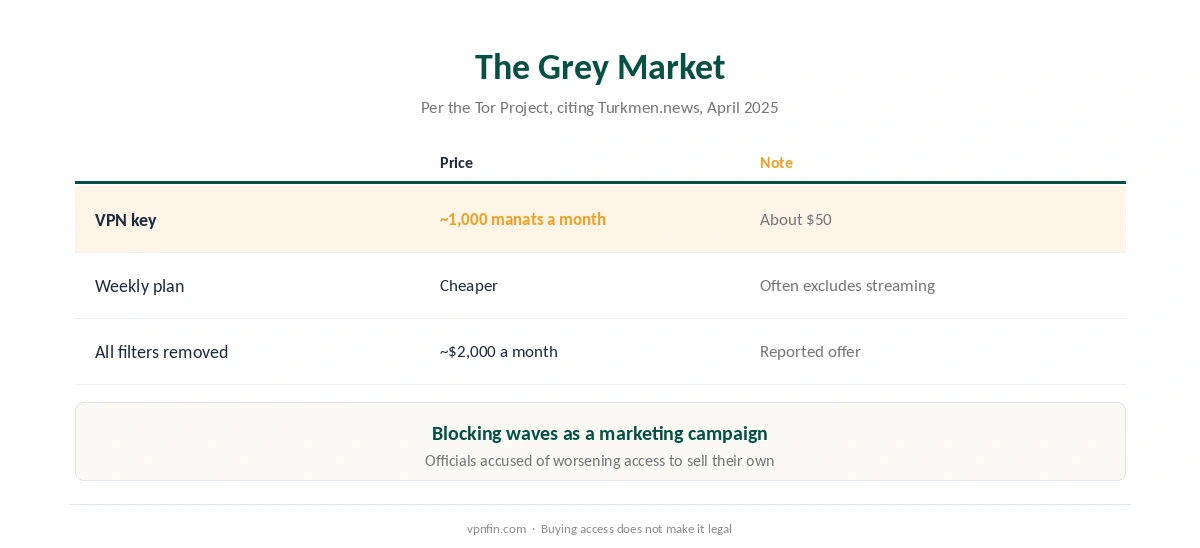
Is a VPN legal in Turkmenistan when bought on the grey market? No, and censorship became a business. By April 2025, VPN keys were being sold for about 1,000 manats a month, and for about $2,000 a month buyers could have all filters removed, the Tor Project reported, citing Turkmen.news.
Reports accuse officials of running it. Turkmen.news described the blocking waves as a kind of marketing campaign by cybersecurity officials, worsening the internet to raise demand for their own services, according to the Tor Project.
The risk falls on buyers. Paying for grey-market access does not make it legal, and buyers have no way to know who controls the connection. Our guide to what a VPN hides explains why the operator’s trustworthiness matters, and our no-logs guide why logging policies do.
How Turkmenistan Compares
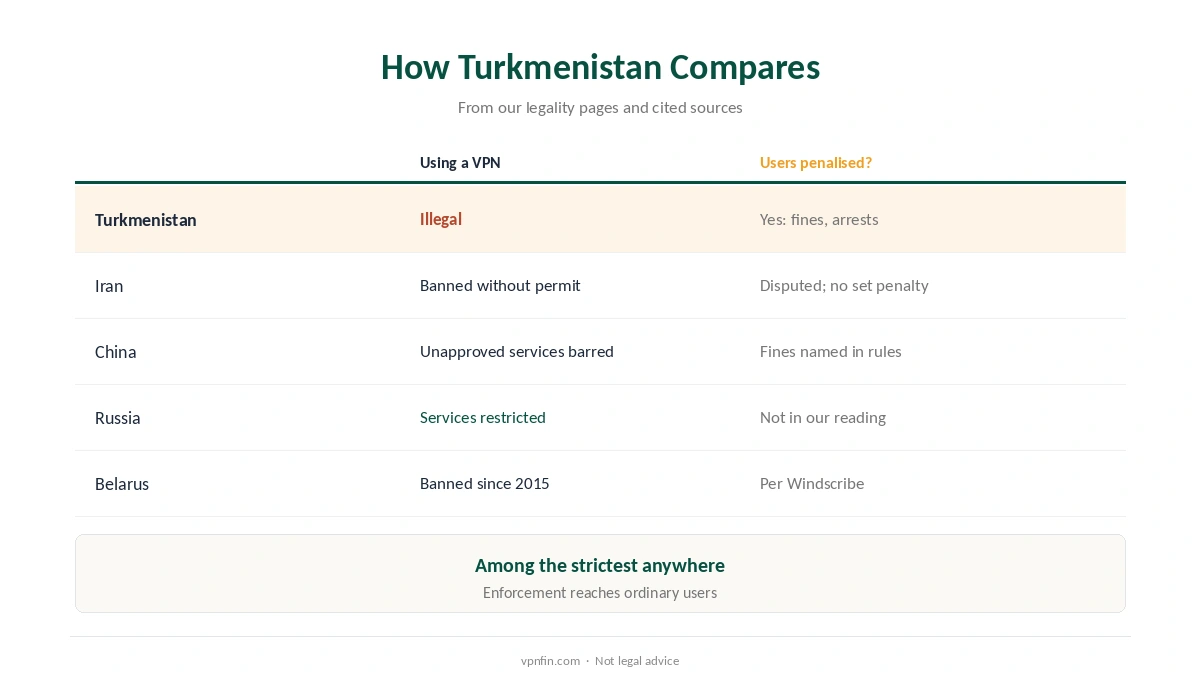
It is among the strictest anywhere. The Tor Project, whose network differs from a VPN, has tracked Turkmen blocking closely. Iran bans VPN use without a permit, and China restricts unapproved services.
Elsewhere the tool is often tolerated: the UAE punishes misuse rather than VPNs, and Pakistan relies on registration. Russia blocks services but does not penalise users, in our reading, as our Russia page explains. So is a VPN legal in Turkmenistan by comparison? No; it is one of the few countries where sources report fines for ordinary users.
For travellers, our travel guide covers restricted destinations, and our country-by-country guide compares every country.
The contrast next door: in Kazakhstan VPN use is legal, as our VPN for Kazakhstan guide explains.
How We Research
The oath, arrests and blocking come from RFE/RL’s reporting, the fine and grey market from the Tor Project’s 2025 analysis citing Turkmen.news, the criminal code provision from LegalClarity, and the phone searches from Proton. Turkmenistan’s legislation was not available to us in an official English text, so each legal claim carries its source. This is not legal advice; we are not lawyers. We name each source where used; all were read on 27 September 2026. Our full approach lives on the About Us page.
Turkmenistan VPN Legality FAQ
No. VPNs are illegal, and users have faced fines, arrests and forced oaths not to use them.
The Tor Project puts it at 1,500 manats, about an average monthly salary. LegalClarity reports up to seven years in prison under a criminal code provision on uncertified encryption.
Yes. In 2021, RFE/RL reported that officials made people applying for home internet swear on the Koran that they would not use VPNs.
The ban applies to everyone, and Proton notes reports of phone searches. Take local legal advice before travelling.
Blocking is so extensive that much of the internet is unreachable. A grey market, reportedly involving officials, sells access at high prices.
The Verdict
A VPN is not legal in Turkmenistan, and enforcement reaches ordinary users.
The sources describe fines, arrests, oaths and a grey market run for profit. Anyone travelling there should take local legal advice first.