
Disclosure: VPNFin is reader-supported. If you buy a VPN through links on this page, we may earn a commission at no extra cost to you. This never affects our ratings — here’s our full disclosure.
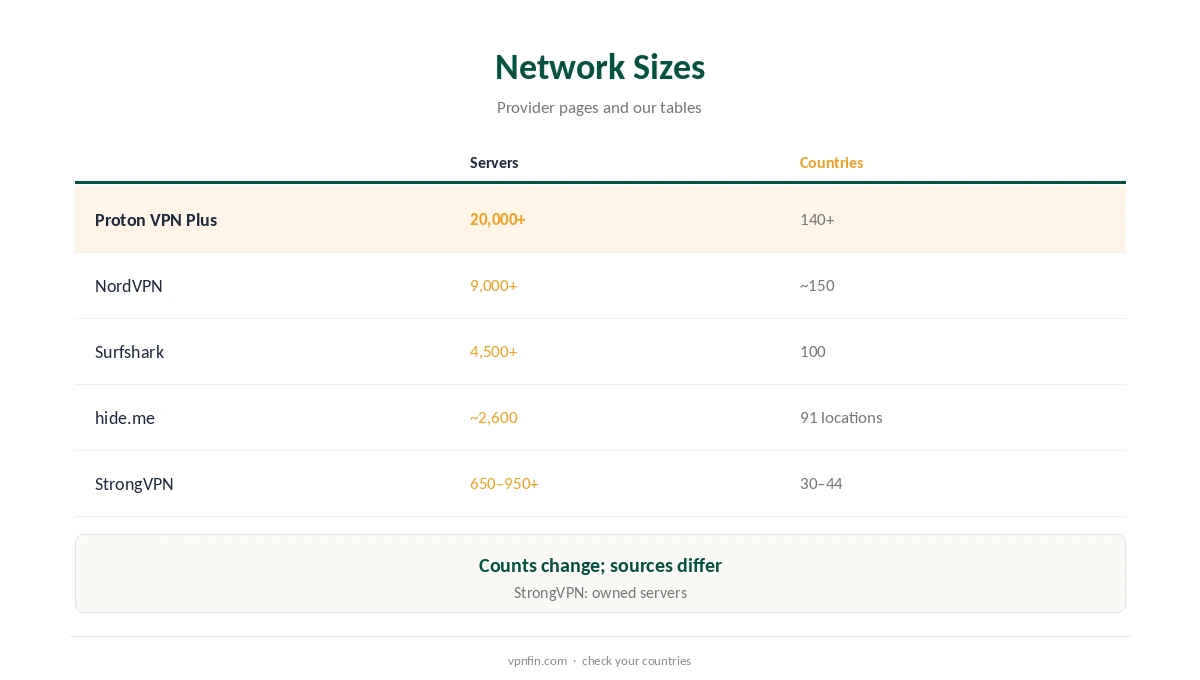
VPN servers are where your encrypted traffic exits to the internet, and their number, location and setup shape speed and privacy. Counts vary widely. NordVPN lists over 9,000 servers in nearly 150 countries, and Proton VPN 20,000+ in 140+ countries on paid plans. StrongVPN runs 650 to 950+ owned servers in 30 to 44 countries, depending on the source. More servers do not always mean better; how they are run matters as much.
This guide covers counts, virtual locations, RAM-only servers, specialty servers and how to pick one.
How Many VPN Servers Is Enough?
For most users, enough servers in the countries you need, with low load, matters more than the headline total. Proton shows each server’s load in its apps; its blog names distance as the biggest speed factor and load as the next.
Virtual Locations
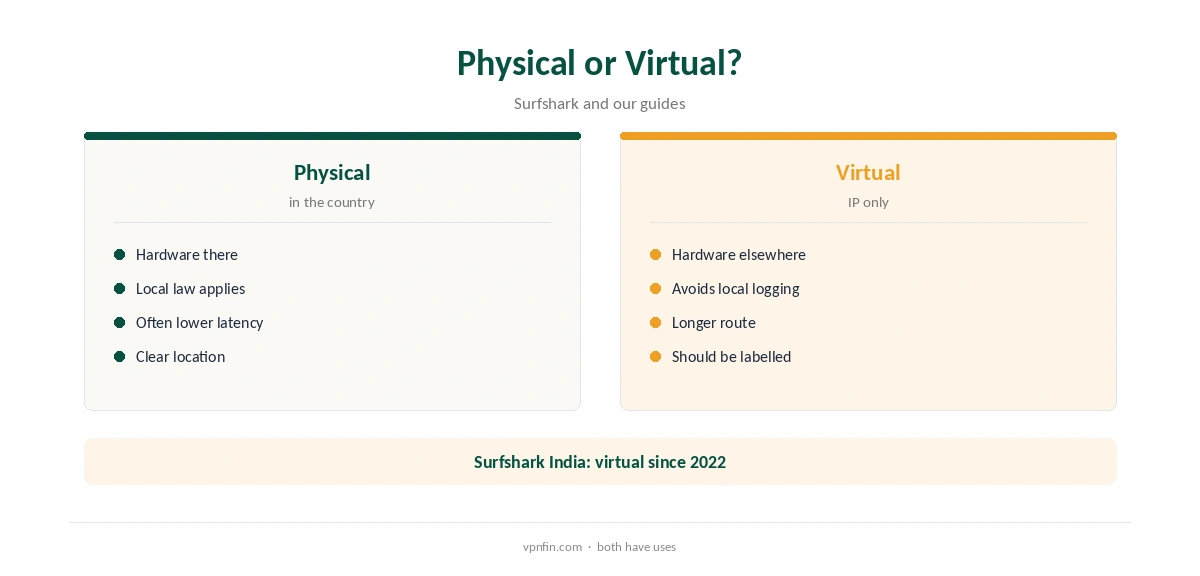
A virtual location gives an IP address from one country while the hardware sits elsewhere. Surfshark’s Indian addresses, for example, run from servers in Singapore, the Netherlands and London since India’s 2022 CERT-In rules, its blog explains. Our Surfshark India guide covers that case.
RAM-Only and Owned Servers
RAM-only servers keep nothing on disk, so a seized server holds no stored data; Surfshark runs its network this way, Wikipedia notes; Surfshark shares an owner, Nord Security, with NordVPN. Some providers own their servers rather than renting. Fahimai says StrongVPN owns physical servers, and our review records hide.me’s as self-managed.
Specialty Servers
Providers add servers for specific jobs. P2P servers suit torrenting and obfuscated servers suit networks that block VPNs. Multi-hop servers, such as Proton’s Secure Core or NordVPN’s Double VPN, route through two locations. Multi-hop adds latency, Proton notes. Our Double VPN guide explains multi-hop.
Picking a Server
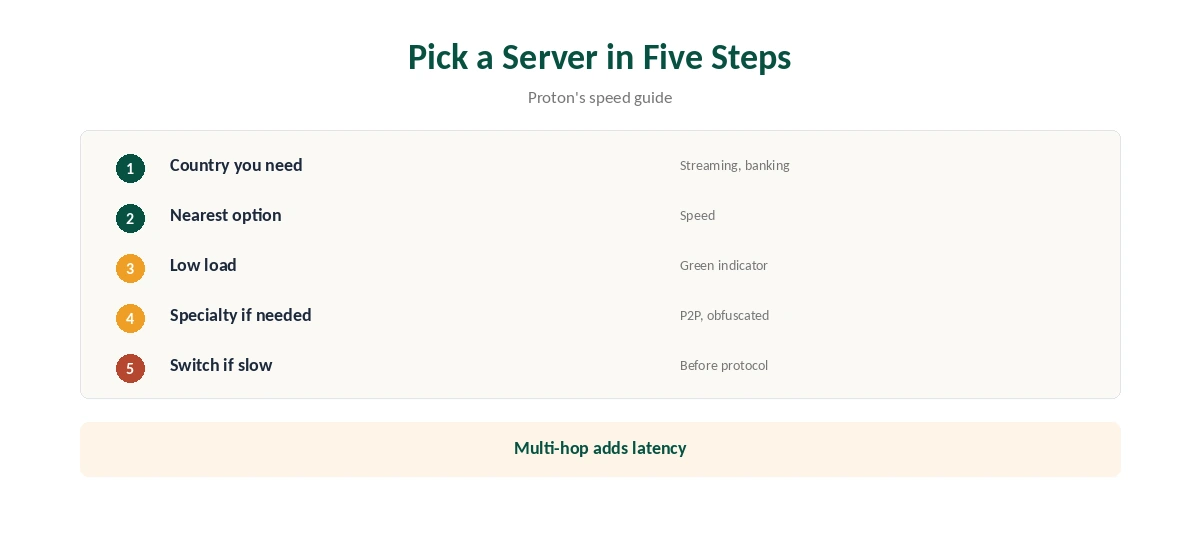
Choose the nearest server for speed, the country you need for streaming or banking, and a low-load server when the app shows it. Switch if speed drops, before changing protocol.
VPN Servers and Speed
Distance is the biggest speed factor, Proton’s blog says, then load. A nearby, lightly loaded server usually beats a distant one in a country you do not need.
Server Labels
Good apps label virtual locations and specialty servers. If a provider hides which locations are virtual, ask support, since it affects which country’s law applies to the hardware.
Streaming Servers
Some providers mark servers that work with particular streaming services. CyberGhost’s apps group servers by service, Gizmodo notes. Our Netflix VPN guide explains why streaming servers change.
Free Plan Servers
Free plans usually limit server choice. Proton’s free plan assigns a server in one of 10 countries automatically, Toolradar notes, and free servers carry more users.
How Providers Count Servers
Providers may count physical machines, IP addresses or virtual locations differently, so totals are hard to compare directly. Compare the countries and cities you need instead.
Server Ownership and Audits
Audits sometimes cover server infrastructure, checking that no logs are stored. Our VPN audit tracker shows which providers had servers examined.
Obfuscated Servers
Obfuscated servers disguise VPN traffic for networks that block VPNs. Our obfuscation guide explains how they work and when to use them.
Quick Check
After connecting, confirm the server’s country on our VPN test page.
Is a Bigger Network Better for VPN Servers?
A bigger network helps if it covers the countries you need and keeps load low. A smaller network of owned, RAM-only servers can be better for privacy, as StrongVPN’s owned servers and Surfshark’s RAM-only design show different routes to the same goal.
Servers in Restrictive Countries
After India’s CERT-In rules, NordVPN, Surfshark, Proton VPN, PIA and ExpressVPN removed physical servers there and offered virtual Indian addresses instead, Security.org notes. PIA and ExpressVPN both belong to Kape, which also owns CyberGhost.
Several Devices
Each device connects to its own server choice. A router covers the home on one server, while phones pick their own on the move. Our router setup guide explains the set-up.
Quick Rule
For a specific country, pick it directly. For speed, choose a nearby server. Privacy calls for RAM-only, audited networks, and blocked networks call for obfuscated servers.
VPN Servers for Gaming
Gamers want the lowest ping, so a nearby server in the game’s region matters most. Our gaming VPN guide covers latency in detail.
Load Changes by Hour
A server that is quiet in the morning can be busy in the evening. If speed drops at peak time, switch to a nearby server with lower load rather than changing protocol.
Dedicated IP Servers
A dedicated IP gives you an address no one else uses, which helps with banking and allowlists. Our dedicated IP guide explains when it is worth paying for.
Running Your Own
A self-hosted VPN server on a Raspberry Pi gives you a home address while travelling, but not privacy from your own provider. Our Raspberry Pi VPN server guide covers it.
How We Research
This page draws on provider server pages, Proton’s speed guides, Surfshark’s CERT-In announcement, Wikipedia, Fahimai and our server tables. We cross-checked these sources against each other, and where they conflict or something can’t be verified, we say so in the text rather than guessing. We checked time-sensitive figures, including prices in US dollars, on 8 October 2026. The main source we relied on is Proton’s speed guide. Our full approach lives on the About Us page.
VPN Servers FAQ
Not necessarily; location, load and how servers are run matter more.
An IP from one country with hardware elsewhere.
Servers that store nothing on disk, so seizures find no stored data.
The nearest for speed, or the country you need, with low load.
Servers for P2P, obfuscation or multi-hop routing.
The Verdict
VPN servers matter for speed and privacy, but quality beats quantity. Look for the countries you need, RAM-only operation and clear labels for virtual locations.