Disclosure: VPNFin is reader-supported. If you buy a VPN through links on this page, we may earn a commission at no extra cost to you. This never affects our ratings — here’s our full disclosure.
This PotatoVPN review covers a Singapore-based VPN that launched in 2020, according to VPNCentral’s PotatoVPN review. It is best known as a mobile app with a free tier and one-tap connection.
PotatoVPN is easy to start: the free version needs no account, FileHippo notes. The questions are about who runs it and how far its privacy claims go. We cover both, plus prices and test results.
PotatoVPN Review: Is It Worth It in 2026?
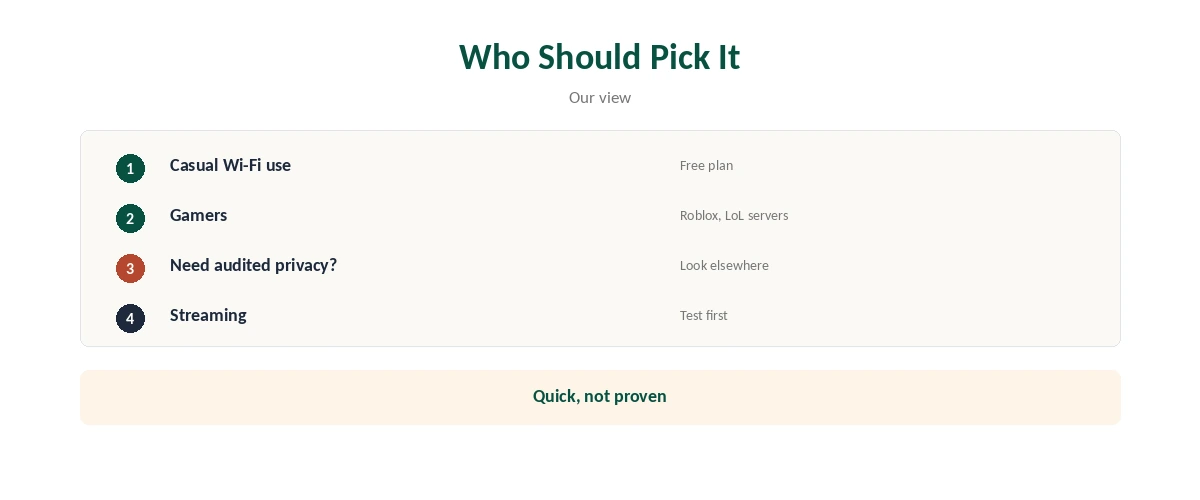
It is worth a try for light use on public Wi-Fi, or for gaming, since it offers dedicated servers for titles such as Roblox and League of Legends. VPNCentral found it fast enough for streaming and gaming.
For sensitive privacy needs, though, look elsewhere. VPNCentral places its privacy in the middle of the field, and no independent audit backs its no-logs claim.
What PotatoVPN Costs
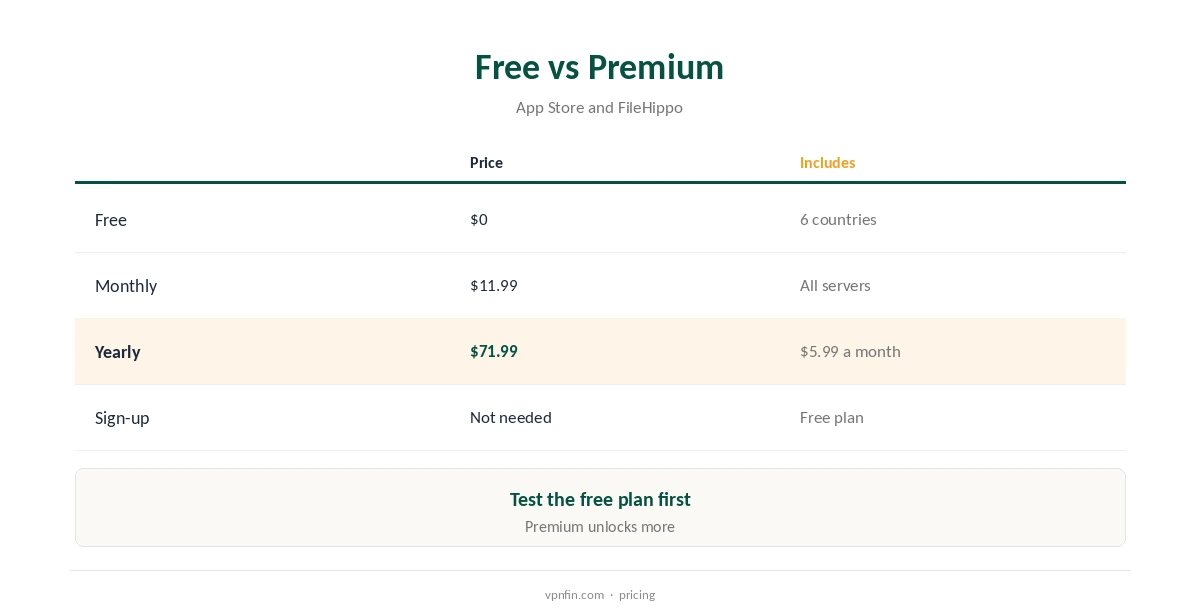
The free plan offers six countries without registration or payment, FileHippo reports. One App Store reviewer adds that free sessions run on a timer and need reconnecting.
Premium costs $11.99 a month or $71.99 a year, which works out at $5.99 a month, according to the App Store listing. In-app purchases range from $7.99 to $71.99, AppPricingLab notes. Our cheap VPN guide compares similar prices.
On mobile, subscriptions bought through the App Store or Google Play follow those stores’ refund rules. Check them before buying in the app.
The free plan’s timed sessions mean you reconnect regularly. That is fine for quick tasks but tiring for long sessions.
Who Runs PotatoVPN
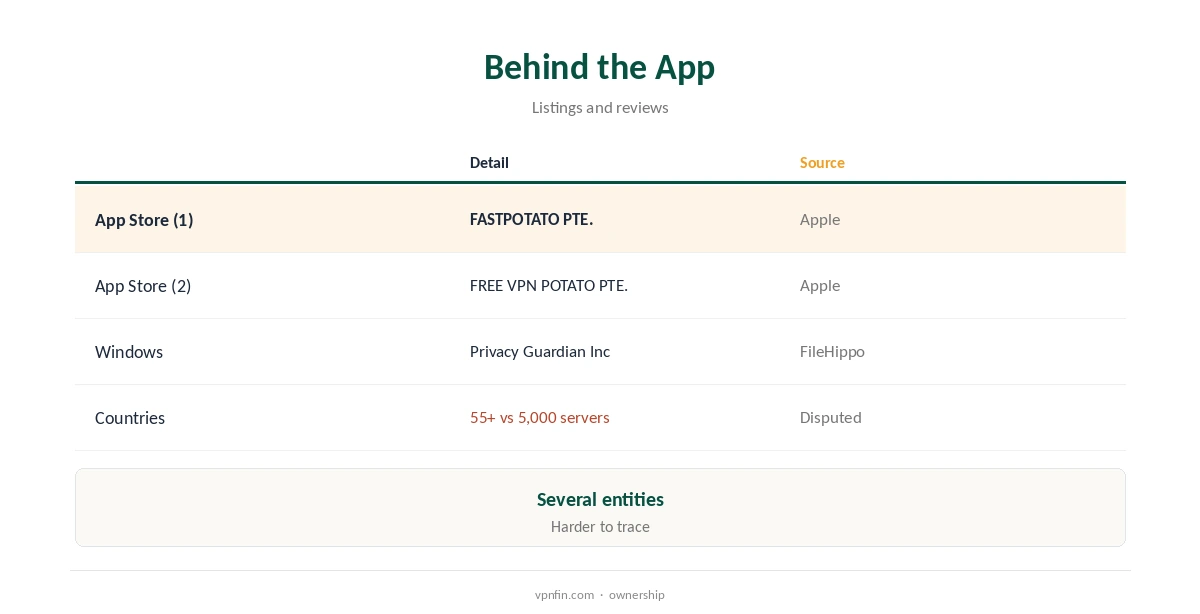
Several company names appear across its listings. On the App Store, one version lists FASTPOTATO PTE. LTD. as the developer, and another FREE VPN POTATO PTE. LTD. The Windows version on FileHippo names Privacy Guardian Inc.
Several entities behind one brand is common among mobile VPNs, but it makes accountability harder to trace. Our page on who owns your VPN explains why that matters.
Before installing, check the developer name on the store page against the one on PotatoVPN’s site. Mismatched names are a common sign of copycat apps.
Keep the app updated through the official store only, never through third-party download sites.
What Reviewers Disagree On
Network size. VPNCentral counts servers in more than 55 countries. Techjockey’s listing instead claims over 5,000 servers worldwide, without a country count.
Overall verdict. VPNCentral calls PotatoVPN safe overall, since it found no leaks. FileHippo praises its simplicity but notes that advanced privacy controls are less detailed than in Proton VPN, Windscribe or Mullvad.
Privacy and Logging
PotatoVPN says it keeps no user activity logs, its App Store listing states. Techjockey also lists a kill switch and DNS leak protection.
No independent audit has checked those claims. Our VPN audit tracker lists providers whose policies an outside firm has tested.
⚠️ Free VPNs carry extra risk. Our guide to free VPN risks explains what to watch for before you rely on one.
Free VPNs need some way to pay for servers, usually ads, data or upgrades. Read the privacy policy to see which applies before relying on the free plan.
Account-free use limits what the company knows about you. However, your device and app data may still identify you, depending on the policy.
If you rely on the free plan often, consider a paid plan from a provider with an audit, since your browsing then passes through servers you can verify less.
Speed and Streaming
VPNCentral found PotatoVPN fast enough for nearly any task, including streaming and torrenting. FileHippo adds that real-time calls can feel extra latency on distant servers.
The App Store listing mentions dedicated streaming servers. Results still vary by service, so test during the first session. Our streaming VPN guide lists alternatives.
Gaming servers aim to cut lag on specific titles. Compare your ping with and without the VPN, since a VPN can also add delay if the server is far away.
Long-distance servers add latency, FileHippo notes, so choose nearby servers for video calls and games.
Features Worth Knowing
Gaming servers are the unusual extra, VPNCentral notes. The app also connects automatically to the fastest server.
Apps cover iPhone, Android and Windows, with versions listed on the App Store and FileHippo.
Automatic server choice suits most users. Pick a server manually only when you need a specific country.
Check whether the app offers a kill switch on your platform, and turn it on. Techjockey lists one, but settings vary by device.
Who Should Look Elsewhere
If privacy comes first, choose an audited provider such as Proton VPN, which also has a free plan. For gaming, see our VPN for gaming guide.
There is more on PotatoVPN elsewhere on VPNFin: whether PotatoVPN is safe, PotatoVPN alternatives and head-to-head comparisons with NordVPN.
Readers weighing similar options can also read OrionVPN review and IceVPN review.
How We Research
For this PotatoVPN review, we took speed, network and privacy findings from VPNCentral’s PotatoVPN review, free-plan details from FileHippo, and prices and developer names from the App Store listings and AppPricingLab, read on 21 October 2026. Our scores weigh speed, security and privacy, streaming, price and ease of use equally. We do not run our own tests. Our full approach lives on the About Us page.
PotatoVPN Review FAQ
Yes, with six countries and no sign-up. Premium costs $11.99 a month or $71.99 a year.
VPNCentral found no leaks, but no independent audit has checked its no-logs claim.
In Singapore, according to VPNCentral.
Yes, for titles such as Roblox and League of Legends.
Listings name FASTPOTATO PTE. LTD., FREE VPN POTATO PTE. LTD. and Privacy Guardian Inc.
PotatoVPN
Easy and quick, privacy unproven
PotatoVPN is simple, offers a no-sign-up free plan and adds gaming servers, and VPNCentral found no leaks. Against that: several companies behind its listings, no audit and middling privacy.
The Verdict
Our PotatoVPN review finds an easy, quick VPN that suits casual use and gaming.
For anything sensitive, its unaudited privacy makes an established provider the safer pick.