
Disclosure: VPNFin is reader-supported. If you buy a VPN through links on this page, we may earn a commission at no extra cost to you. This never affects our ratings — here’s our full disclosure.
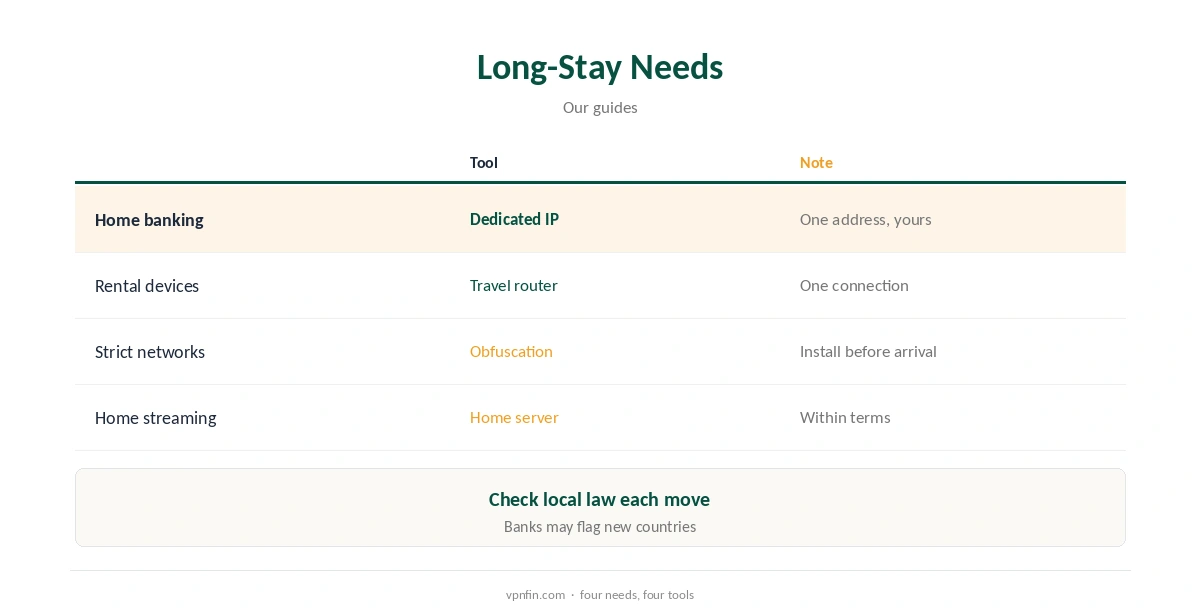
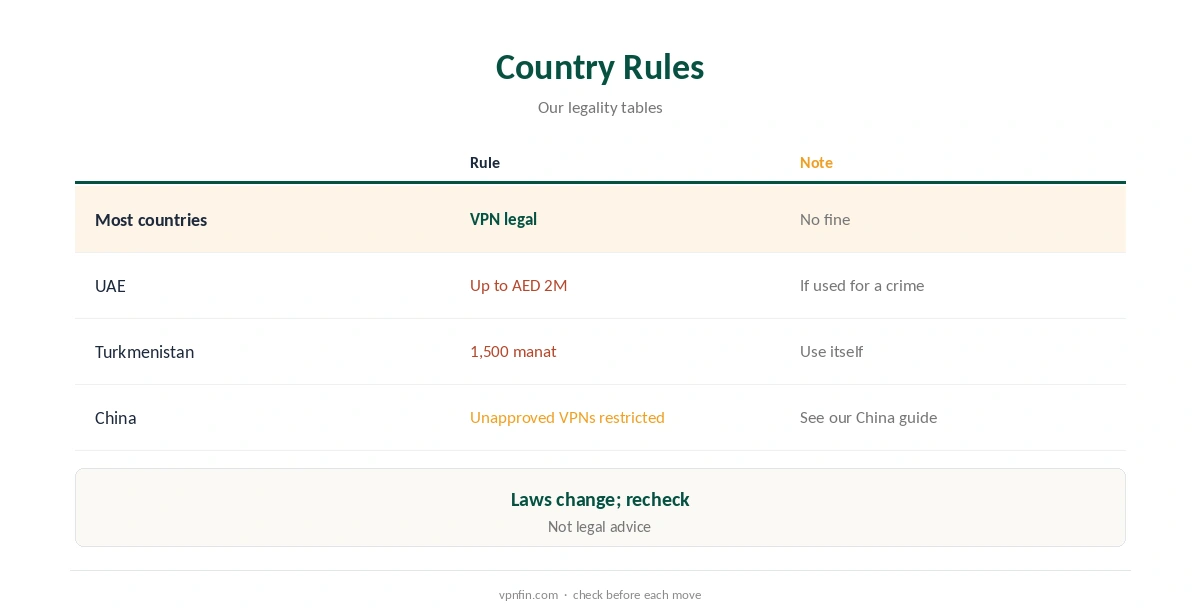
A VPN for digital nomads covers months abroad, not a holiday week. It keeps home banking and streaming working from a home-country address, protects work on shared Wi-Fi in co-living spaces, and needs to respect local law, which varies widely. The UAE punishes VPN use tied to crimes with fines up to AED 2 million, and Turkmenistan fines VPN use itself, our tables record. A dedicated IP and a travel router solve two common long-stay problems.
This guide covers long-stay needs, country rules and setup. For short trips, our travel guide covers hotel Wi-Fi.
Home Banking From Abroad
Banks may flag logins from new countries or shared VPN addresses. A dedicated IP gives you one address in your home country that you alone use, which can reduce repeated checks. Our dedicated IP guide explains the option.
Local Law Varies
Most countries allow VPN use; a few fine it, and others punish VPN use tied to other acts. Check each country before arriving. Our VPN fines guide and VPN legality guide list the rules we have verified.
A Travel Router
A small travel router running the VPN covers every device in a rental, including a TV, as one connection. Proton publishes a setup guide for GL.iNet’s Flint, for example. Our router setup guide covers the options.
Streaming Home Libraries
Libraries follow your connection’s country. Connect to home to see your subscriptions’ home catalogues, within each service’s terms. Our Netflix VPN guide explains why services block some servers.
VPN for Digital Nomads Setup
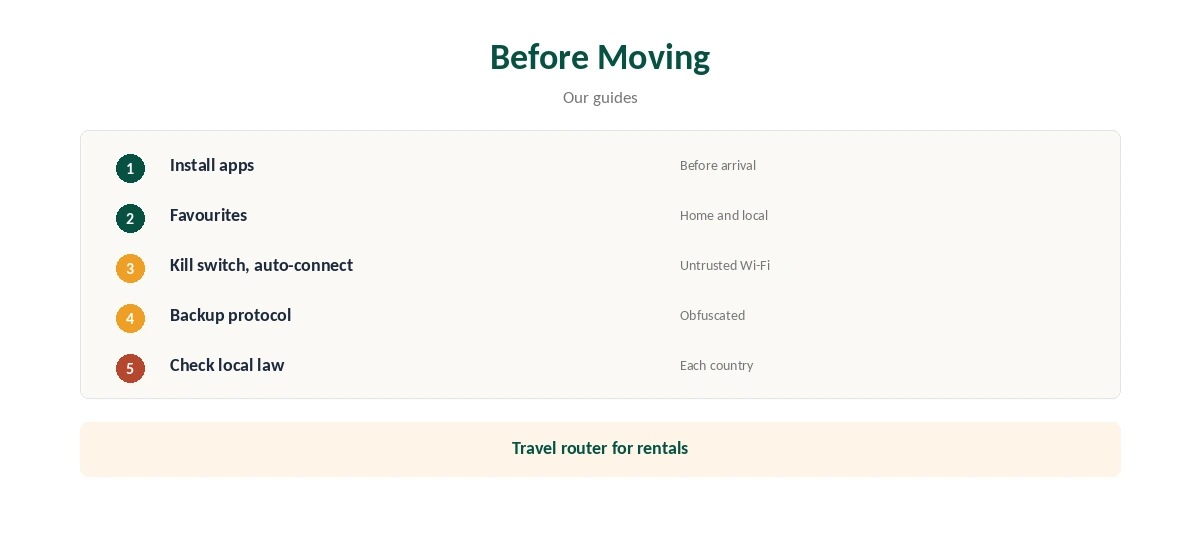
Install apps before moving, since provider sites may be hard to reach in some countries. Save a home server and a local one as favourites, turn on the kill switch and auto-connect for untrusted Wi-Fi, and keep a backup protocol such as an obfuscated one.
Restrictive Countries
China and the UAE need extra care: obfuscated servers, apps installed before arrival and an understanding of the rules. Our China VPN guide and UAE VPN guide cover both.
Time Zones and Auto-Connect
Set the app to connect automatically on untrusted networks, so protection does not depend on remembering after a long journey.
Several Devices
Nomads carry a laptop, phone and often a tablet. NordVPN covers 10 devices and Surfshark has no cap, our device table records; the two share an owner, Nord Security.
Working for Clients
Some clients allowlist addresses for their systems. A dedicated IP keeps your address fixed as you move, as our freelancer VPN guide explains.
Refunds and Renewals
Note the renewal price before paying for a long plan, since you may move somewhere with different needs. Our renewal price guide compares providers.
Is a VPN for Digital Nomads Worth a Long Plan?
If you will be abroad for a year or more, a long plan lowers the monthly cost. Check the renewal price and refund window first.
Co-Living and Co-Working Wi-Fi
Shared spaces put many strangers on one network. Keep the VPN on there, as our public Wi-Fi guide explains.
Keeping It Updated
Update apps before each move, since provider sites can be hard to reach in some countries.
Quick Rule
Home-country dedicated IP for banking, obfuscation ready, travel router for rentals, local law checked before each move.
Is a VPN for Digital Nomads Legal at Home?
Your home country’s law still applies to some activities, wherever you are. A VPN changes your address, not your legal obligations.
Health and Government Portals
Home-country portals may block foreign addresses. A home server or dedicated IP restores access where the portal allows it.
Testing on Arrival
After arriving, connect, check the address on our VPN test page and run a leak test before signing in to banking.
Is a VPN for Digital Nomads Needed in Every Country?
Not for privacy in every case, but home banking and streaming work better with a home address almost anywhere you go.
Mobile Data and eSIMs
Mobile data does not share a network with strangers the way café Wi-Fi does, but the local operator still sees your browsing without a VPN. Keep it on if you handle work data.
Support From Abroad
Note how to contact the provider’s support before you move, especially for countries where sites may be blocked.
Who This Suits
Remote workers, long-stay travellers and anyone splitting months between countries. Weekend travellers need less; our short-trip guide covers them.
Backups
Keep a second protocol, or a free Proton account installed in advance, as a fallback in countries where your main provider may be blocked. It costs nothing to prepare.
Payments From Abroad
Keep the payment card on file current, since an expired card can end the subscription while you are far from home.
Short Trips
For a week away, hotel Wi-Fi is the main problem, as our travel VPN guide explains.
How We Research
This page draws on our country legality guides, our UAE and Turkmenistan tables, Proton’s router guides and our dedicated IP and streaming guides. We cross-checked these sources against each other, and where they conflict or something can’t be verified, we say so in the text rather than guessing. We checked time-sensitive figures, including prices in US dollars, on 8 October 2026. The main source we relied on is Proton’s router guides. Our full approach lives on the About Us page.
VPN for Digital Nomads FAQ
For home banking, streaming and shared Wi-Fi over months abroad.
It gives one home-country address only you use, which can reduce checks.
No; a few countries fine use, and others punish use tied to other acts.
It covers every device in a rental as one connection.
Before moving, since sites may be blocked on arrival.
The Verdict
A VPN for digital nomads needs a home-country dedicated IP, obfuscation for strict countries and room for many devices. Check local law before each move.