
VPN Kill Switch (2026): What It Blocks, and the Half That Failed
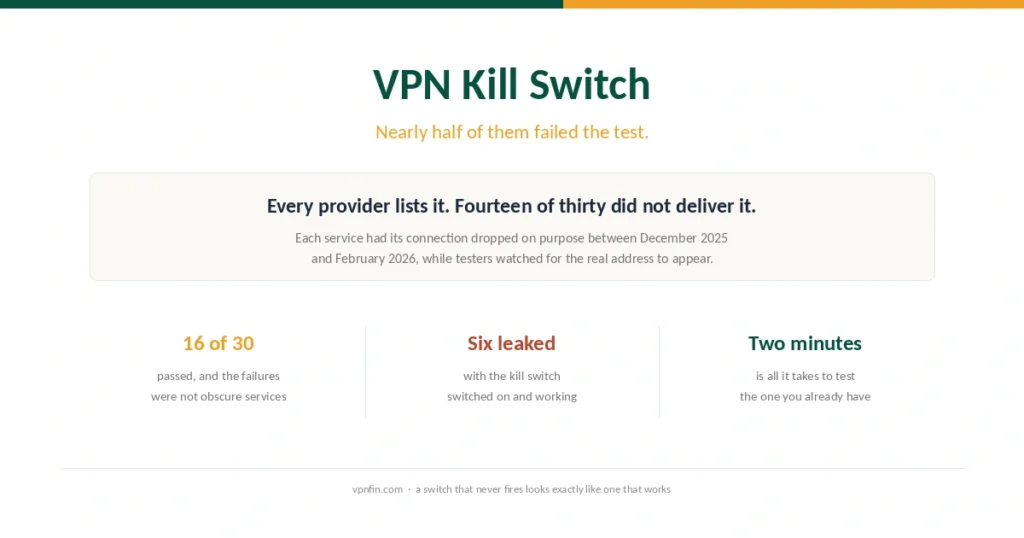
The feature is on every product page. In independent testing of thirty services, fourteen failed to protect the real IP address when the connection dropped.
Step-by-step VPN tutorials for beginners: setup, troubleshooting, and getting the most out of your VPN. Clear instructions with screenshots — no technical background needed.
The feature is on every product page. In independent testing of thirty services, fourteen failed to protect the real IP address when the connection dropped.
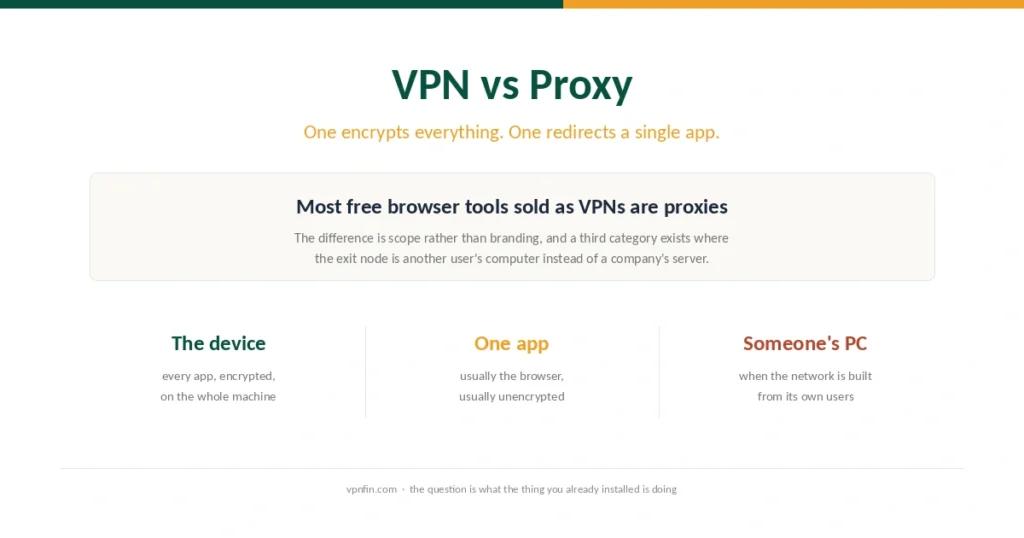
The difference is not encryption alone. It is scope — and a third category exists where the exit node is somebody else’s computer, which nobody warns you about.
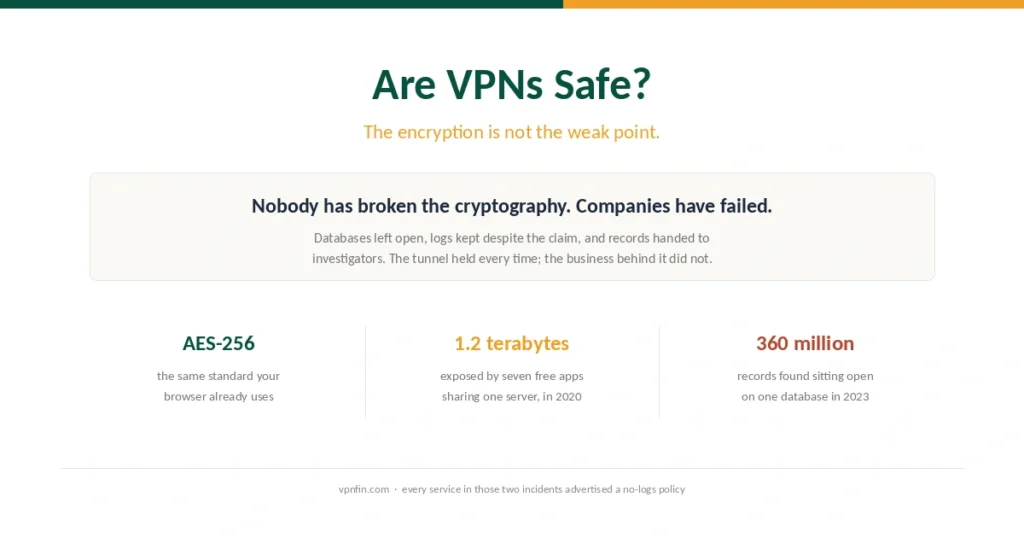
Nobody has broken the encryption. What has failed, repeatedly, is the company holding the other end of the tunnel — including several that advertised no logs at the time.
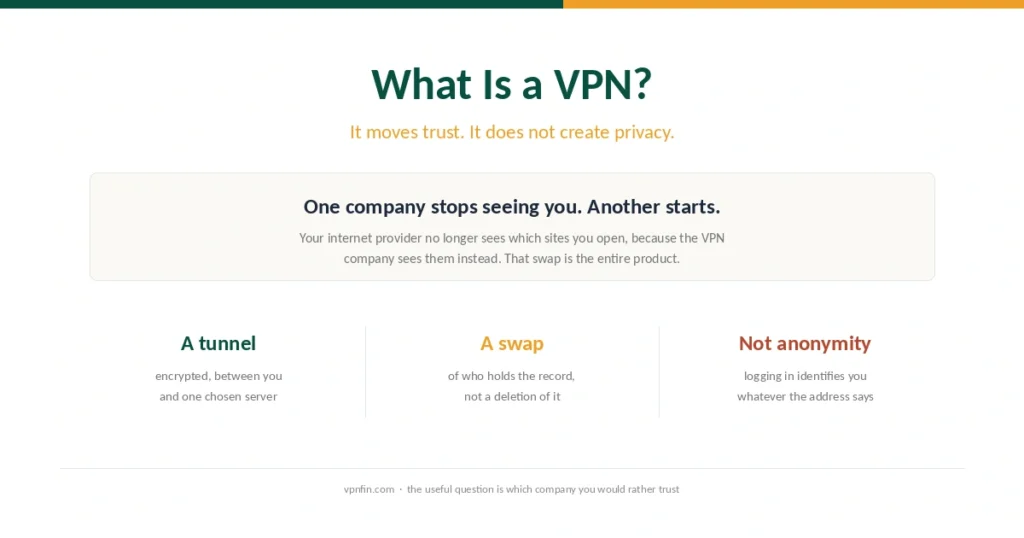
A VPN does not make you anonymous. It changes which company can see where you go, and that swap is the whole product. Everything else in the marketing follows from it.
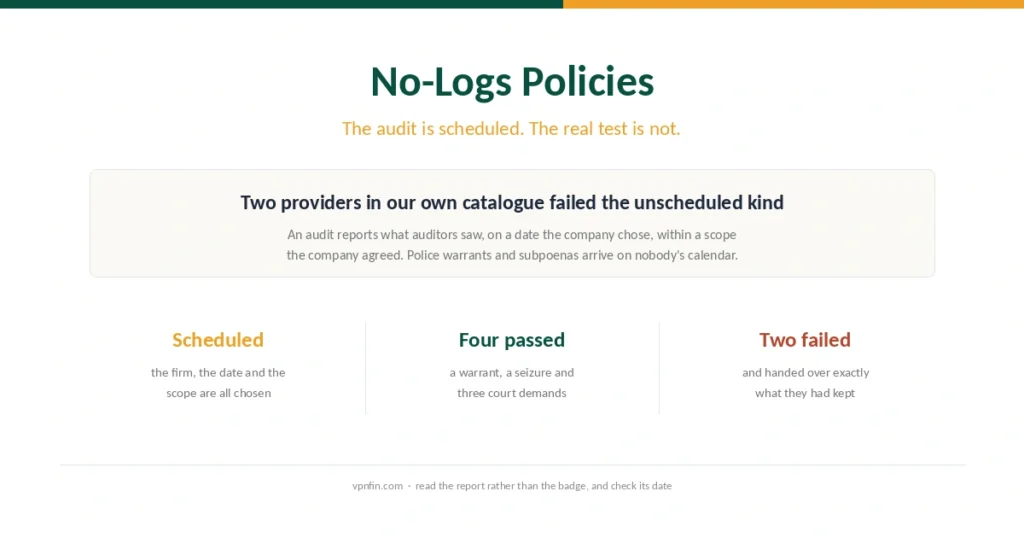
Every provider claims it keeps no logs, and most now pay an accounting firm to say so. The interesting evidence comes from the days nobody put in the calendar.
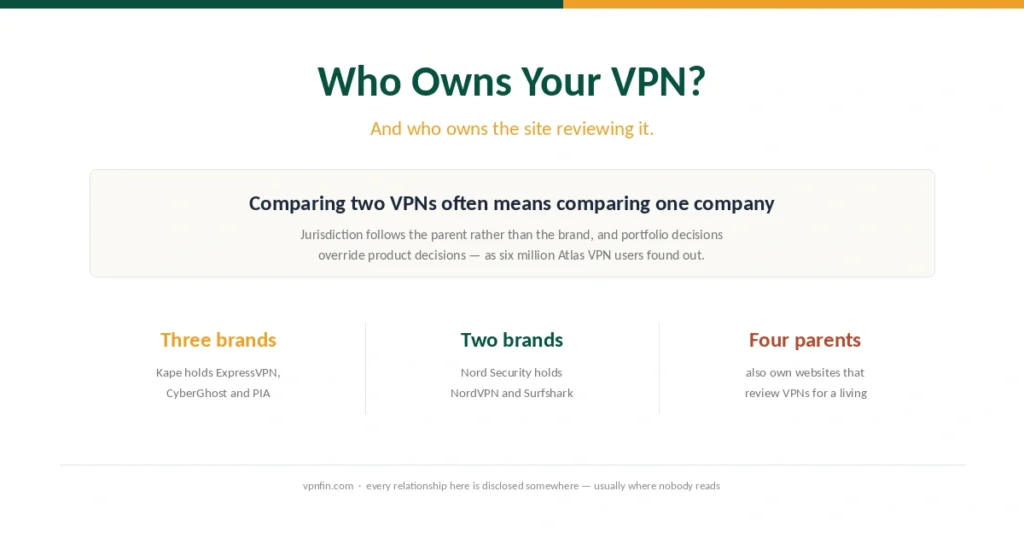
The consolidation is well documented. The part that gets less attention is that four of these parent companies also own the review sites you might be reading.
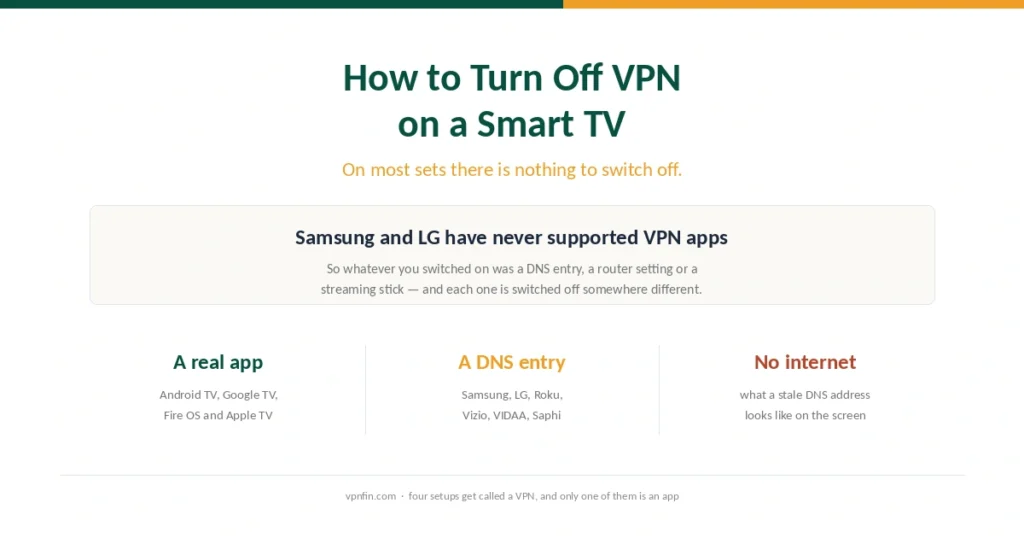
Samsung and LG televisions cannot install VPN apps at all. So whatever you switched on, it was probably a DNS entry — and removing it takes a different route from closing an app.
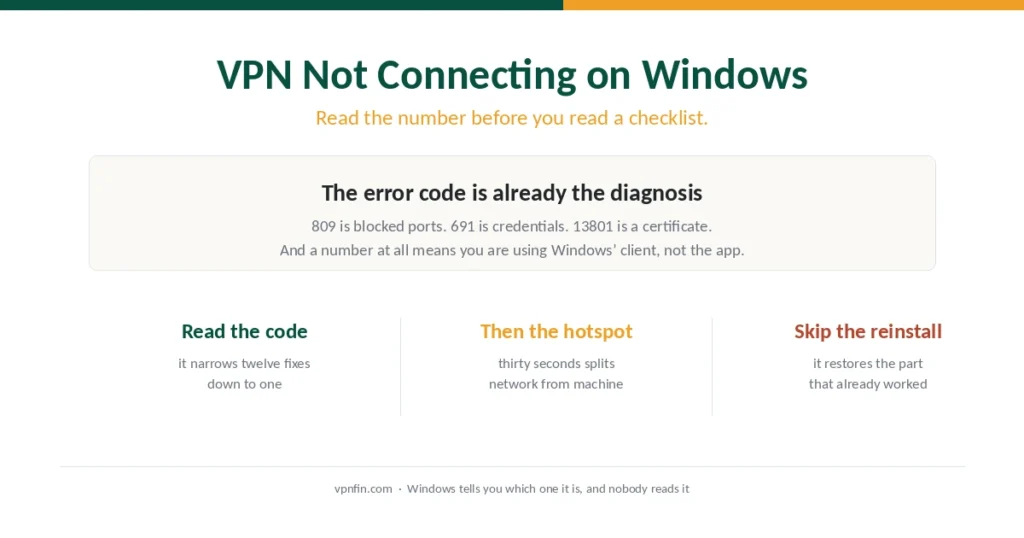
Windows hands you a specific number and almost every guide replies with a twelve-item checklist. The number narrows it to one thing, and its presence tells you which piece of software is failing.
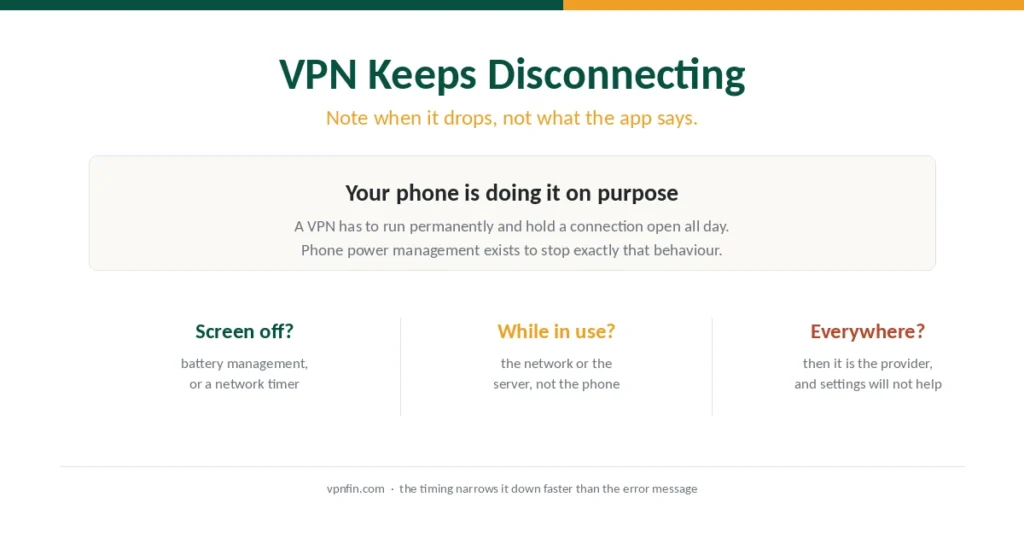
Providers publish support articles explaining how to stop Android killing their apps. When the troubleshooting page is about the operating system rather than the product, that tells you where the fault sits.
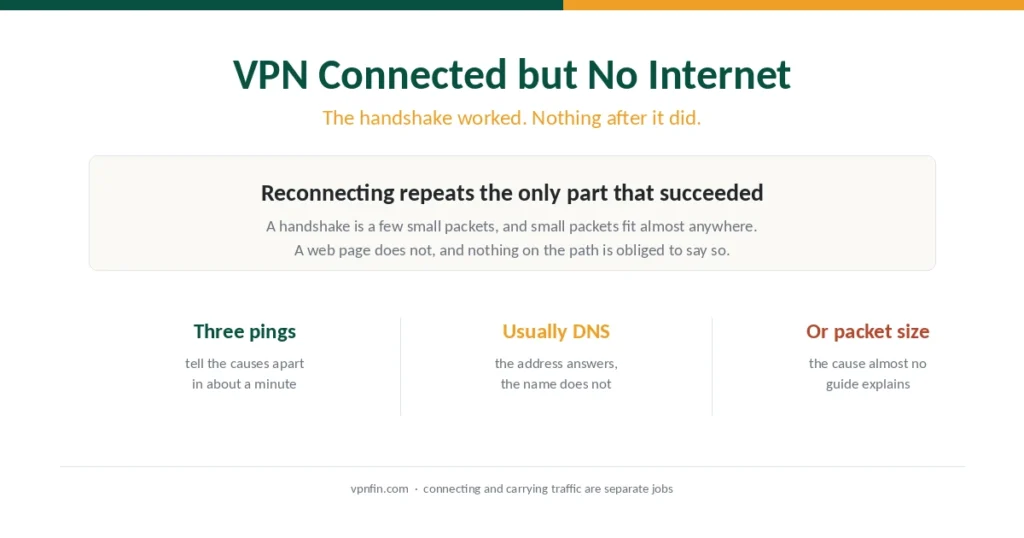
The connected icon is honest about one thing and silent about everything after it. A handshake fits in a small packet; a web page does not, and nothing on the path is obliged to tell you so.