
Disclosure: VPNFin is reader-supported. If you buy a VPN through links on this page, we may earn a commission at no extra cost to you. This never affects our ratings — here’s our full disclosure.
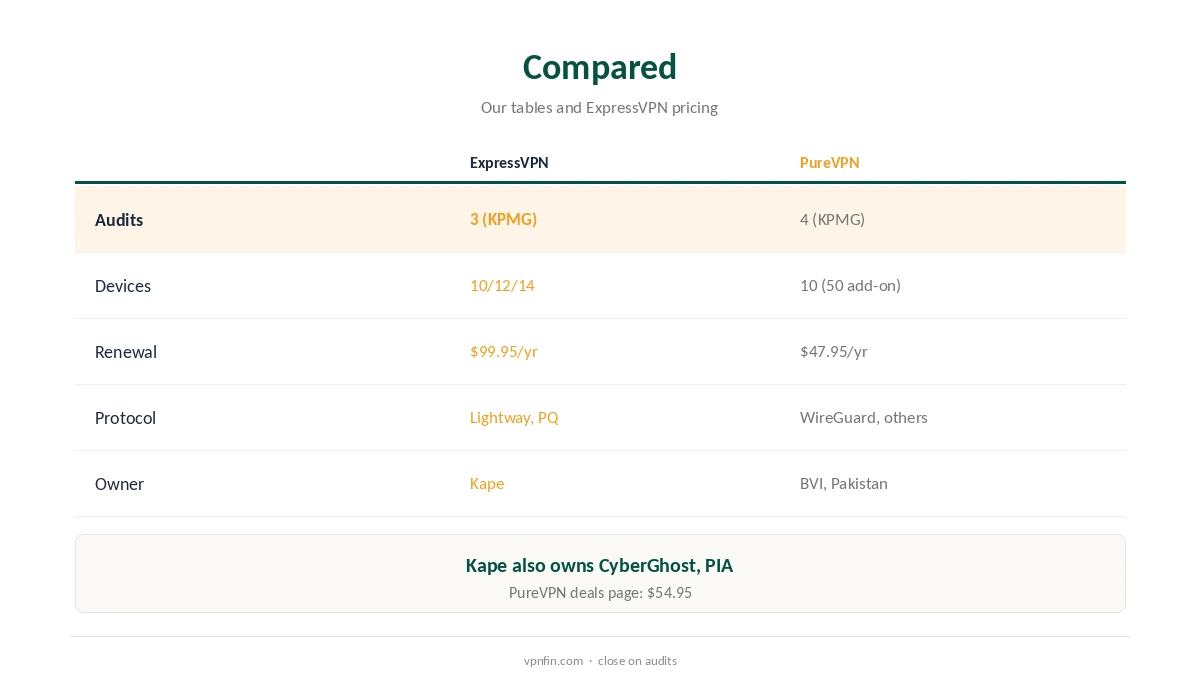
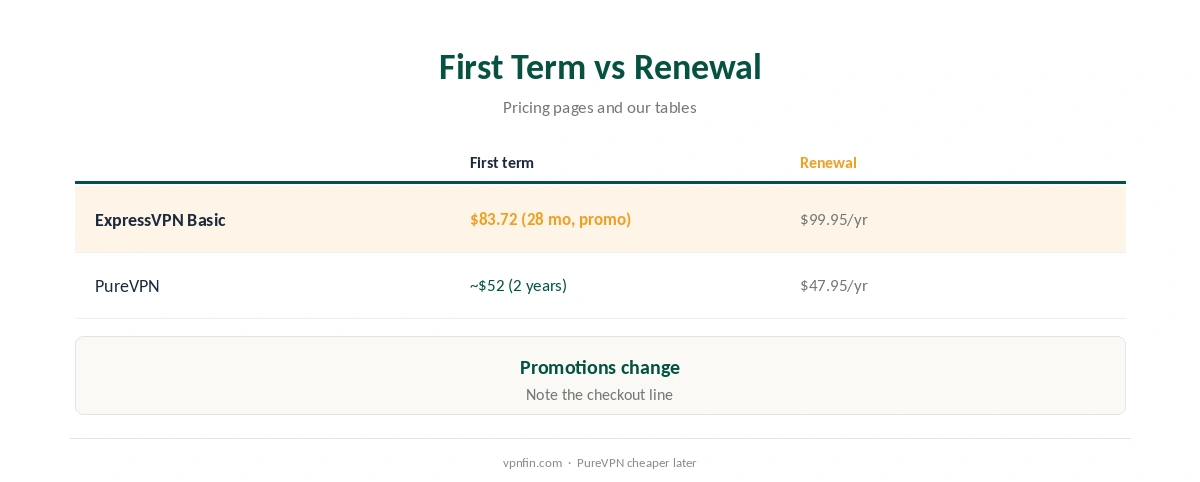
ExpressVPN vs PureVPN pits a premium all-rounder against a budget service with more no-logs audits. ExpressVPN, owned by Kape and based in the British Virgin Islands, lists 27 independent audits by May 2026, including three KPMG no-logs reports, allows 10, 12 or 14 devices by tier and uses its own Lightway protocol with post-quantum key exchange by default. Its pricing page listed Basic at $83.72 for the first 28 months during a September 2026 promotion, renewing at $99.95 a year. PureVPN, based in the British Virgin Islands and operated from Pakistan, has four KPMG audits in our table, allows 10 devices, up to 50 with an add-on, and renews at $47.95 a year on its order page.
This guide compares them on privacy, price, devices, features and fit.
ExpressVPN vs PureVPN on Privacy
Both are audited by KPMG: ExpressVPN three times and PureVPN four times, our table records. Both are registered in the British Virgin Islands. Our VPN audit tracker explains what each audit covers.
Price
PureVPN costs about $2.15 a month on two years and renews at $47.95 a year; its deals page lists $54.95. ExpressVPN’s Basic plan renews at $99.95. Over several years, PureVPN costs far less. Our PureVPN price guide covers its grids.
Streaming
ExpressVPN reached Netflix in several regions in TechRadar’s 2026 testing. PureVPN offers streaming-optimised servers, and Wizcase found its Disney+ servers worked reliably. Test the services you use within the refund window.
Apps and Platforms
Both cover Windows, Mac, iOS, Android and Fire TV. ExpressVPN adds a Vega OS app and Apple TV; PureVPN offers split tunnelling on Android TV and Fire TV, its release notes say.
Torrenting
PureVPN offers a SOCKS5 proxy, as our PureVPN SOCKS5 guide explains. ExpressVPN allows P2P on its servers without a proxy option.
Is ExpressVPN vs PureVPN a Close Call?
On audits, yes: both use KPMG. The deciding factors are price over time, where PureVPN wins, and app polish and streaming, where ExpressVPN leads.
Refunds
ExpressVPN offers 30 days for new users, its pricing page says; PureVPN 31 days. Test both within those windows.
Value Over Four Years
Our tables put ExpressVPN near $267 over four years. PureVPN’s lower renewal brings its four-year total well below that, though grids differ between its order and deals pages.
Kill Switch
ExpressVPN calls its kill switch Network Lock. PureVPN’s apps include one too; test either by switching Wi-Fi off and on while connected.
Routers
ExpressVPN publishes router apps and guides, as our ExpressVPN router guide explains. Check PureVPN’s router pages for your model.
Who Each Suits
Streamers and travellers to China lean towards ExpressVPN. Budget households with many devices lean towards PureVPN.
Several Devices
A family with many phones and laptops fits PureVPN’s 10 devices, or 50 with the add-on. ExpressVPN’s Pro tier reaches 14.
Quick Check
After installing either, run our DNS leak guide and confirm the kill switch blocks traffic when the tunnel drops.
Support
Check each provider’s support channels during the refund window with a question about your own device.
Privacy on Public Wi-Fi
Both encrypt traffic on café and hotel networks. Turn on Network Lock or PureVPN’s kill switch first. Our public Wi-Fi guide explains the risks.
Quick Rule
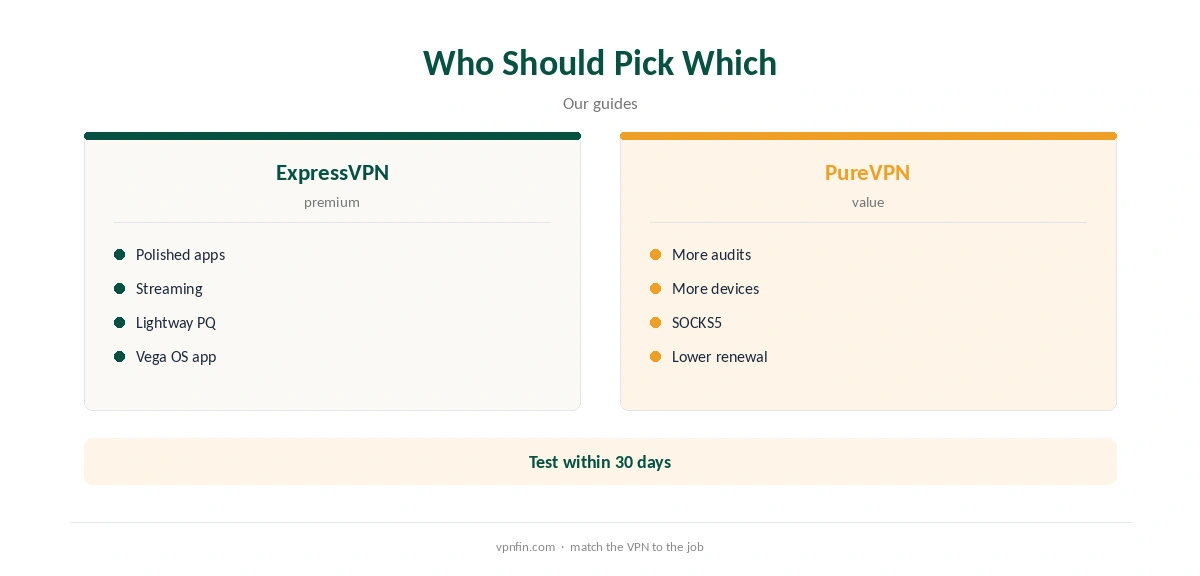
Premium apps and streaming: ExpressVPN. Audits, devices and a low renewal: PureVPN. Test both within 30 days.
Jurisdiction
Both are registered in the British Virgin Islands, outside the intelligence alliances; PureVPN operates from Pakistan. Our Five Eyes guide explains why logs matter more than location.
Keeping It Updated
After app updates, recheck the kill switch and protocol on both, since updates can reset them.
Free Options
Neither offers a free plan. PureVPN’s seven-day trial is paid; ExpressVPN relies on its 30-day guarantee for new users. Our free VPN trial guide explains how trials and guarantees work.
China
ExpressVPN connected on every attempt in vpnpicked’s China testing, our tables record. Check PureVPN’s current guidance before relying on it there.
Devices and Features
PureVPN allows 10 devices, extendable to 50, and offers a SOCKS5 proxy. ExpressVPN allows 10 to 14 by tier and adds ID theft insurance on higher tiers, its pricing page shows.
ExpressVPN’s Strengths
ExpressVPN covers 113 countries on its pricing page and reached Netflix in several regions in TechRadar’s 2026 testing. Its Fire TV app now runs on Vega OS too, as our Vega OS VPN guide records.
Renewal Prices
ExpressVPN’s Basic plan renews at $99.95 a year, Advanced at $119.95 and Pro at $199.95, its pricing page shows. Note the renewal line at checkout. Our renewal price guide compares providers.
Ownership
ExpressVPN belongs to Kape, which also owns CyberGhost and PIA. Our VPN ownership guide explains why ownership matters.
Who Should Pick Which
Pick ExpressVPN for polished apps, streaming and Lightway. Pick PureVPN for more audits, more devices and a much lower renewal. Our NordVPN vs PureVPN page compares PureVPN with another leader.
How We Research
This page draws on ExpressVPN’s pricing page, TechRadar’s 2026 Netflix testing and our audit, device, price and ownership tables. We cross-checked these sources against each other, and where they conflict or something can’t be verified, we say so in the text rather than guessing. We checked time-sensitive figures, including prices in US dollars, on 8 October 2026. The main source we relied on is ExpressVPN’s pricing page. Our full approach lives on the About Us page.
ExpressVPN vs PureVPN FAQ
ExpressVPN for streaming and apps; PureVPN for audits and price.
KPMG audited PureVPN four times and ExpressVPN three.
PureVPN, at $47.95 a year against $99.95.
Kape, which also owns CyberGhost and PIA.
PureVPN, up to 50 with an add-on.
The Verdict
ExpressVPN vs PureVPN: ExpressVPN for a premium experience, PureVPN for audits and value over several years.