
Disclosure: VPNFin is reader-supported. If you buy a VPN through links on this page, we may earn a commission at no extra cost to you. This never affects our ratings — here’s our full disclosure.
Kodi Surfshark use follows one rule: Kodi has no VPN of its own, so Surfshark goes on the device that runs Kodi. Surfshark’s apps cover the usual Kodi devices, including Fire TV sticks on both Fire OS and Vega OS, Android TV and Google TV boxes, and computers. Once Surfshark connects, every Kodi add-on uses the tunnel.
This guide covers each device, the Fire TV setup, Bypasser for routing only Kodi, and the legal line.
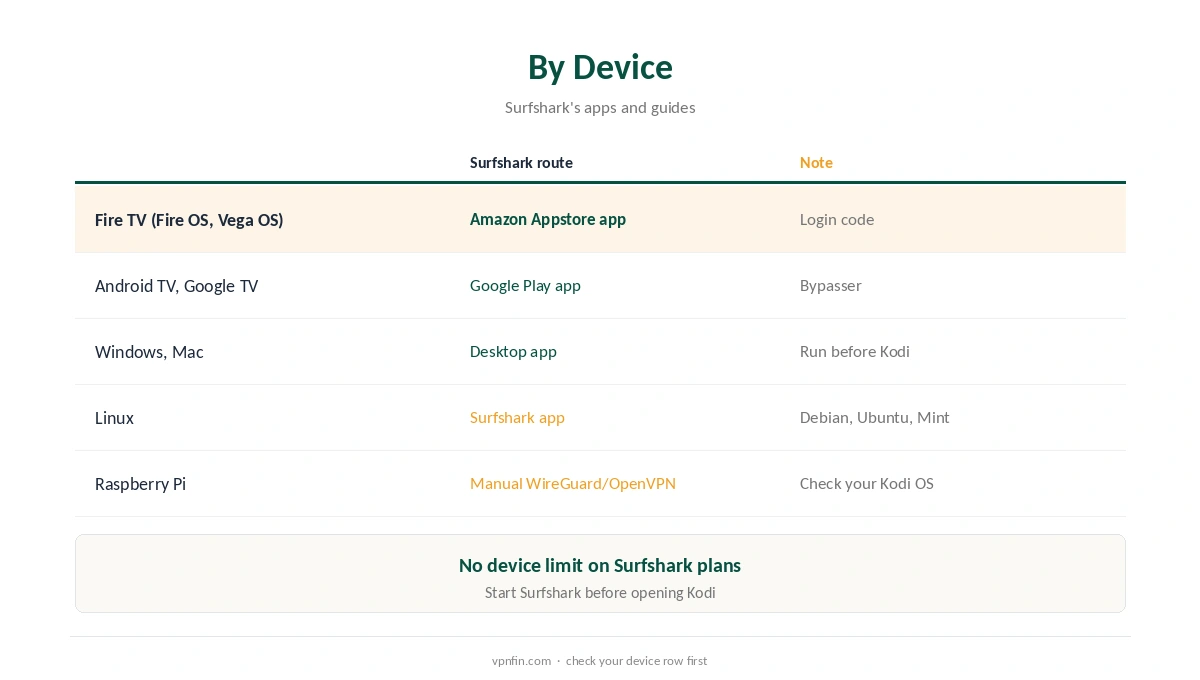
Kodi Surfshark by Device
Surfshark’s May 2026 blog lists apps for Fire TV, including Vega OS models, Google TV, Android TV and Apple TV on tvOS 17 and later. Our Surfshark Firestick guide and Android TV guide cover the TV apps.
On a Windows PC or Mac, run Surfshark before opening Kodi; our Surfshark Windows guide covers the desktop app. On Linux, the Surfshark app covers Debian, Ubuntu and Mint, as our Surfshark Linux guide explains.
Setting Up Kodi Surfshark on a Fire TV Stick
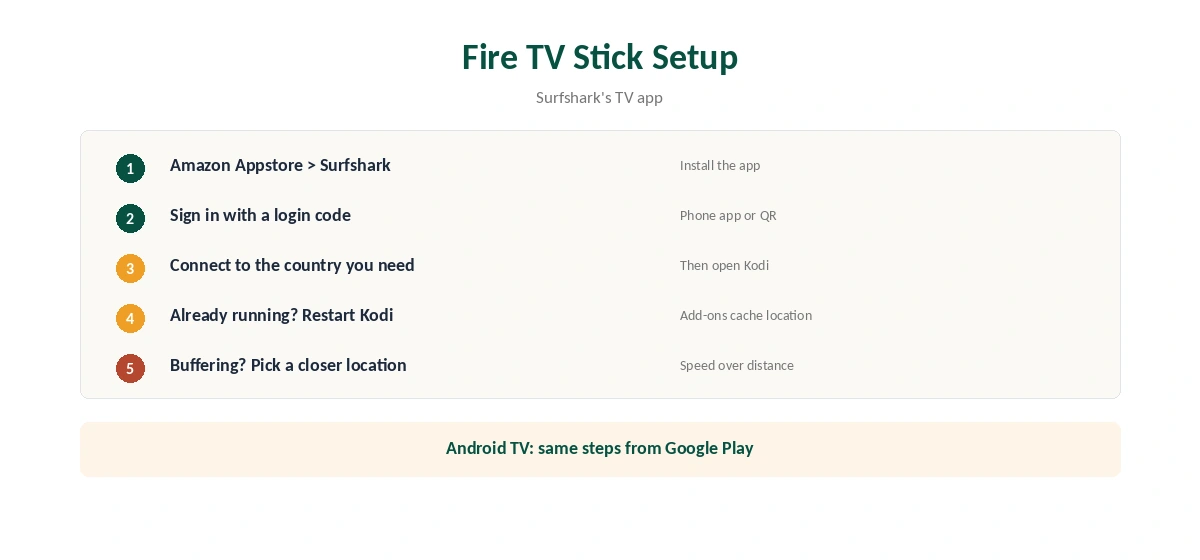
Install Surfshark from the Amazon Appstore and sign in. Surfshark’s TV apps support a login code, which you enter in the phone app or scan as a QR code. Connect to the country whose content you need, then open Kodi.
If Kodi was already running, close it fully and reopen it, since some add-ons cache location or connections. If a stream buffers, switch to a closer location.
Bypasser for Kodi
Surfshark’s Android TV support lists Bypasser under Features. It lets one app use the VPN while others use your normal connection, or the reverse. You can send Kodi through Surfshark while a local streaming app stays on your home address. Our split tunnelling guide explains the modes.
Kill Switch and Auto-Connect
The same support page lists the kill switch and auto-connect under VPN settings on Android TV. Turn on auto-connect so the VPN starts when the box wakes, and the kill switch so Kodi does not fall back to your real address if the tunnel drops.
Kodi on a Raspberry Pi
Many people run Kodi on a Raspberry Pi. Surfshark documents manual WireGuard and OpenVPN setups for the Pi, as our Surfshark Raspberry Pi guide explains. Kodi-only systems may not include the tools those guides use, so check yours first.
Choosing a Location
Kodi itself does not care where you connect; the add-ons and the services behind them do. For a service tied to your home country, connect there. For general privacy, the nearest location gives the best speed.
Live streams are the most sensitive to distance. If a live add-on stutters while on-demand video plays smoothly, the server is probably too far away or too busy. Try a closer city before changing anything else.
Buffering and Protocols
If streams buffer, change protocol before giving up. Surfshark’s speed advice suggests trying OpenVPN UDP first on Android-based devices, then WireGuard, as our Surfshark speed guide explains. The Small packets option in the TV app’s settings can help on unstable Wi-Fi.
Keep Kodi and its add-ons updated too. Outdated add-ons can cause playback errors that look like network problems. When an error appears, test the same stream with the VPN off for a moment to see which side causes it, then reconnect. Our DNS leak guide covers one more check worth running once.
Routers for Unsupported Boxes
Some Kodi boxes run systems with no VPN app at all. For those, a router running the VPN covers the box without any app, as our Surfshark router guide explains. Every device on that router then shares one location, so some households use a separate network for the TV and keep phones on the normal one. Our page on CyberGhost on Kodi covers running the app on the device and the router route for other boxes.
Kodi Add-Ons and the Law
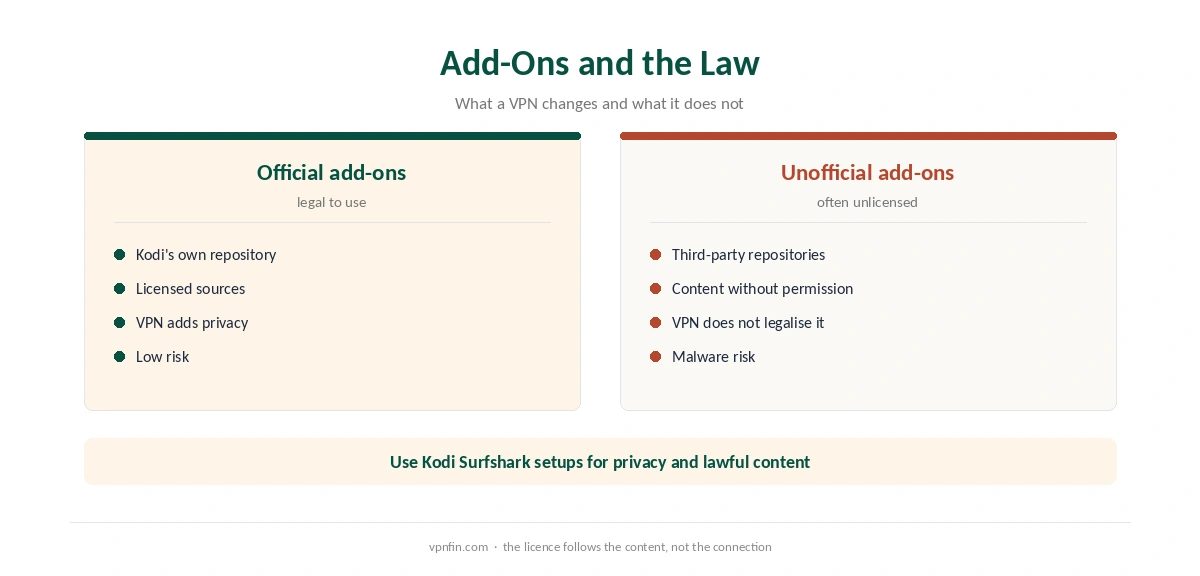
Kodi itself is legal, and so are its official add-ons from the Kodi repository. Some unofficial add-ons stream content without the rights holder’s permission, and a VPN does not make that legal. Unofficial repositories also carry a malware risk.
Use Kodi Surfshark setups for privacy and for services you have the right to watch. Our Kodi VPN guide compares other providers.
What Surfshark Costs
On 25 September 2026, the Starter 2-year plan cost $67.23 for the first 27 months. Renewal sits at about $79 a year, according to Security.org and VPNOverview. Surfshark sets no device limit, so a Kodi box adds nothing to the count. Our Surfshark price breakdown covers the plans, and our Surfshark refund guide explains the 30-day window.
| Provider | Renewal price | Per month | Tier |
|---|---|---|---|
| NordVPN | $139.08/yr | ~$11.59 | Basic |
| Surfshark | ~$79/yr | ~$6.58 | Starter |
| ExpressVPN | $99.95/yr | ~$8.33 | Basic |
| CyberGhost | $56.94/yr | ~$4.75 | 2-year |
| PureVPN | $47.95/yr | ~$4.00 | Standard, 2-year (1-year renews $57.95) |
| IPVanish | $89.99/yr | ~$7.50 | Essential |
| Windscribe | ~$69/yr | ~$5.75 | Pro |
| Proton VPN | ~$83.88/yr | ~$6.99 | VPN Plus |
| Mullvad | ~$65/yr | ~$5.40 | flat, no tiers |
| Norton VPN | $79.99/yr | ~$6.67 | Standard |
| Hotspot Shield | ~$95.99/yr | ~$8.00 | Premium annual |
| Astrill | $300 every 2 yrs | ~$12.50 | 2-year, same at renewal |
Checks and Related Guides
After connecting, confirm the tunnel with our VPN test page from a browser on the same device. Our NordVPN Kodi guide and PureVPN Kodi guide show the same approach with other providers. Surfshark belongs to Nord Security, which also owns NordVPN.
How We Research
This page draws on Surfshark’s May 2026 TV apps blog and its Android TV support article, our Surfshark device research, and pricing from Surfshark, Security.org and VPNOverview. We cross-checked these sources against each other, and where they conflict or something can’t be verified, we say so in the text rather than guessing. We checked time-sensitive figures, including prices in US dollars, on 6 October 2026. Surfshark’s renewal table did not load, so renewal figures come from Security.org and VPNOverview. The main source we relied on is Surfshark’s smart TV blog. Our full approach lives on the About Us page.
Kodi Surfshark FAQ
You do not need one. Install Surfshark on the device that runs Kodi, and every add-on uses the tunnel.
Yes, including Vega OS models, according to Surfshark’s May 2026 blog.
Yes, with Bypasser on Android TV and other platforms that support it.
Kodi and its official add-ons are legal. A VPN does not make unlicensed streams legal.
An add-on may have cached it. Close Kodi fully and reopen it after Surfshark connects.
The Verdict
Kodi Surfshark setup means installing Surfshark on the device beneath Kodi. Use Bypasser for local services, turn on the kill switch, and stick to content you have the right to watch.